Birth of Our Flag
Charles H. Weisgerber (American, 1859–1932)
1893
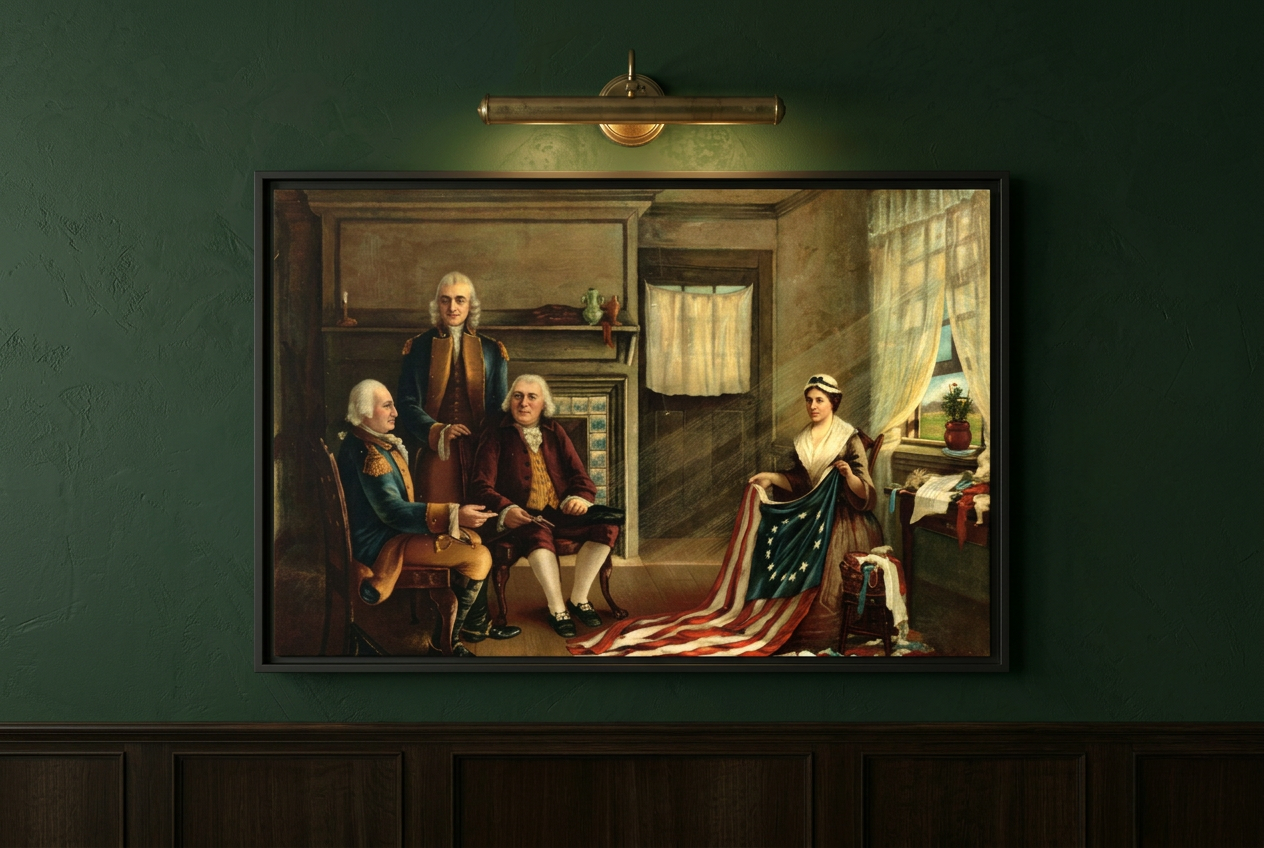
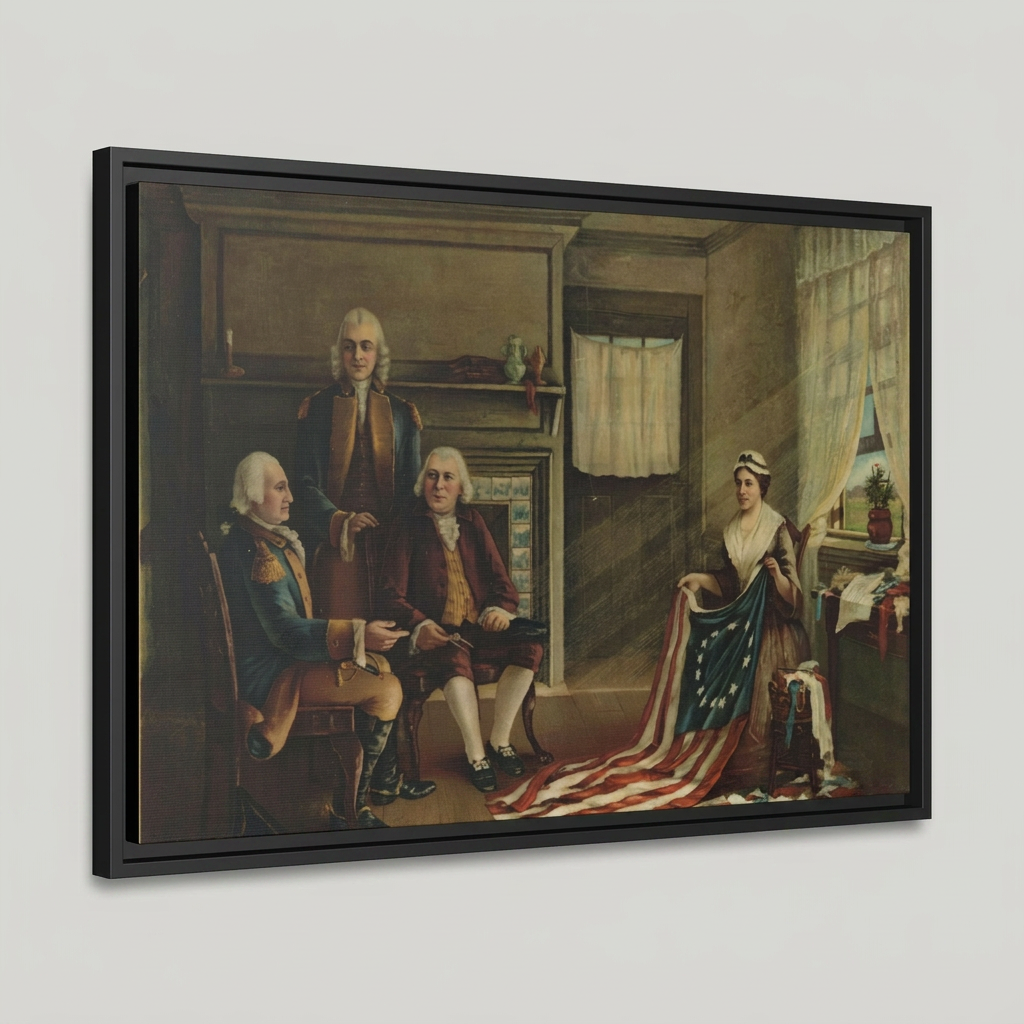
In the spring of 1776, George Washington came to a Philadelphia seamstress with a sketch and a request. The sketch showed a flag with six-pointed stars. Betsy Ross suggested five-pointed ones — easier to cut with a single snip of the scissors. Washington agreed. What she sewed in that room became the symbol of a nation. This painting captures the moment before the first stitch — three men with a drawing, and a woman who knew exactly what to do with it.
Size
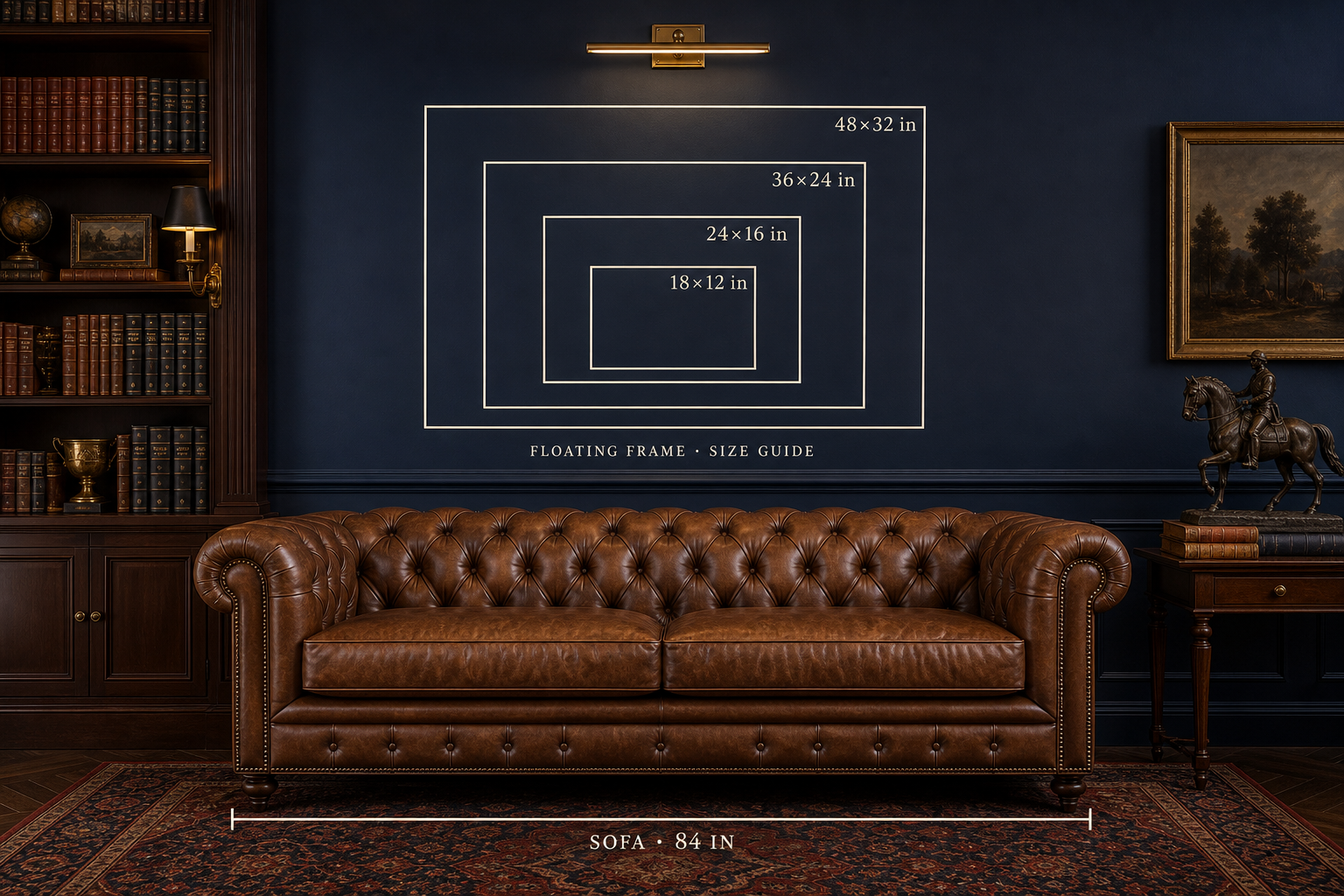
18″ x 12″ (Horizontal)
Color
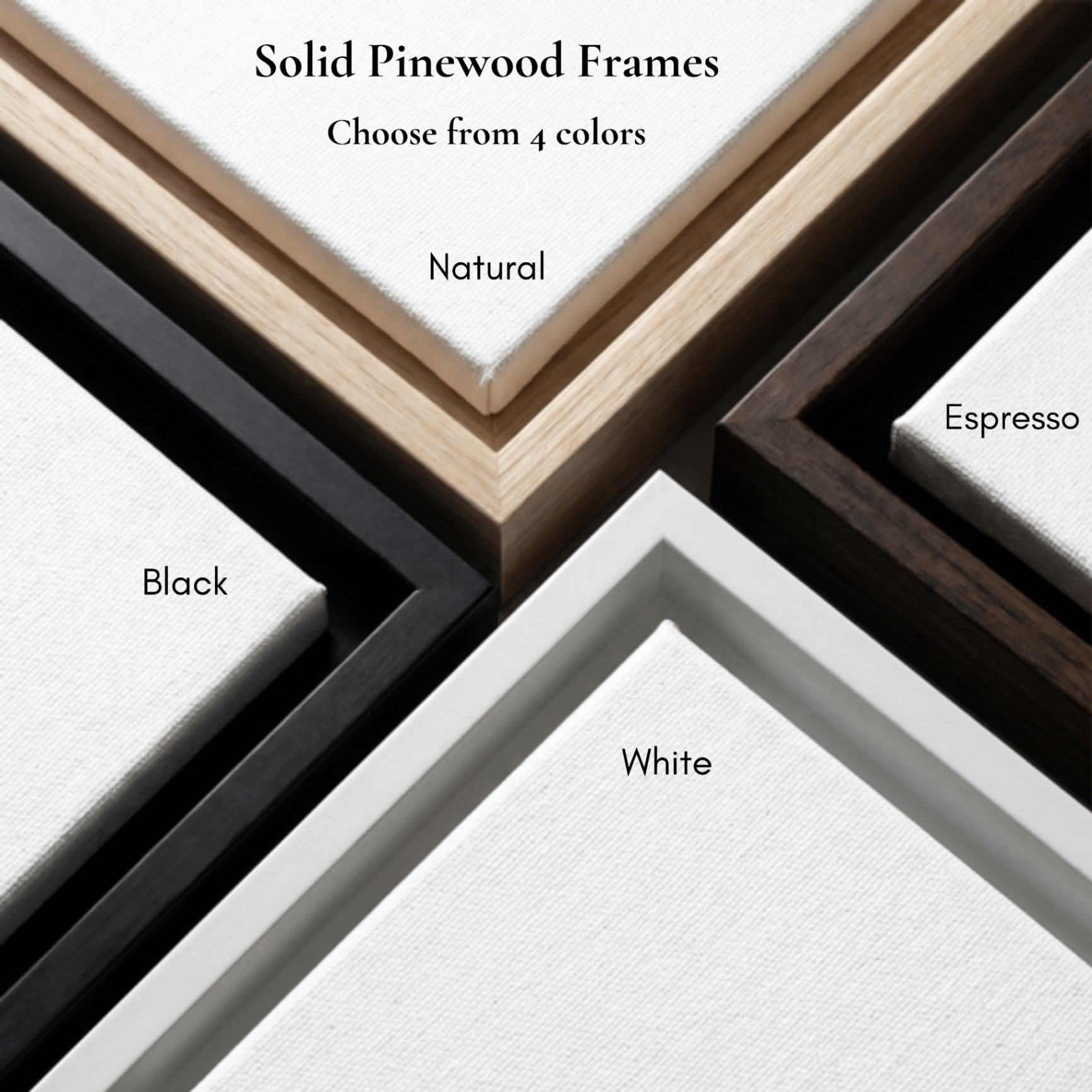
Black
The Story
The Story Behind the Painting
The story of Betsy Ross and the first American flag is one of the most beloved in American history — and one of the most debated by historians.
The account that most Americans know comes primarily from Betsy Ross herself, as recounted by her grandson William Canby in 1870 — nearly a century after the events he described. According to this account, in the spring of 1776, a small committee that included George Washington, Robert Morris, and George Ross visited Betsy at her upholstery shop on Arch Street in Philadelphia with a rough sketch of a proposed flag. Betsy suggested changing the six-pointed stars in the design to five-pointed stars, demonstrating that a five-pointed star could be cut with a single fold and snip of the scissors. The committee was persuaded, and Betsy sewed the first flag.
Historians have noted that no contemporary documentary evidence from 1776 confirms this specific account, and the story rests substantially on family oral tradition passed down nearly a century before it was recorded. Whether Betsy Ross sewed the very first American flag — or one of several early flags made by different seamstresses — remains an open question among scholars.
What is not in question is that Betsy Ross was a skilled Philadelphia upholsterer who did make flags for the Pennsylvania State Navy during the Revolutionary War period, and that she continued making flags for decades. Her shop on Arch Street in Philadelphia still stands today as a museum, drawing visitors from across the country.
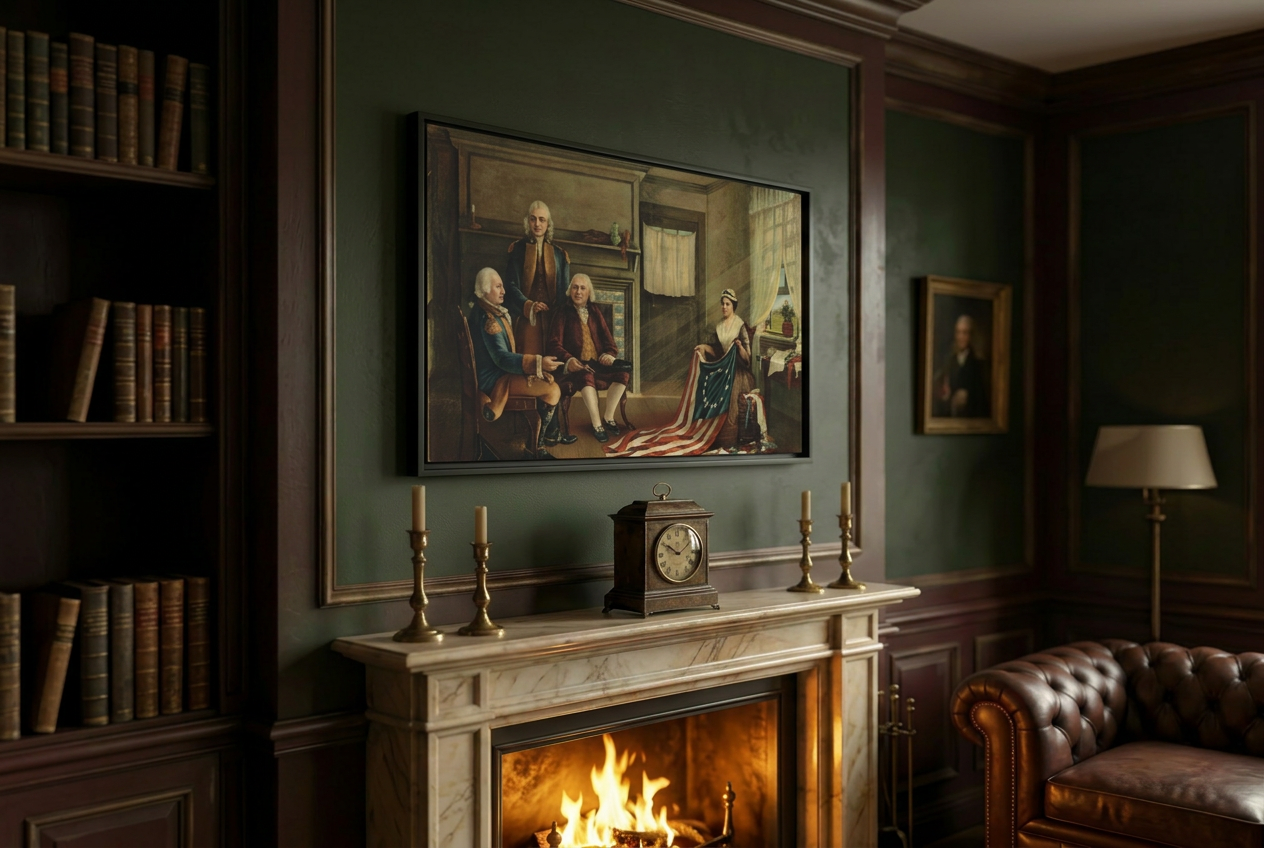
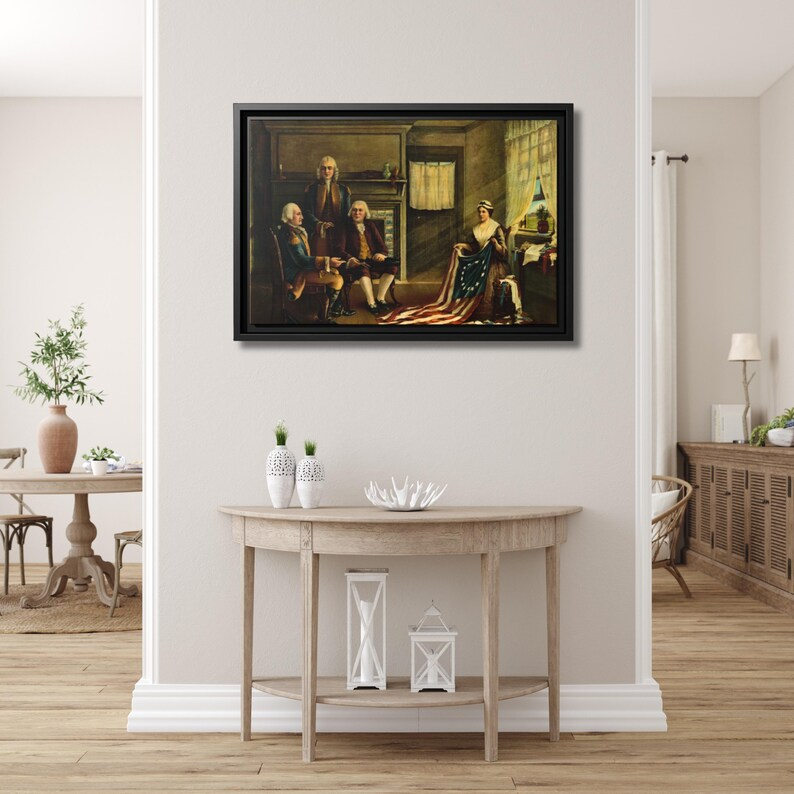
The painting depicts the moment of the commission itself — Washington seated at left in his Continental Army uniform, Robert Morris standing behind him, George Ross seated at center. Ross was Betsy's late husband's uncle — one reason the committee may have come to her specifically. At right, Betsy holds the flag she has produced, the thirteen stars already arranged in their circle, the stripes falling across her lap in the afternoon light coming through the window.
Whether the precise details of that visit happened exactly as described, the image itself has endured for 250 years as the visual shorthand for a simple and powerful idea: that the symbol of American independence was made by hand, in a modest room, by a woman who simply knew how to make things well.
Why Own It
Some founding moments happened in legislatures and on battlefields. This one happened in a sewing room.
Betsy Ross and the First American Flag belongs in the American Legacy Collection as a reminder that the symbols of the Revolution were made as well as declared — that the flag flying over every battle, every colony, and every celebration of the past 250 years began with needle and thread in a Philadelphia shop, held in the hands of a woman whose name most Americans know but whose full story most have never heard.
This is a piece for the home that wants the complete founding story — not just the generals and the statesmen but the craftspeople and the makers whose contributions were equally essential. The study or family room that wants to honor the women of the Revolution alongside the men who commanded its armies. The home that understands that a nation's symbols are as important as its documents.
Printed on premium cotton-poly canvas with archival-quality, Greenguard Gold certified inks, it is built to the same standard of permanence the subject deserves — color that endures, detail that holds, a frame crafted from sustainably sourced FSC-certified pine that will outlast the trends.
Part of the American Legacy Collection — a curated series tracing the arc of the American story from the colonial era through World War II. Own one chapter or collect them all.
Crafted for collectors. Built to be passed down.
Frequently Asked