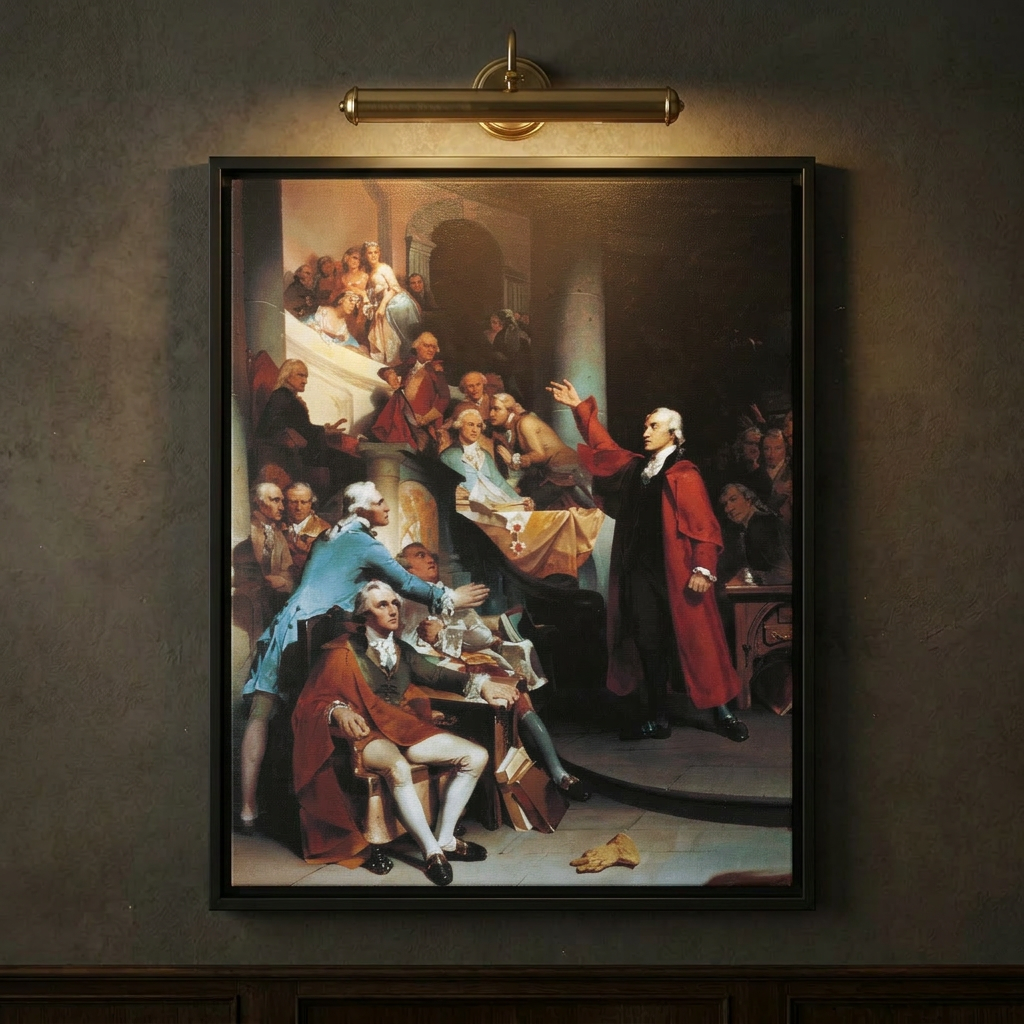
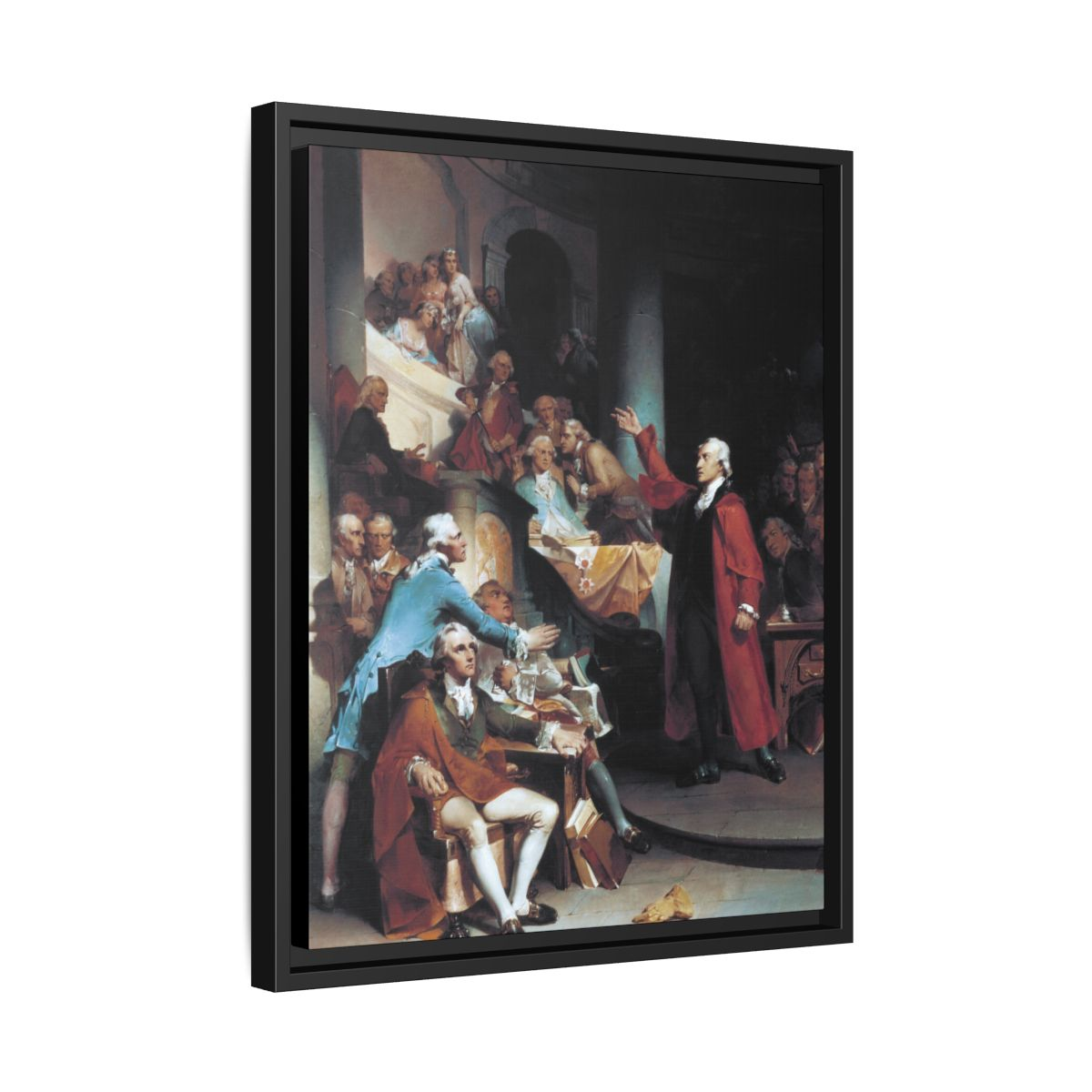

Patrick Henry Before the Virginia House of Burgesses
Peter F. Rothermel (American, 1817–1895)
c. 1851
The year was 1765. Patrick Henry had been a member of the Virginia House of Burgesses for exactly nine days. He rose to speak against the Stamp Act — and said things so dangerous that members shouted "Treason!" from the floor. He did not sit down. He did not lower his voice. He finished his speech. What happened in that room on May 30, 1765 was the first open act of defiance against British authority in American history — eleven years before the Declaration of Independence.
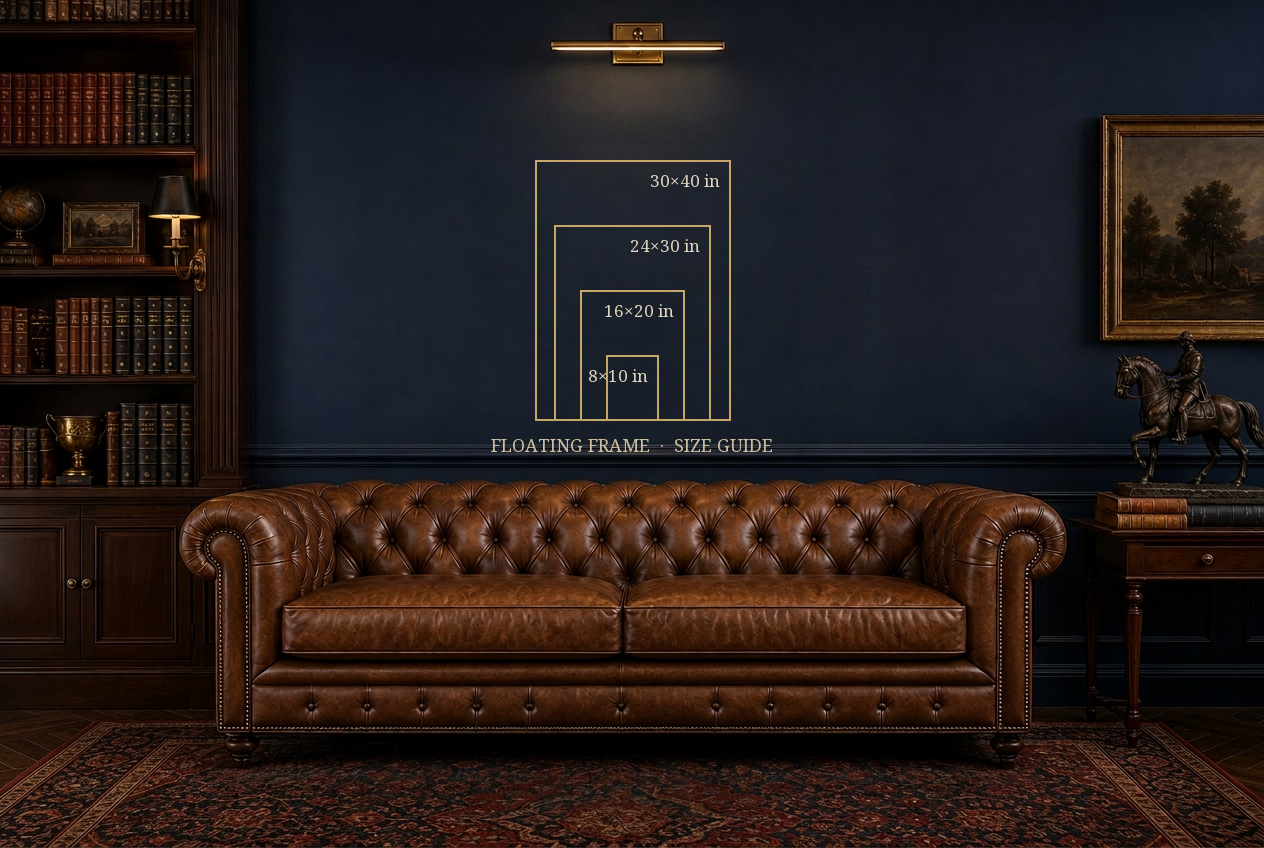
Size
8″ x 10″ (Vertical)
Color
Black
The Story
The Story Behind the Painting
Most revolutions have a moment when the first person says the thing everyone else was afraid to say.
For the American Revolution, that moment happened on May 30, 1765, in the chamber of the Virginia House of Burgesses in Williamsburg — and the man standing was a 29-year-old lawyer named Patrick Henry who had held his seat for nine days.
The occasion was the Stamp Act — Britain's first direct tax on the American colonies, imposed without colonial representation or consent. Most colonial legislators were angry. Most expressed that anger carefully, diplomatically, in measured language designed not to cross the line into open defiance of the Crown. They were experienced men. They understood the risks. They chose their words accordingly.
Henry chose differently.
He introduced a series of resolutions — the Virginia Stamp Act Resolves — that went further than anything any colonial legislature had dared to put in writing. The resolutions argued that Virginians possessed the same rights as Englishmen born in England. That the right to be taxed only by their own representatives was the foundation of British liberty. That any attempt to give that power to another body had the tendency to destroy both British and American freedom.
Then he rose to speak in defense of his resolutions.
The room erupted.
As Henry reached the height of his argument — drawing a parallel between the fates of tyrants and the fate that might await a king who violated his people's rights — the chamber exploded. "Treason!" shouted members from the floor. The Speaker of the House rose to call him to order. Henry paused — and then, by eyewitness accounts, finished his sentence.
He reportedly replied: "If this be treason, make the most of it."
The resolutions passed by a single vote. The following day, under pressure from the royal governor, the most radical of them were expunged from the record. But it was too late. Copies of the resolves — including the expunged ones — had already been printed and distributed across the colonies. In Boston, a young John Adams read them and felt something shift. In Philadelphia, Benjamin Franklin took notice. The idea that a colonial legislature could openly defy parliamentary authority had been spoken aloud for the first time.
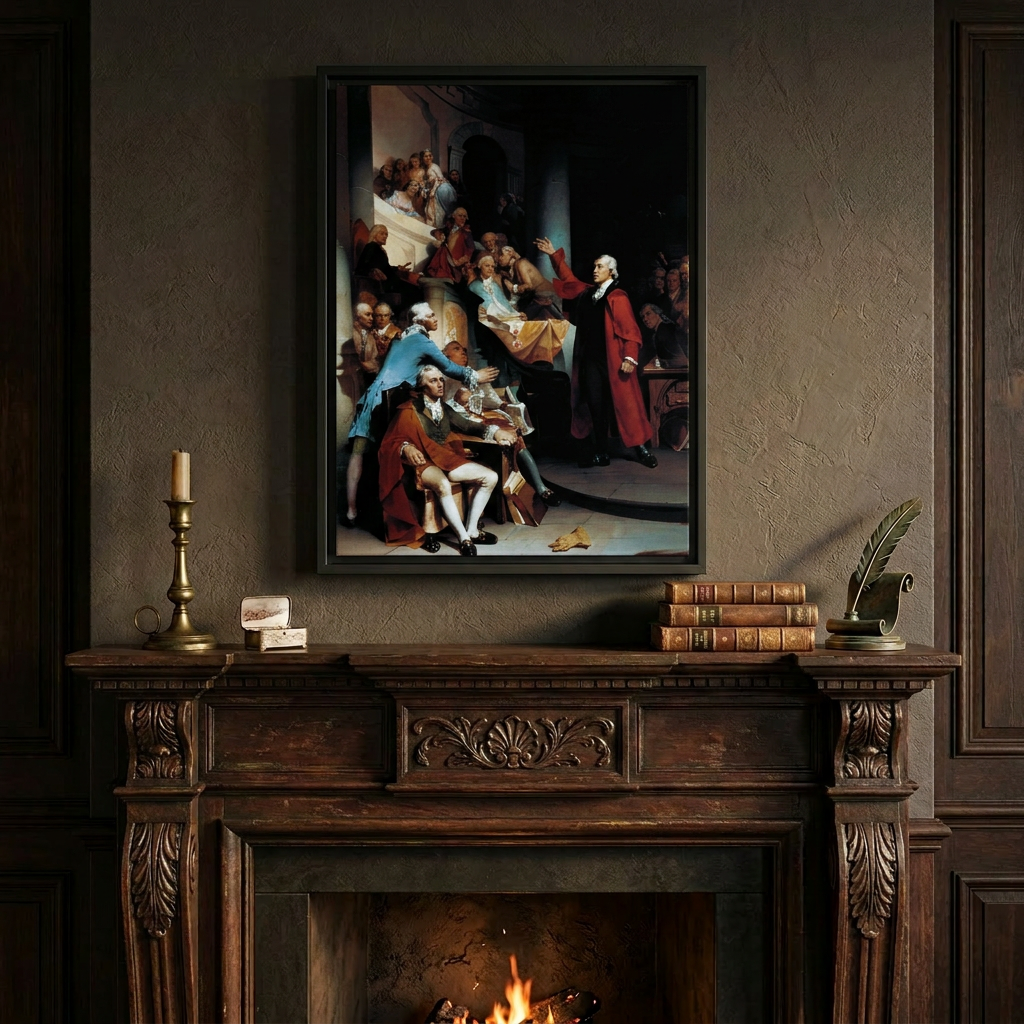
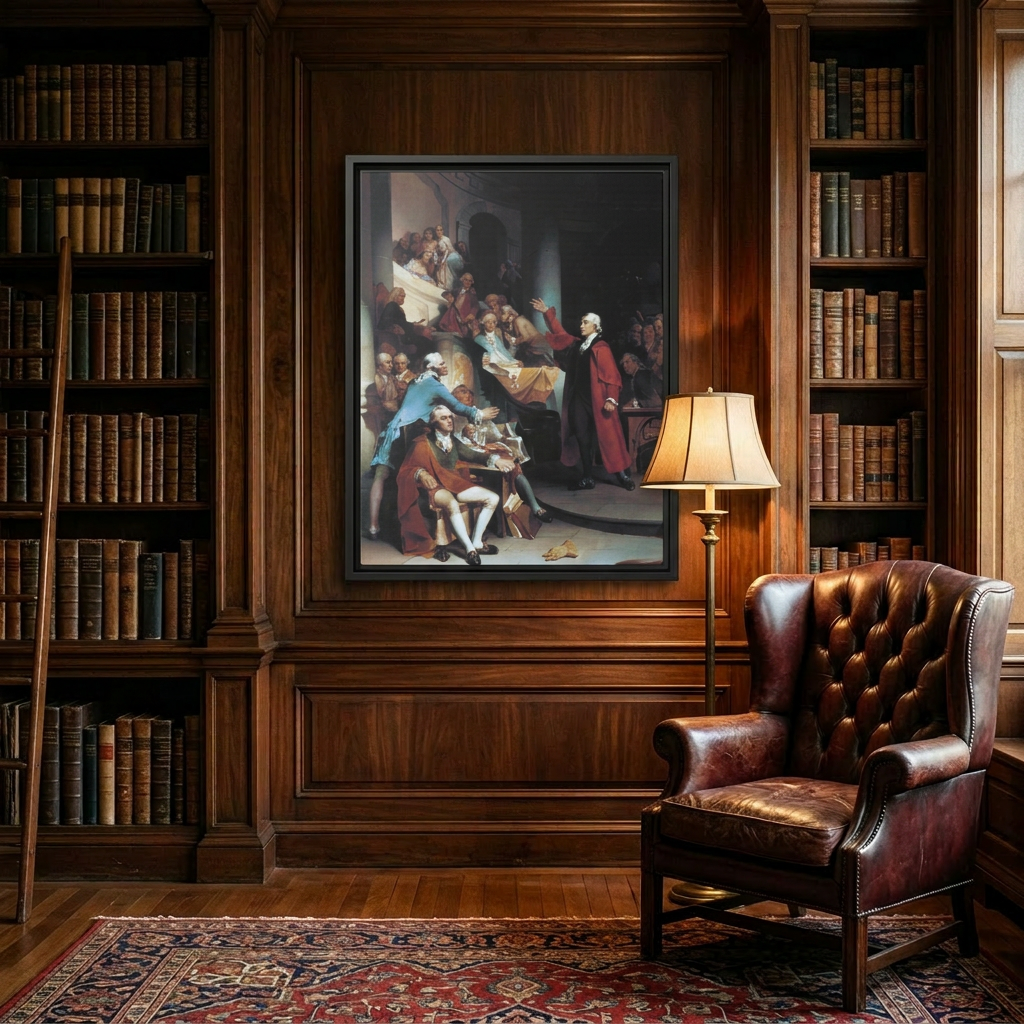
Peter F. Rothermel painted this scene in 1851 — capturing Henry at the exact moment of maximum tension, arm raised, the room in chaos around him, the figure in blue reaching out as if to restrain him. Every element of the composition drives toward the man in red who will not be stopped.
Eleven years before the Declaration. Eleven years before Washington crossed the Delaware. It started here.
Why Own It
Every revolution needs the person who speaks first.
Patrick Henry Before the Virginia House of Burgesses belongs in the American Legacy Collection as the spark — the moment before the fire, when one man decided that the risk of speaking was less than the cost of silence. Washington provided the courage to fight. Jefferson provided the words to justify it. Henry provided the defiance that made both necessary — a decade before either of them stepped into history.
What Rothermel captured in this painting is not a famous victory or a celebrated triumph. It is a man in a room full of people telling him to stop, finishing his sentence anyway. That image — arm raised, voice unbroken, the room in uproar around him — is one of the most honest depictions of moral courage in American art.
This is a piece for the office that understands that the most important moments rarely feel safe when they happen. The study that draws its standards from those who said the necessary thing at the necessary moment regardless of the personal cost. The home that wants its walls to remember that freedom has always begun with someone refusing to sit down.
Printed on premium cotton-poly canvas with archival-quality, Greenguard Gold certified inks, it is built to the same standard of permanence the subject deserves — color that endures, detail that holds, a frame crafted from sustainably sourced FSC-certified pine that will outlast the trends.
Part of the American Legacy Collection — a curated series tracing the arc of the American story from the colonial era through World War II. Own one chapter or collect them all.
Crafted for collectors. Built to be passed down.
Frequently Asked