
Declaration of Independence
John Trumbull (American, 1756–1843)
1818
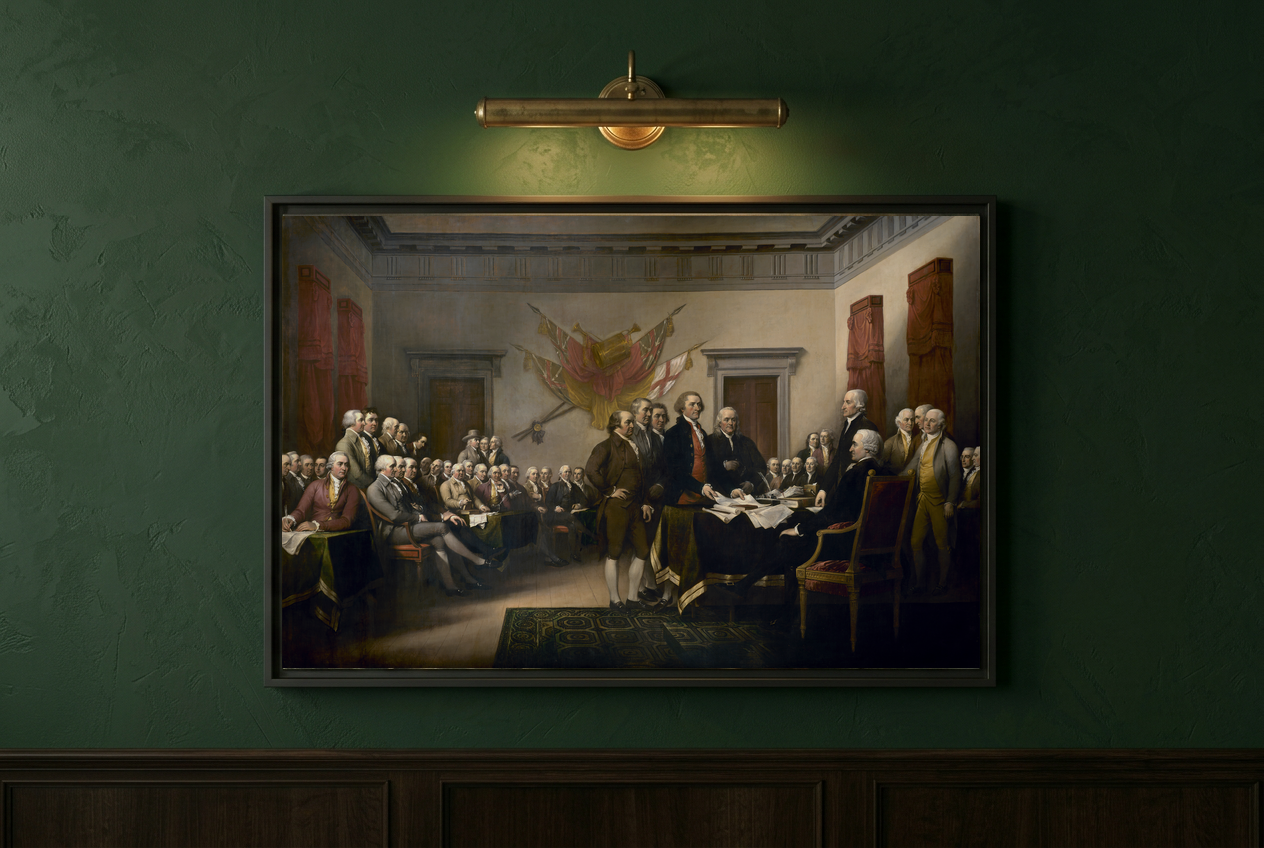
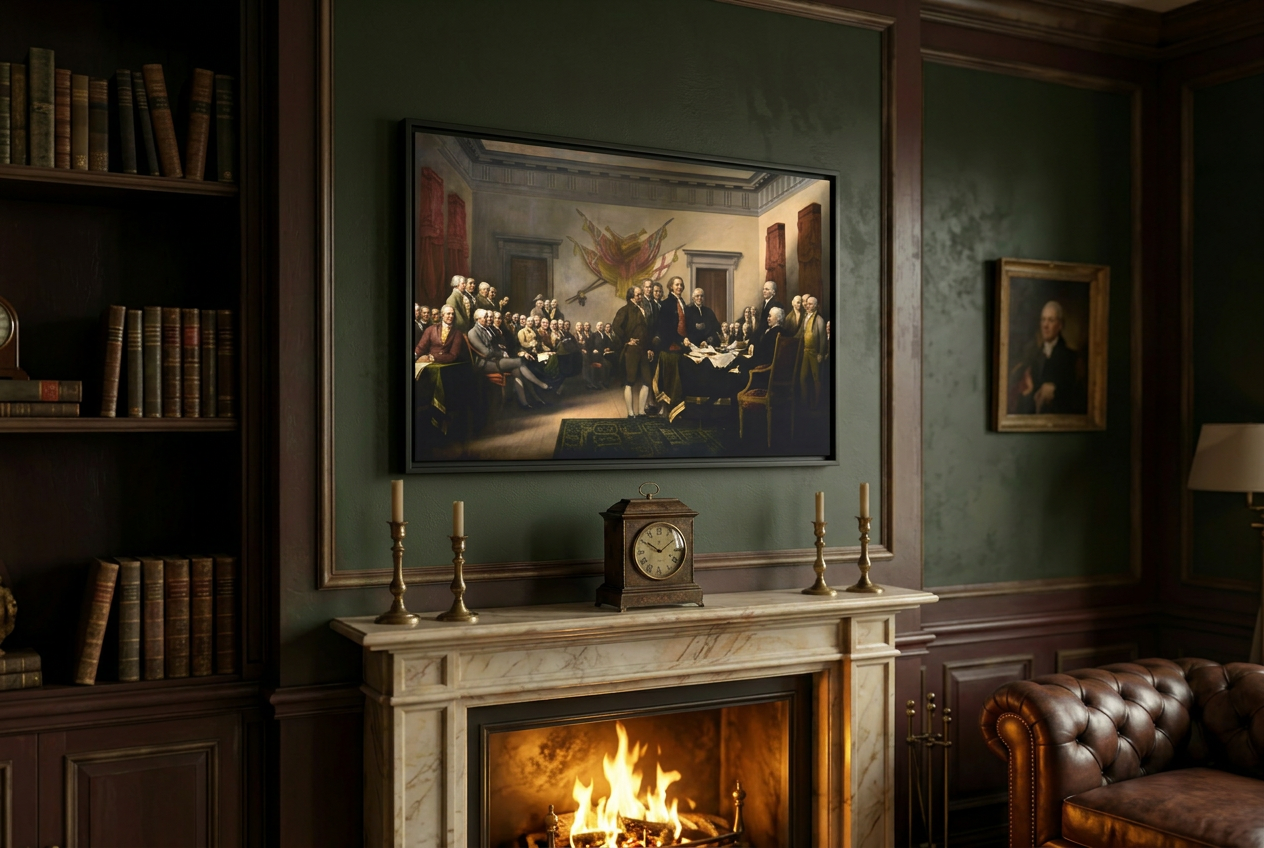
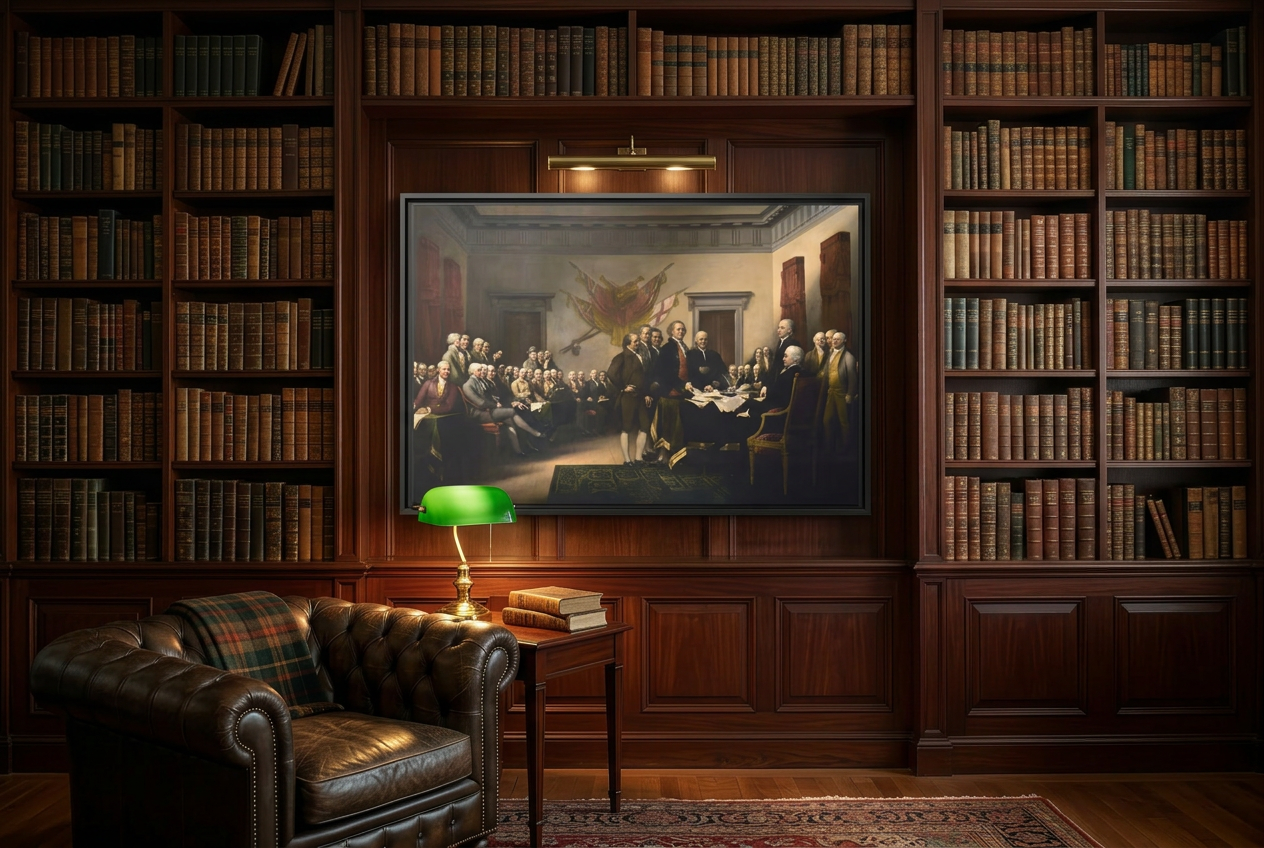
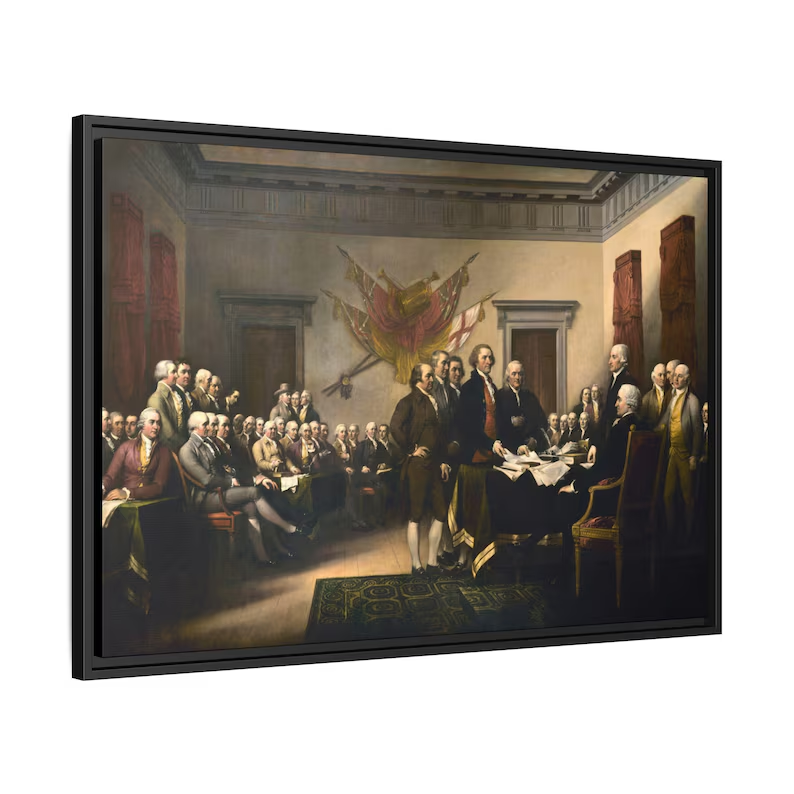
This is not the signing. Most people don't know that. What John Trumbull painted is the moment five days before the vote — June 28, 1776 — when the drafting committee presented the Declaration to the Continental Congress for the first time. The decision had not yet been made. The outcome was not yet certain. Thirty-three men in that room would go on to sign it. Others would not. Trumbull painted the moment when everything still hung in the balance — and somehow made it feel like destiny.
Size
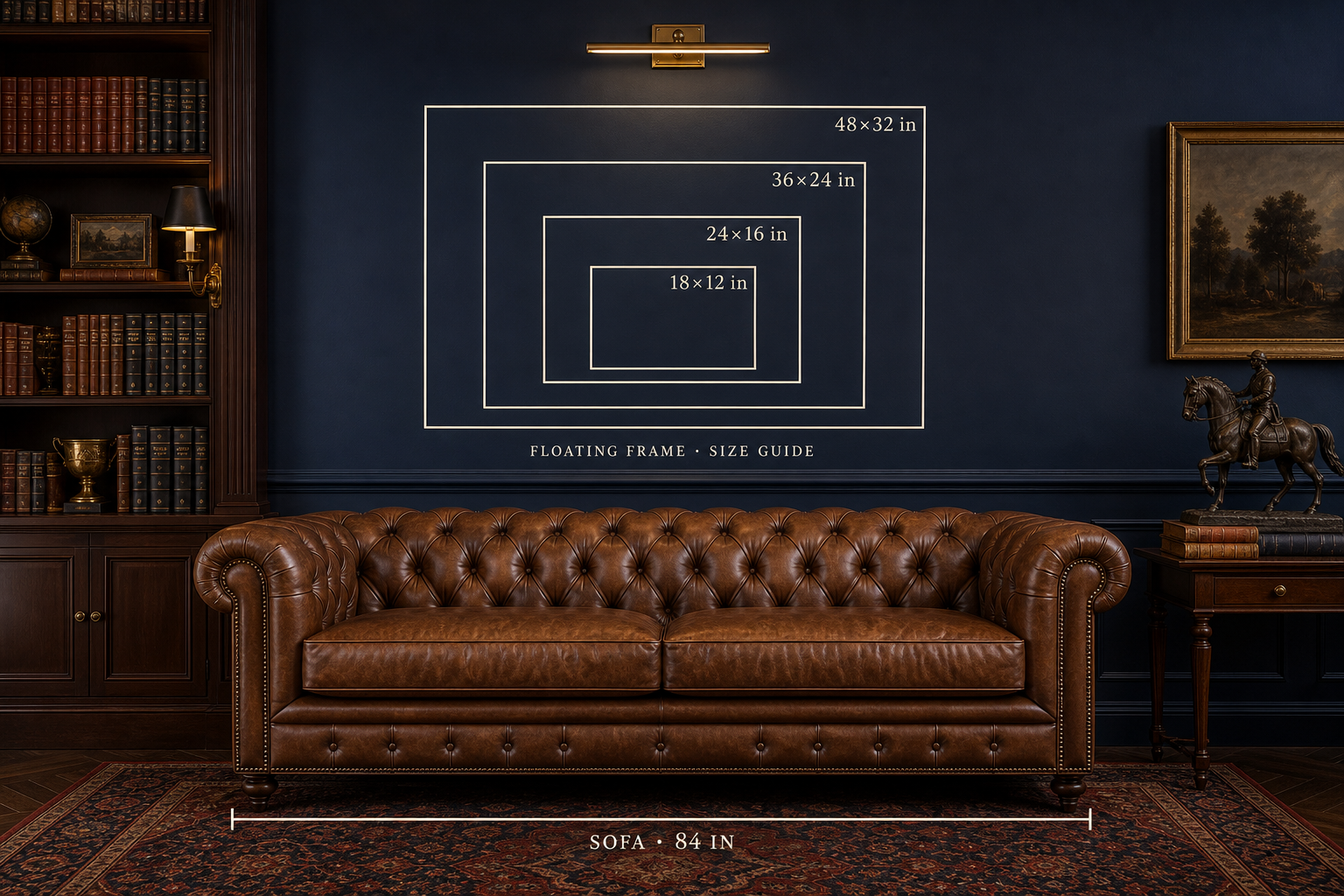
18″ x 12″ (Horizontal)
Color
Black
The Story
The Story Behind the Painting
Forty-seven men stand in this painting. Thirty-six of them sat for Trumbull personally.
That fact alone sets The Declaration of Independence apart from virtually every other work of historical painting ever made. John Trumbull did not paint symbols or approximations. He painted faces — real faces, remembered faces, faces he had looked at directly and committed to canvas before time took them. He began the work in 1786, a decade after the events depicted, and spent the next thirty years tracking down the surviving signers before age and mortality closed the window forever.
Thomas Jefferson was his partner in the endeavor.
When Trumbull traveled to Paris in 1787 to paint the French officers for his Revolutionary War series, he stayed with Jefferson — then serving as American minister to France. Jefferson not only sat for his own portrait but personally supervised the composition of the Declaration painting, helping Trumbull identify the figures, recall the arrangement of the room, and reconstruct the details of a moment Jefferson had lived but Trumbull had not. The two men worked together at Jefferson's desk in Paris to ensure that history would be recorded accurately.
What they were capturing was not July 4th.
The scene Trumbull chose to paint was June 28, 1776 — the moment the five-man drafting committee presented the finished Declaration to the full Continental Congress. Jefferson stands at center in the red waistcoat, the document in hand, flanked by John Adams, Benjamin Franklin, Roger Sherman, and Robert Livingston. John Hancock sits at the desk before them, presiding. The vote had not yet been taken. The signatures had not yet been signed. Independence had not yet been declared.
Trumbull chose this moment deliberately. Not the triumphant signing but the presentation — the instant before the point of no return. The room full of men who understood exactly what they were being asked to decide. Who knew that a yes vote meant war without guarantee of victory, that their names on this document meant their lives, their fortunes, and their sacred honor were formally on the line.
The painting was completed in 1818 and installed in the Rotunda of the United States Capitol the following year, where it has hung ever since — one of four Revolutionary War masterpieces Trumbull painted for that singular space. It shares the Rotunda with his Surrender of Cornwallis — the beginning and the end of the Revolution, facing each other across the most important room in American government.
Thirty-six men in this painting looked John Trumbull in the eye. He looked back and made sure the rest of history could too.
Why Own It
Every face in this painting was real. Every one of them knew what they were risking.
The Declaration of Independence belongs in the American Legacy Collection as its defining centerpiece — the moment the founding generation stood in a room together and chose the future over the familiar. Not in retrospect. Not knowing how it would turn out. In real time, with everything on the line, surrounded by men who were about to sign their names to an act of treason against the most powerful empire on earth.
What Trumbull understood — and what makes this painting unlike any other — is that history is made by specific people in specific rooms making specific decisions. Not by forces or movements or inevitabilities. By men. These men. Their faces recorded from life so that no future generation could ever mistake them for abstractions.
This is a piece for the study that understands decisions have consequences and makes them anyway. The office where the weight of responsibility is felt as a privilege rather than a burden. The home that wants its walls to remember that the freedoms enjoyed daily were chosen — deliberately, courageously, and at enormous personal cost — by the men looking out from this canvas.
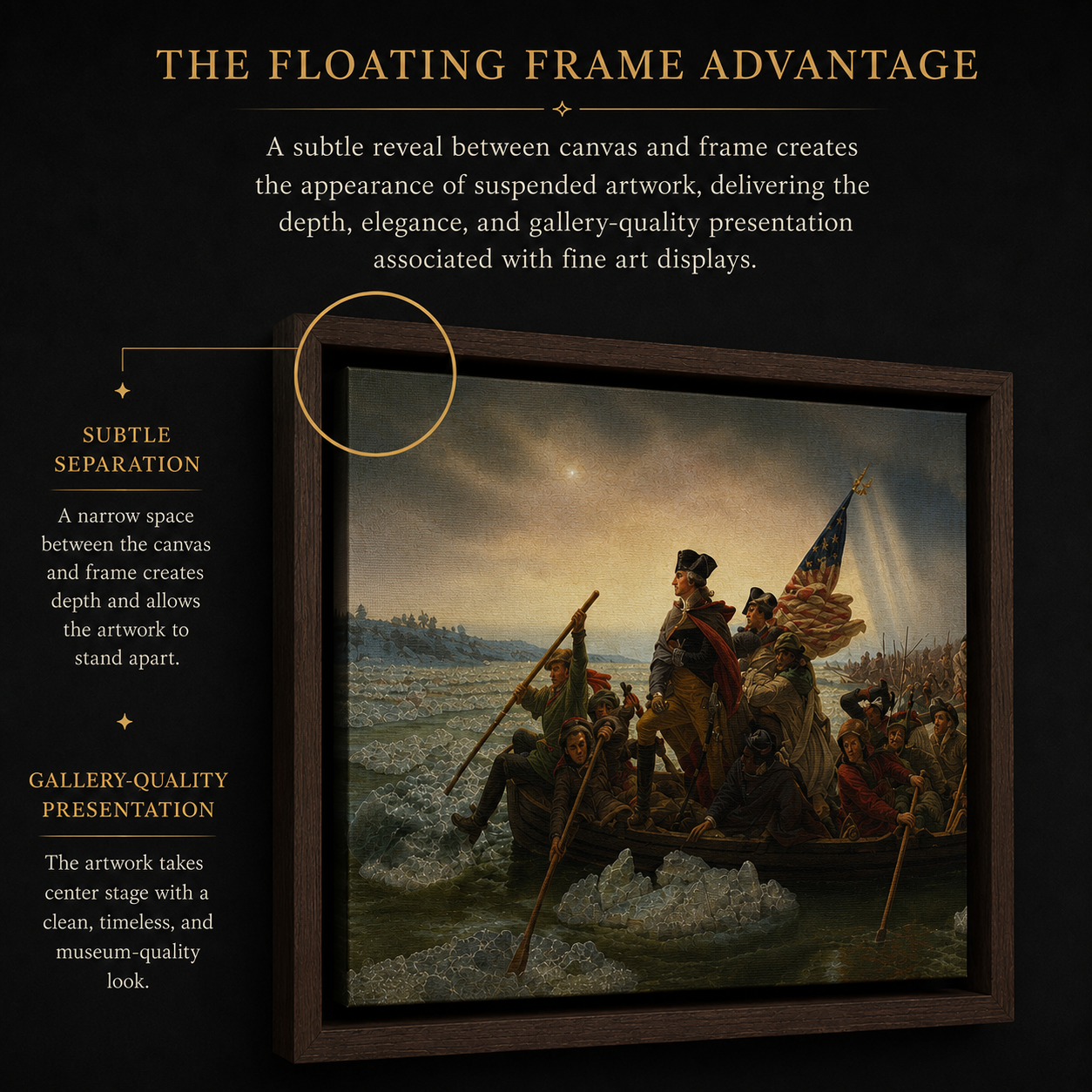
Printed on premium cotton-poly canvas with archival-quality, Greenguard Gold certified inks, it is built to the same standard of permanence the subject deserves — color that endures, detail that holds, a frame crafted from sustainably sourced FSC-certified pine that will outlast the trends.
Part of the American Legacy Collection — a curated series tracing the arc of the American story from the colonial era through World War II. Own one chapter or collect them all.
Crafted for collectors. Built to be passed down.
Frequently Asked