

The Declaration of Independence
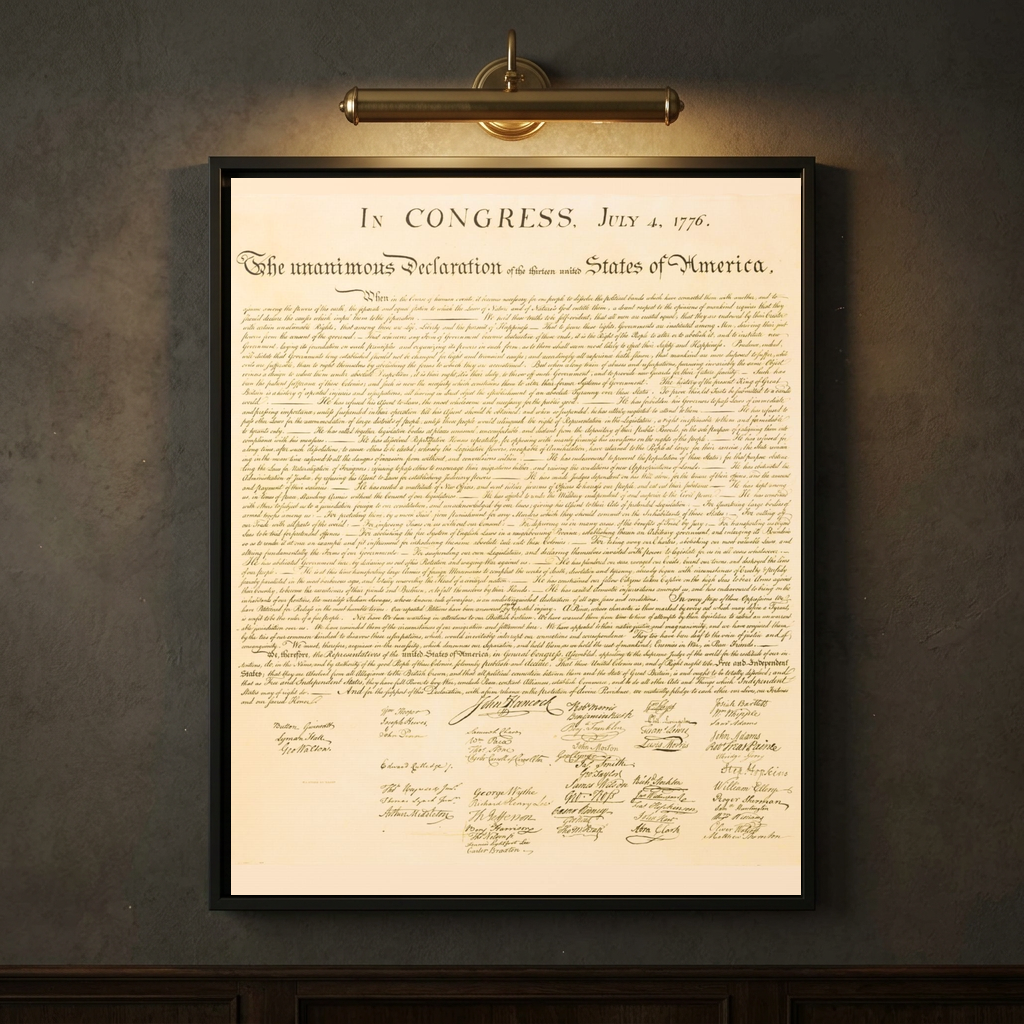
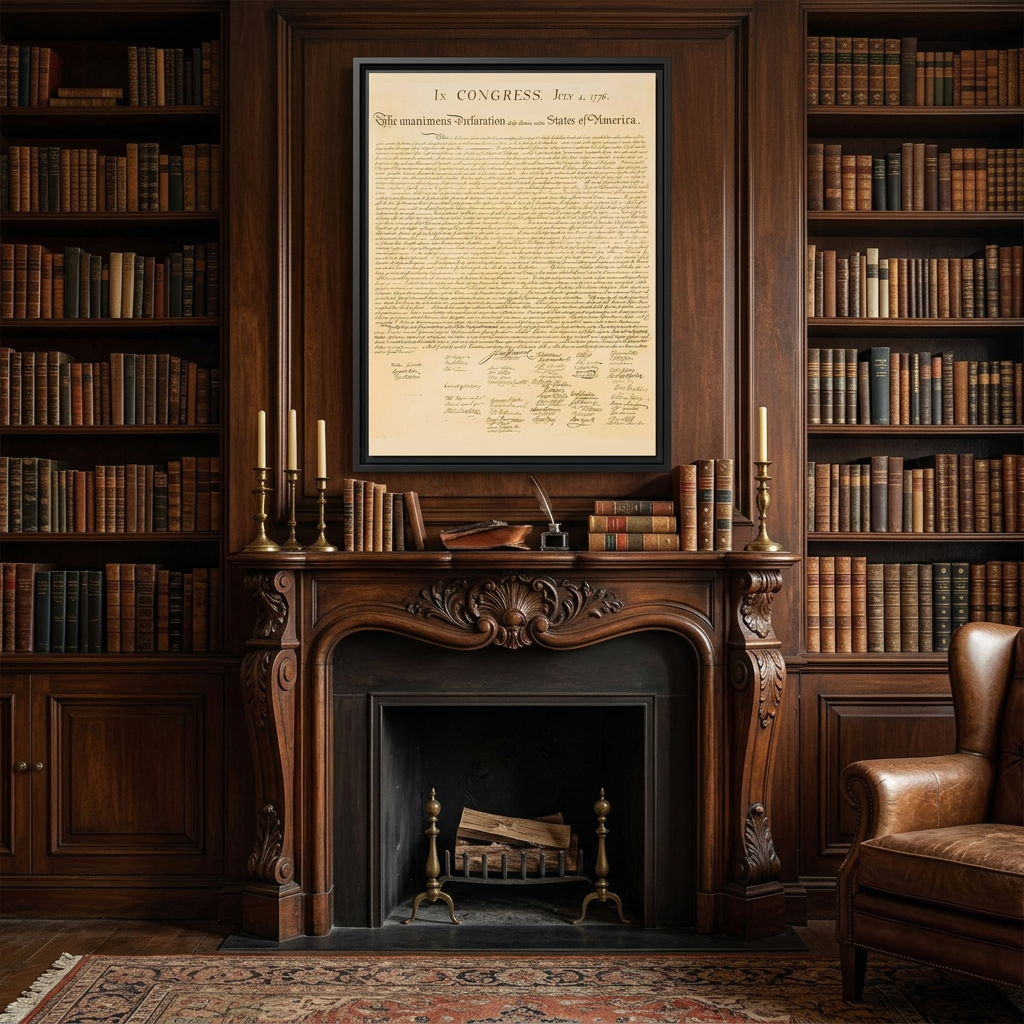
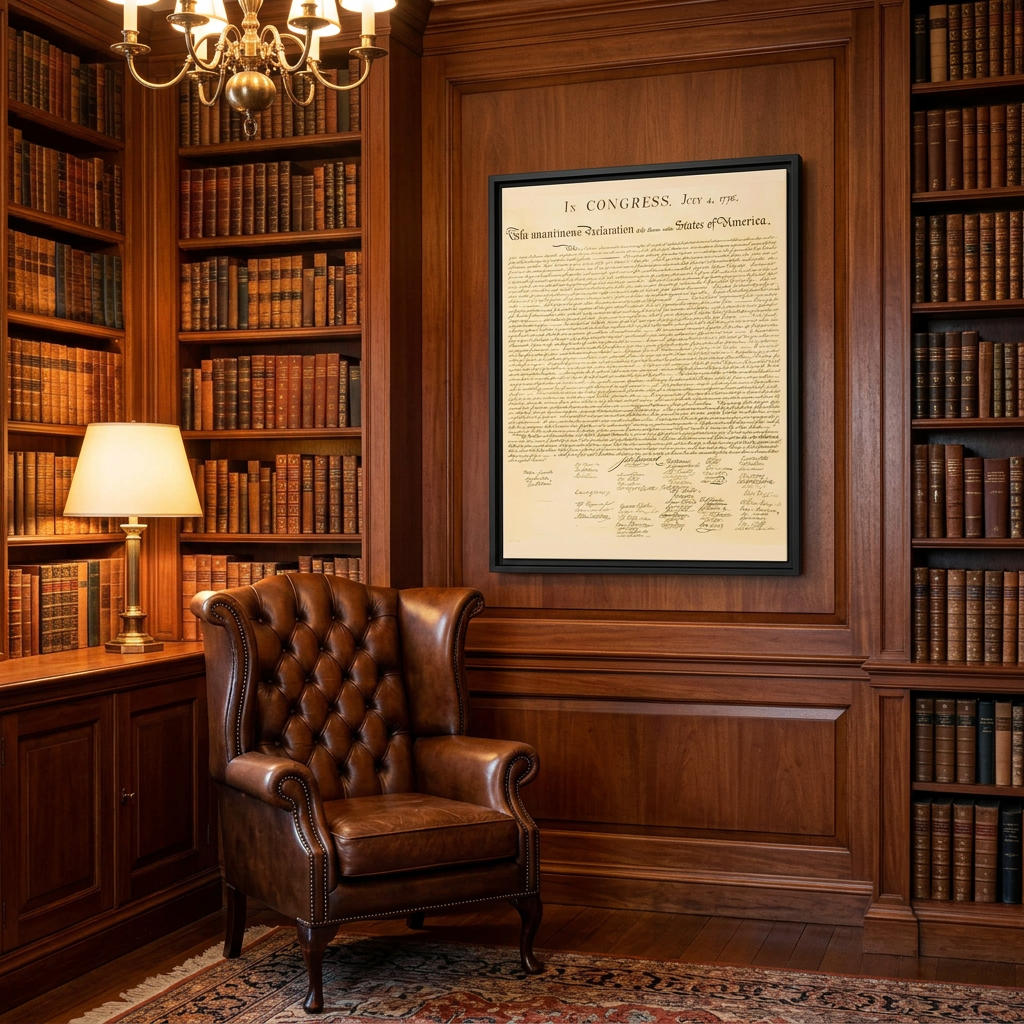
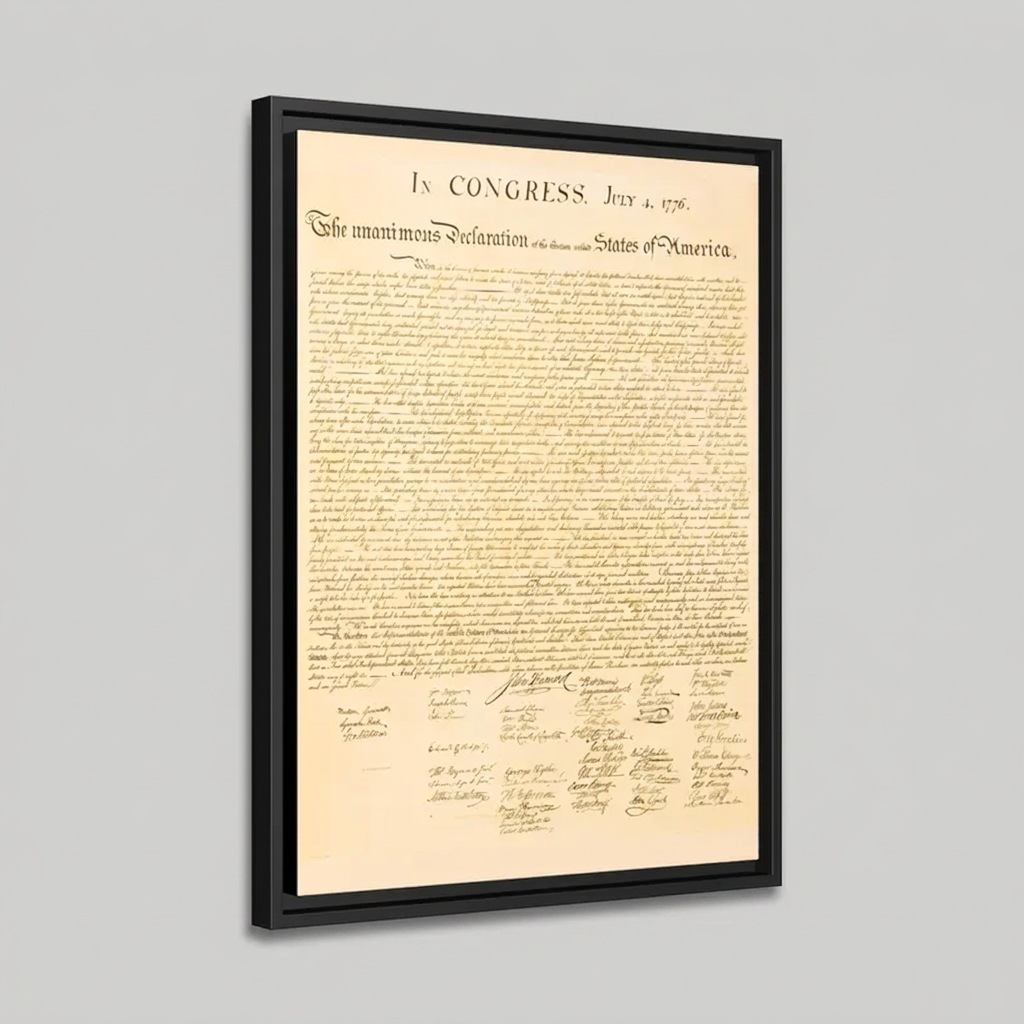
Engrossed copy, signed July 4, 1776 — aged parchment reproduction
1776
Fifty-six men signed their names to this document — and in doing so, signed what amounted to their own death warrants if the Revolution failed. They knew it. They wrote it anyway. "With a firm reliance on the protection of Divine Providence, we mutually pledge to each other our Lives, our Fortunes, and our sacred Honor." Those were not abstract words. This document is the moment 56 individuals chose a nation over their own safety — and it has outlived every empire that doubted them.
Size
16″ x 20″ (Vertical)
Color
Espresso
The Story
The Story Behind This Piece
By July 1776, the Continental Congress had been debating independence for months.
The arguments had been made. The grievances against King George III had been compiled — twenty-seven of them, methodically listed, each one a documented case for why the relationship between the colonies and the Crown could no longer continue. Thomas Jefferson had drafted the language. Congress had revised it. What remained was the most consequential vote in American history — and then the act of putting names to it.
On August 2, 1776, most of the 56 delegates affixed their signatures to the engrossed copy of the Declaration. John Hancock, President of the Continental Congress, signed first — famously large, by his own account so that King George "could read that without his spectacles."
What those signatures meant was not symbolic.
Under British law, every signer had just committed treason against the Crown — a crime punishable by death. These were not anonymous rebels. They were lawyers, merchants, farmers, and physicians — men with names, families, properties, and reputations, all of which they had just placed at total risk. Several signers would lose everything before the war ended. Some had their homes burned. Some were captured and imprisoned. One, Richard Stockton of New Jersey, was captured by the British and held under conditions so brutal his health never recovered.
They knew all of this when they signed. The final line of the Declaration says so directly — that they pledged "our Lives, our Fortunes, and our sacred Honor" to support it. That was not rhetorical flourish. It was the actual stakes, stated plainly, by men who understood exactly what they were risking.
The document itself is a masterwork of political philosophy compressed into a single page — the preamble's assertion of self-evident truths and unalienable rights, the list of grievances establishing the case against the Crown, and the formal declaration of independence itself, ending with that final pledge.
It has been reproduced more than any other document in American history. Copies hung in town squares in 1776, were read aloud to crowds who had never heard anything like it, and have been displayed in homes, schools, and government buildings in every generation since. The original — the engrossed parchment copy bearing those 56 signatures — is preserved at the National Archives in Washington D.C., its ink faded by time but its words as permanent as anything in human history.
This piece presents the Declaration in the aged, weathered tones that connect it to its origins — a document written 250 years ago, by men who could not have known how it would end, but signed it anyway.
Why Own It
Every right you have was written down by someone who risked everything to write it.
The Declaration of Independence belongs in the American Legacy Collection as its foundational document — not a symbol of the Revolution but the legal and philosophical instrument that started it. Every other piece in this collection — every battle, every speech, every sacrifice — exists because of what these 56 men signed in the summer of 1776. This is where the entire arc begins.
To display this document is to display the moment the American experiment became official — not an idea anymore, not a grievance, but a declaration to the world, signed by name, by men who pledged their lives to back it up.
This is a piece for the study where the founding principles are not abstractions but the foundation everything else rests on. The office that wants visitors to understand the values it operates by. The home that wants every person who reads it to remember that the freedoms they take for granted were purchased — specifically, deliberately, and at enormous personal risk — by named individuals who could have stayed silent and didn't.
The aged parchment treatment connects this reproduction to its origins — a document that is 250 years old this year, presented with the warmth and weathering that two and a half centuries deserve. Available in your choice of elegant wood frame to suit any study, office, or library.
Part of the American Legacy Collection — a curated series tracing the arc of the American story from the colonial era through World War II. Own one chapter or collect them all.
Crafted for collectors. Built to be passed down.
Frequently Asked