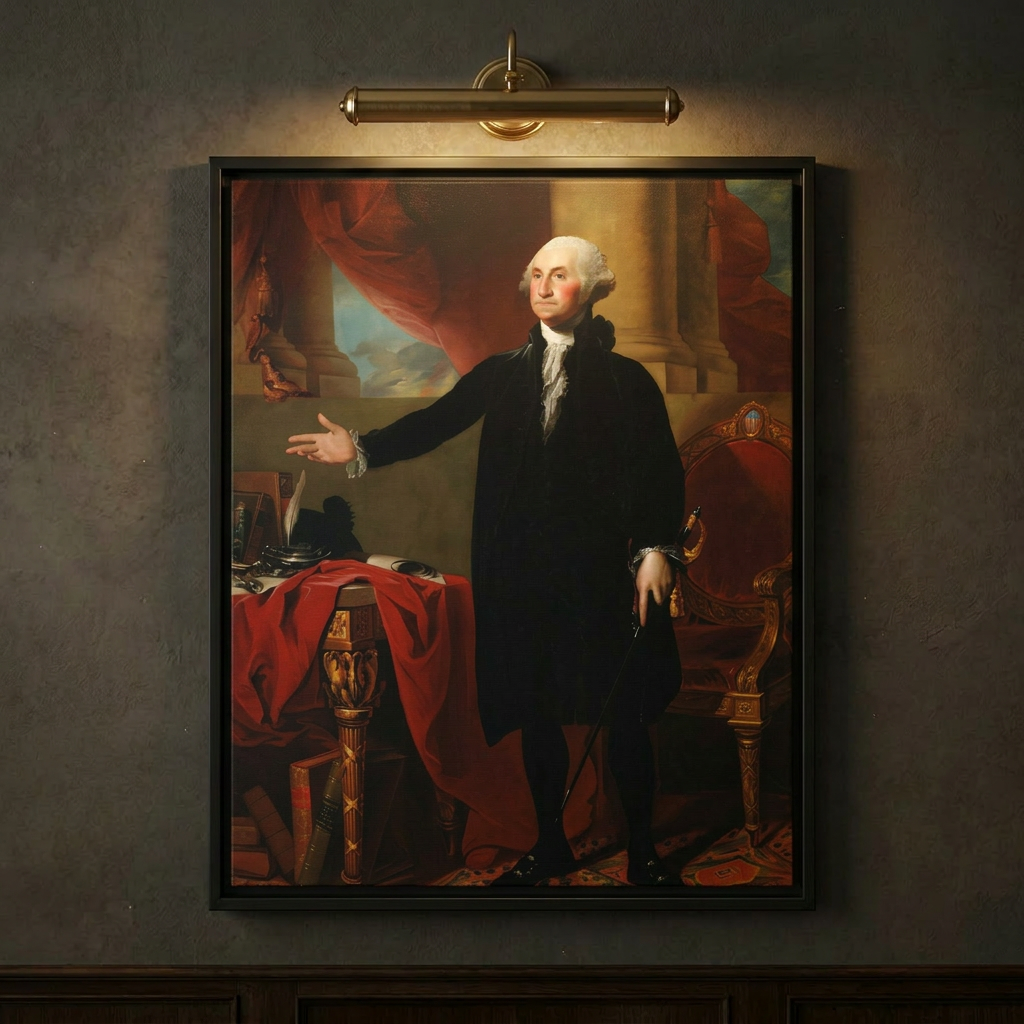
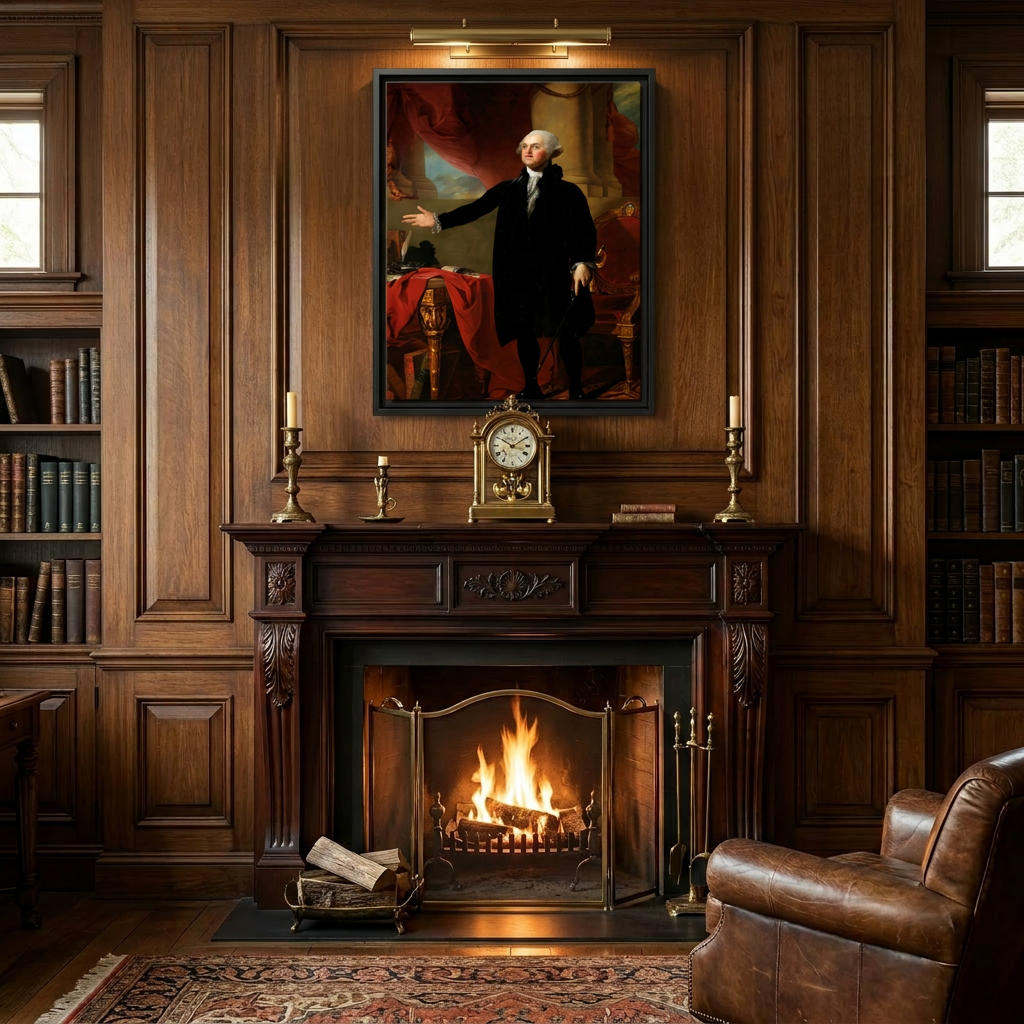
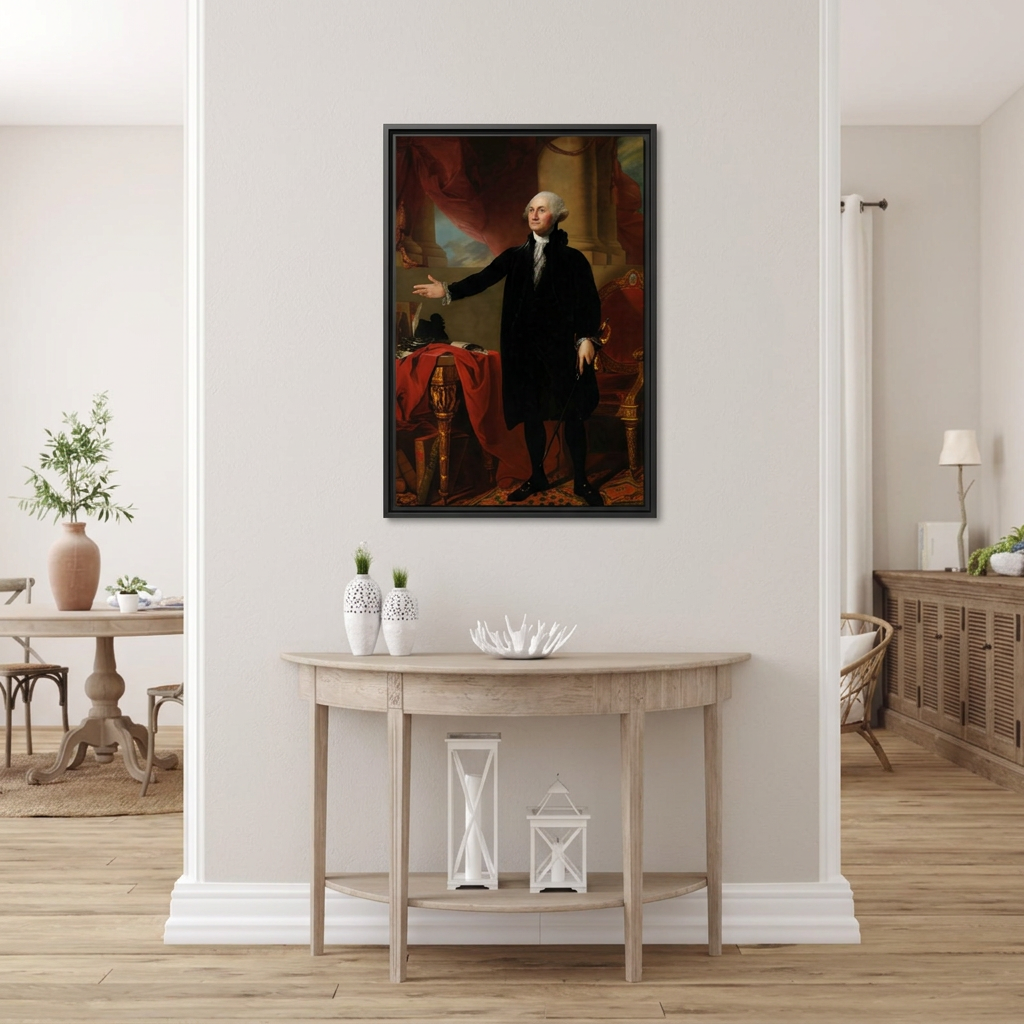
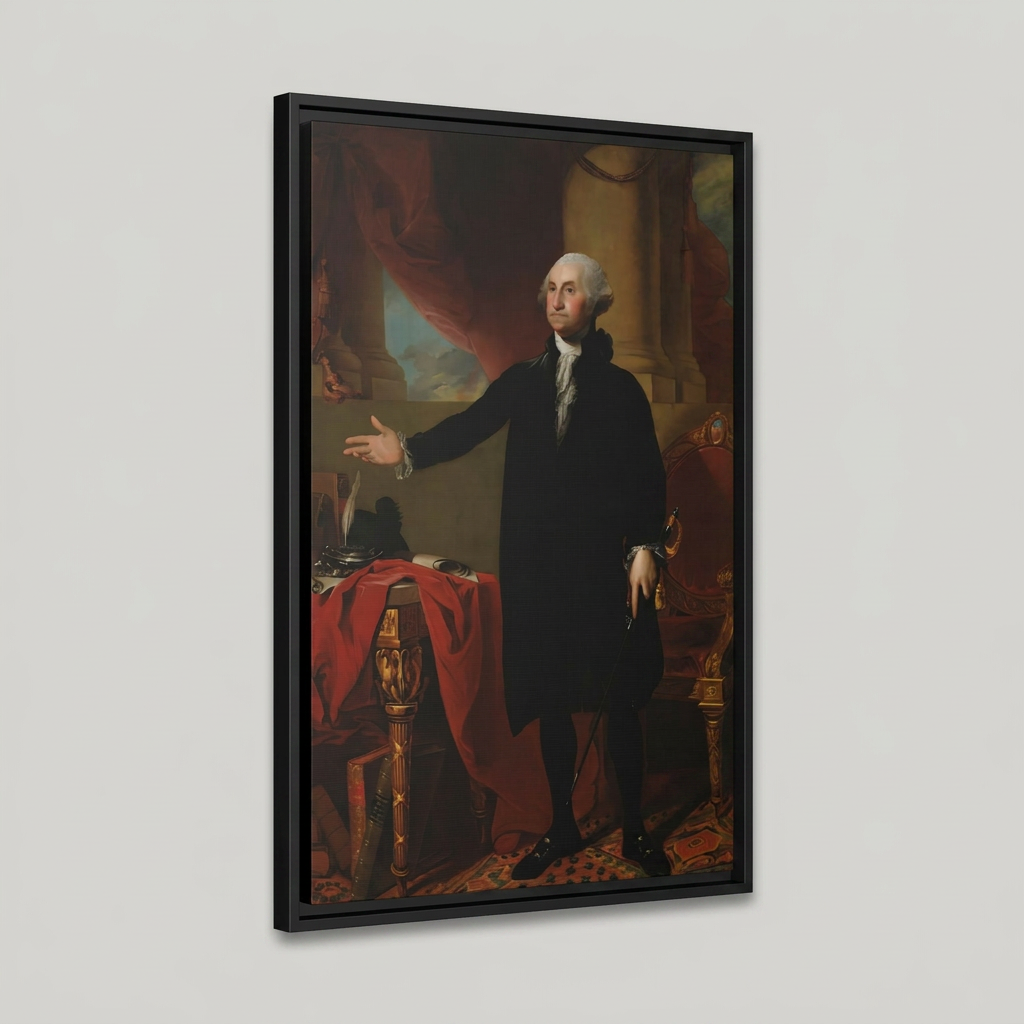

George Washington (Lansdowne Portrait)
Gilbert Stuart (American, 1755–1828)
1796
This is the portrait that defined how the world would see George Washington for the next 250 years. Gilbert Stuart painted it in 1796 — the year Washington chose to step down from the presidency, voluntarily surrendering power when he could have held it for life. The hand extended toward the viewer is not a gesture of greeting. It is Washington offering the Republic back to the people who entrusted it to him. No king in history had ever done what this man was about to do.
Size
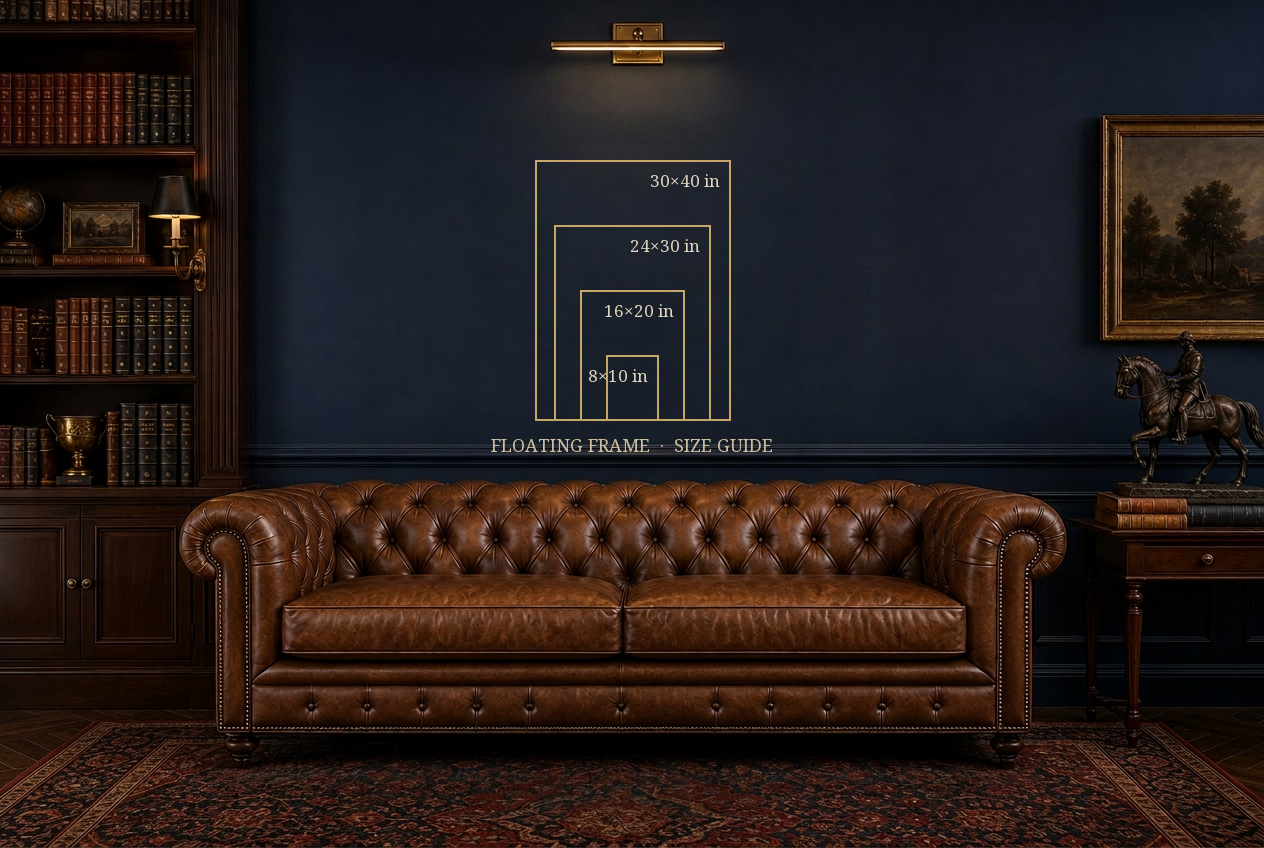
20″ x 30″ (Vertical)
Color
Espresso
The Story
The Story Behind the Painting
By 1796, George Washington was the most famous person on earth.
He had commanded the Continental Army through eight years of revolutionary war, presided over the Constitutional Convention, and served two terms as the first president of the United States — terms during which he established nearly every precedent that would define the American presidency for generations to come. He could have been king. He had been offered the equivalent. He refused, consistently and without apparent temptation, because he believed the republic he had helped build was more important than any individual who served it.
In 1796, he chose not to seek a third term — a decision so extraordinary that foreign observers genuinely could not understand it. King George III of England, upon hearing that Washington intended to return to private life at Mount Vernon, reportedly said that if Washington did what was rumored, he would be the greatest man who had ever lived.
Washington did exactly that.
Gilbert Stuart painted the Lansdowne Portrait that same year, commissioned by Senator William Bingham of Philadelphia as a gift for the Marquess of Lansdowne in England — a British statesman and friend of American independence. Stuart painted Washington from life for this commission, one of the last major portrait sittings Washington agreed to before his retirement.
Every element of the composition was chosen with deliberate symbolic intention. Washington stands in full presidential dignity — black velvet suit, powdered hair, the formal dress of the office he was about to relinquish. His right hand is extended toward the viewer, palm open — a gesture of offering and farewell simultaneously. On the table beside him lie the symbols of his presidency: documents, an inkwell, the Constitution he had helped bring into being. Through the window behind him, a stormy sky is clearing — the turbulence of the founding era giving way to the republic that would endure after him.
The chair at his left bears the American eagle — the seal of the office he held and was preparing to return to the people.
Stuart made multiple replicas of the Lansdowne Portrait, which were distributed widely and reproduced throughout the 19th century. The image became so definitive that it was chosen for the one-dollar bill — where it remains today, the most reproduced portrait in American history. The Lansdowne original is jointly owned by the National Portrait Gallery in Washington D.C. and the Pennsylvania Academy of the Fine Arts.
Why Own It
The most powerful man in America chose to give the power back. This is the portrait painted the year he did it.
The Lansdowne Portrait belongs in the American Legacy Collection as the definitive image of George Washington — not the general on horseback, not the commander crossing the Delaware, but the statesman who understood that what he did with power mattered more than the fact that he held it. The extended hand in this portrait is Washington's final and most important act of leadership — offering the republic back, intact, to the people it belonged to.
This is a piece for the executive office that understands that the measure of leadership is not how long you hold power but what you build that outlasts you. The study that draws its standard of character from the man who was offered a crown and chose retirement instead. The home that wants the founding generation represented not by their battles but by their principles.
Printed on premium cotton-poly canvas with archival-quality, Greenguard Gold certified inks, it is built to the same standard of permanence the subject deserves — color that endures, detail that holds, a frame crafted from sustainably sourced FSC-certified pine that will outlast the trends.
Part of the American Legacy Collection — a curated series tracing the arc of the American story from the colonial era through World War II. Own one chapter or collect them all.
Crafted for collectors. Built to be passed down.
Frequently Asked