The Gettysburg Address
Abraham Lincoln (American, 1809–1865)
November 19, 1863
He spoke for two minutes. The photographer never got the shot — it was over before he could focus his camera. The other speaker that day had spoken for two hours and is remembered by almost no one. Abraham Lincoln delivered 272 words on a Pennsylvania battlefield on November 19, 1863, and redefined what America was fighting for — and what it had always been meant to be. Those 272 words have never stopped echoing.
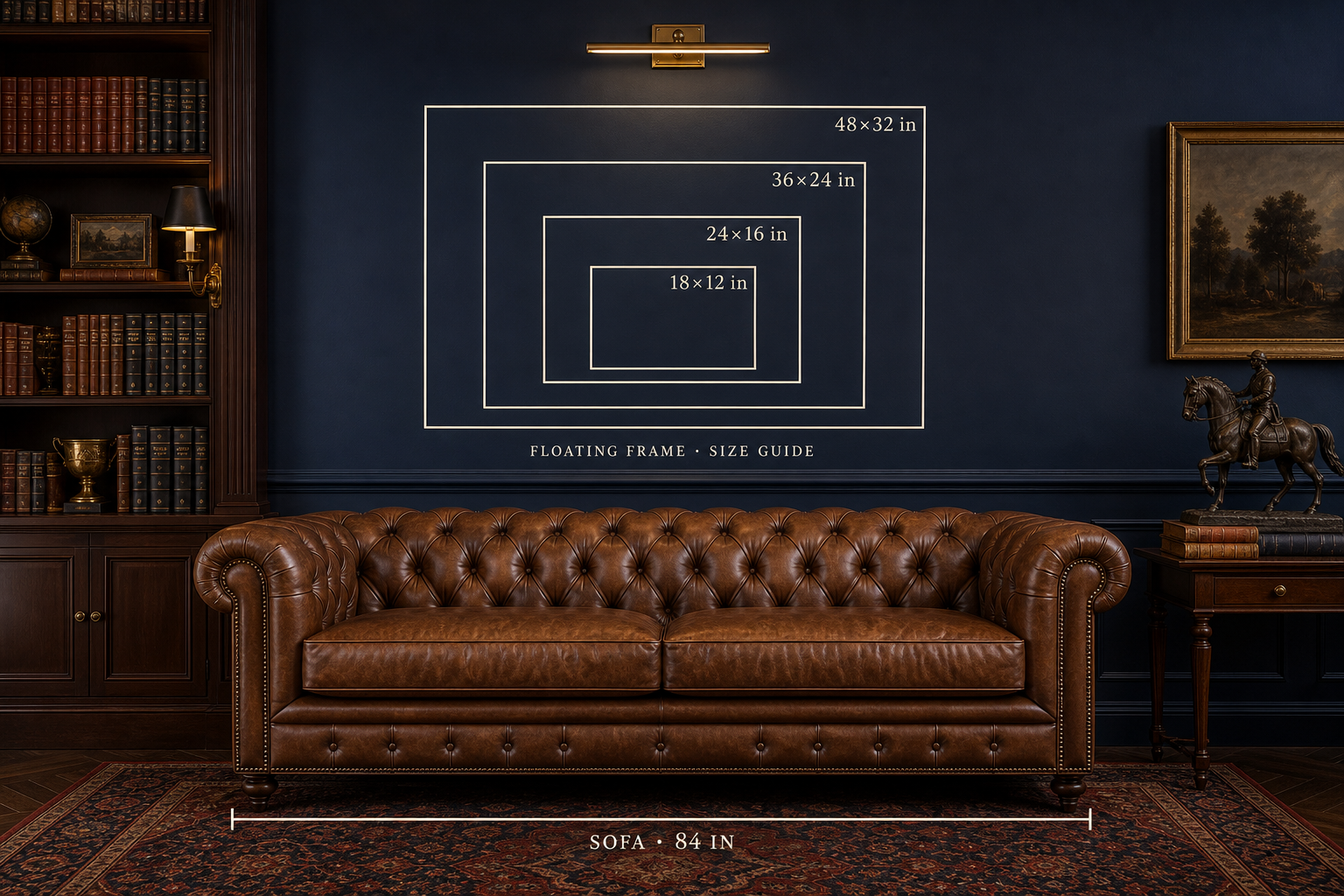
Size
24″ x 18″ (Horizontal)
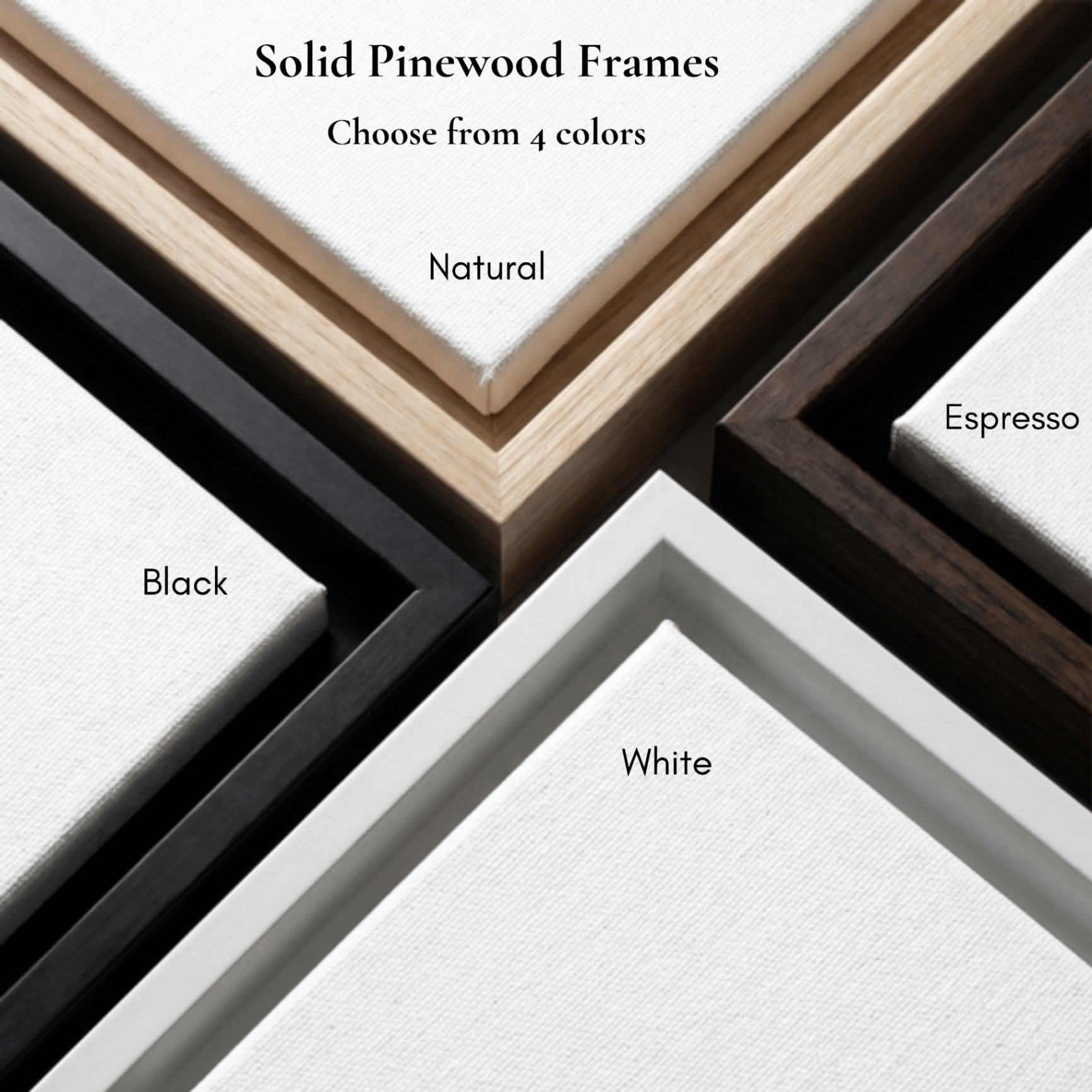
Color
Espresso
The Story
The Story Behind This Piece
The Battle of Gettysburg lasted three days in July 1863. Fifty thousand men were killed, wounded, or missing. It was the bloodiest battle ever fought on American soil — and the turning point of the Civil War.
Four months later, Abraham Lincoln came to dedicate the cemetery.
He was not the featured speaker. That honor belonged to Edward Everett — the most celebrated orator in America, a former senator, secretary of state, and Harvard president who had been preparing his address for two months. Everett spoke for two hours and thirteen minutes, delivering a polished, classical oration that was everything the occasion was expected to demand.
Then Lincoln rose.
He had written his remarks on the train, or so the legend goes. The reality is more considered — Lincoln had been drafting and revising for weeks, understanding the weight of the moment even if the audience did not yet. He spoke for approximately two minutes. Some in the crowd were still finding their positions when it was over. The photographer hired to document the event never got a clear image — the speech ended before he could focus his camera.
Edward Everett wrote to Lincoln the following day. "I should be glad," he said, "if I could flatter myself that I came as near to the central idea of the occasion in two hours as you did in two minutes."
What Lincoln had done in those two minutes was nothing less than reframe the entire meaning of the Civil War — and of America itself. The Declaration of Independence had declared that all men are created equal. The Constitution had compromised on that principle. Lincoln stood on a field of 50,000 casualties and said, simply, that those men had died so that the founding promise could finally be made real. That the war was not about union alone. It was about whether a nation conceived in liberty could live up to its own founding words.
He called it "a new birth of freedom."
Lincoln delivered five known versions of the address. The Bliss copy — considered the authoritative final version and the one from which the text on this piece is drawn — is the only one Lincoln signed and dated in his own hand. It reads not like a speech written on a train but like something distilled to its irreducible essence over weeks of thought by a man who understood exactly what the moment required.
272 words. Two minutes. The most consequential speech in American history.
Why Own It
Some speeches fill time. This one stopped it.
The Gettysburg Address belongs in the American Legacy Collection as the moral turning point of the American arc — the moment a president standing on a battlefield named what the country was truly fighting for and demanded that it live up to its own founding promise. Washington won independence. Jefferson wrote its philosophy. Lincoln stood at Gettysburg and insisted it had to mean something for everyone.
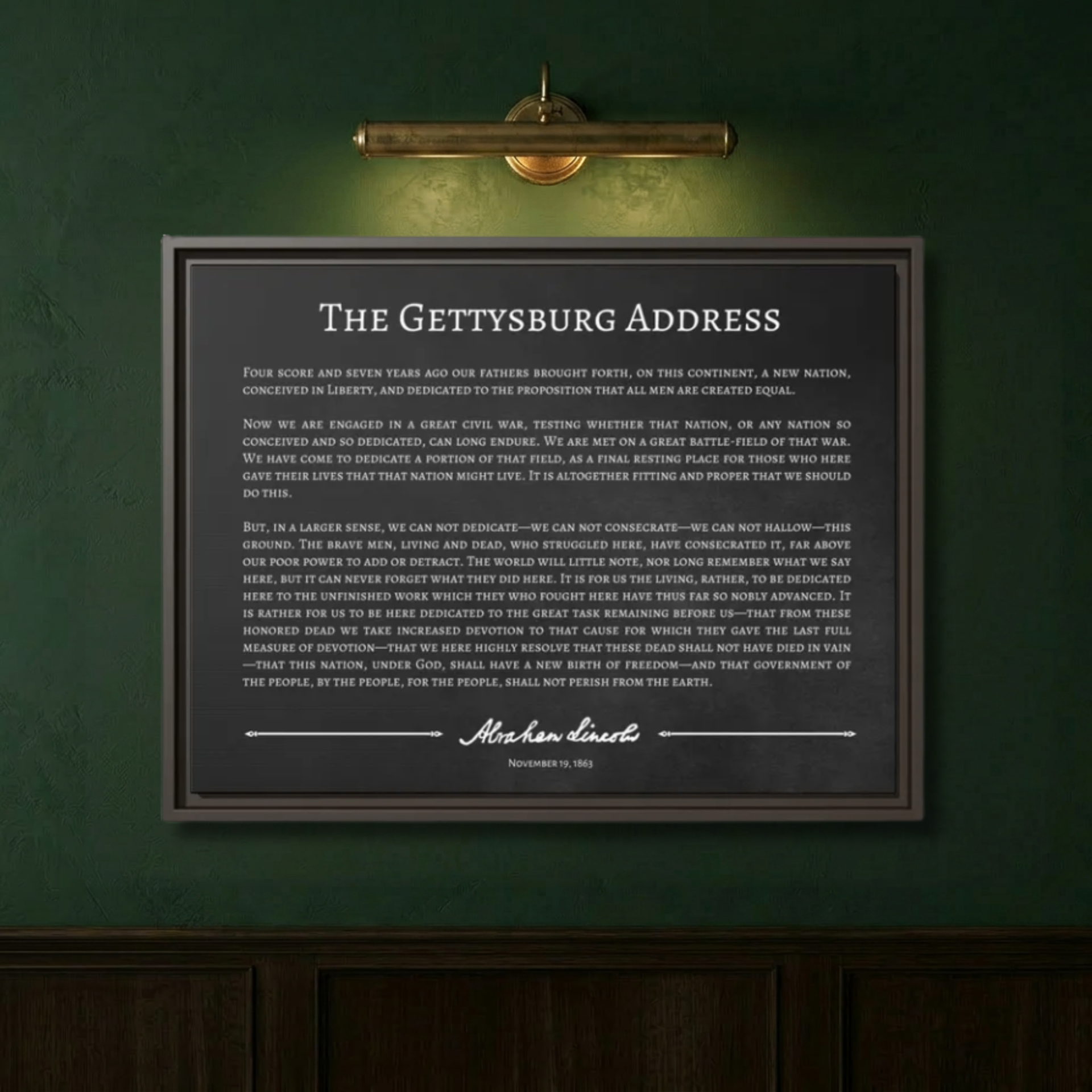
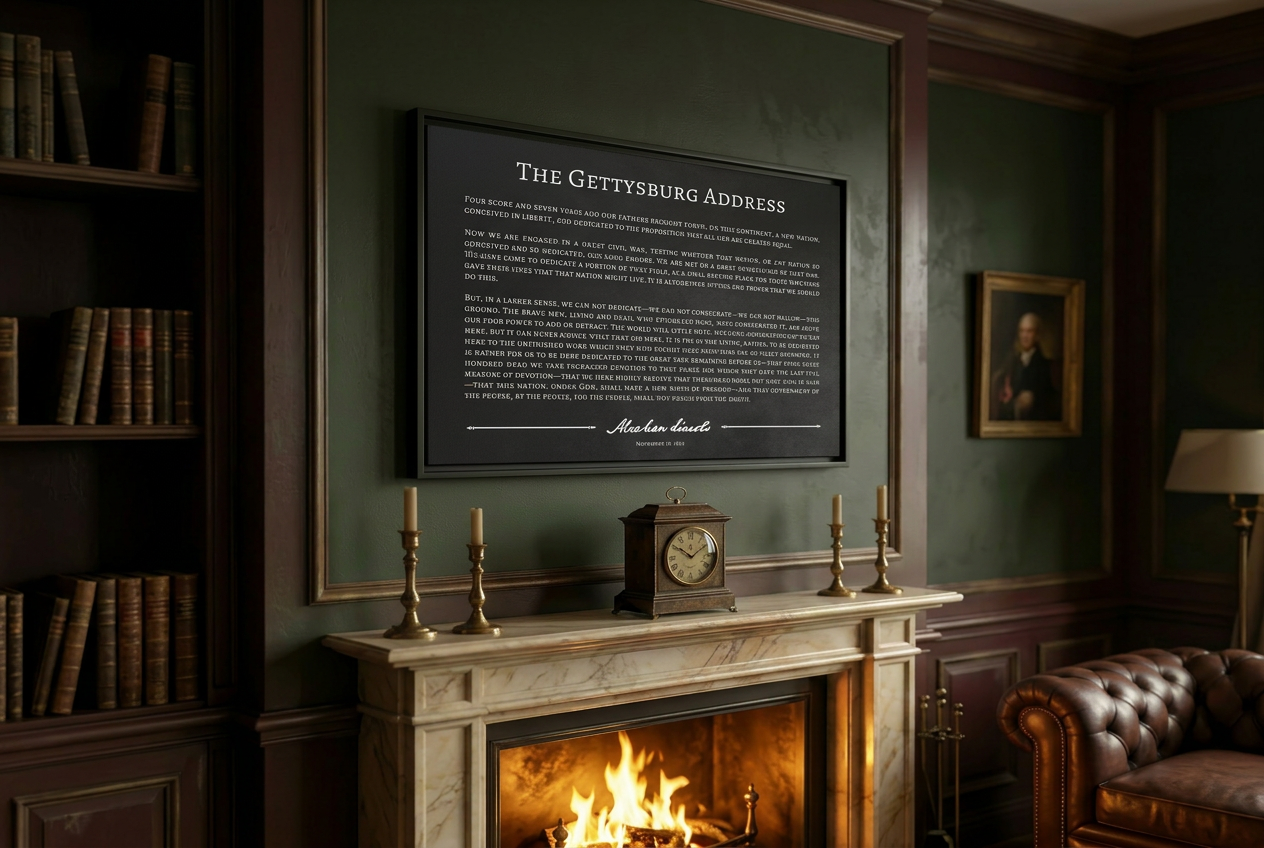
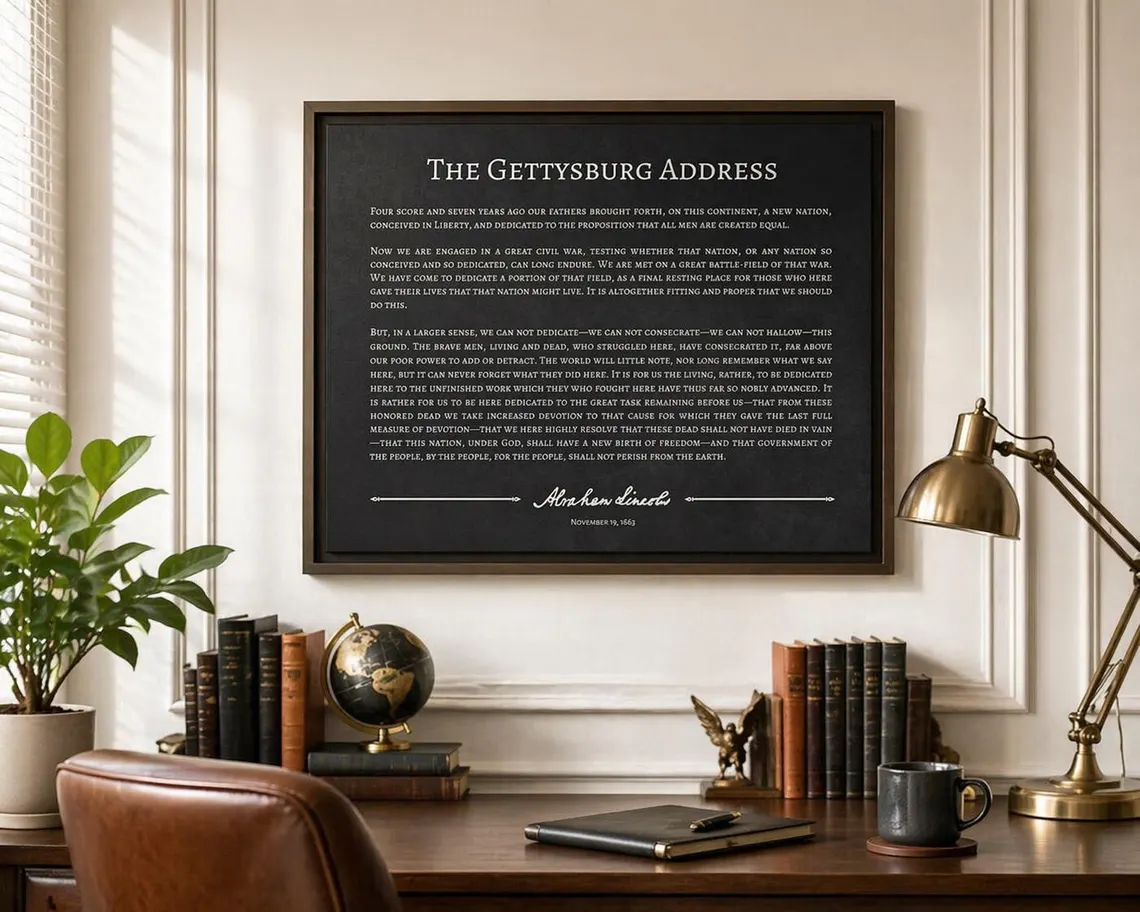
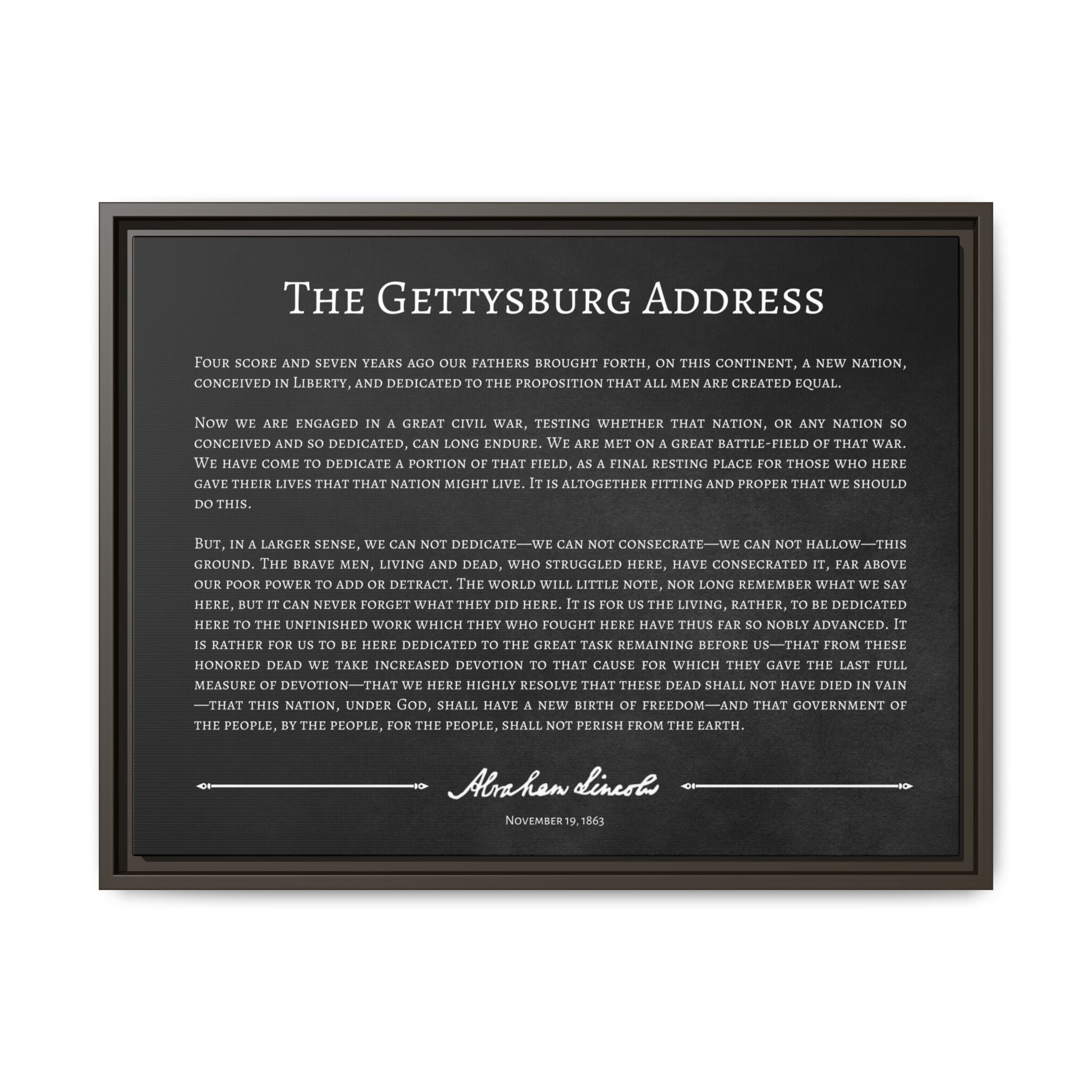
The design gives these words the visual weight they have always deserved — crisp and authoritative against deep charcoal, signed in Lincoln's own hand, dated November 19, 1863. Not decorative. Not inspirational poster. A primary source document rendered with the gravity of a piece that belongs in a serious room.
This is a piece for the study that understands that the American story is not finished — that each generation inherits an unresolved promise and is asked to carry it forward. The office that draws its sense of purpose from those who faced impossible circumstances and chose clarity over comfort. The home that wants its walls to remember what 50,000 men died for on a Pennsylvania field and what Lincoln asked the living to do about it.
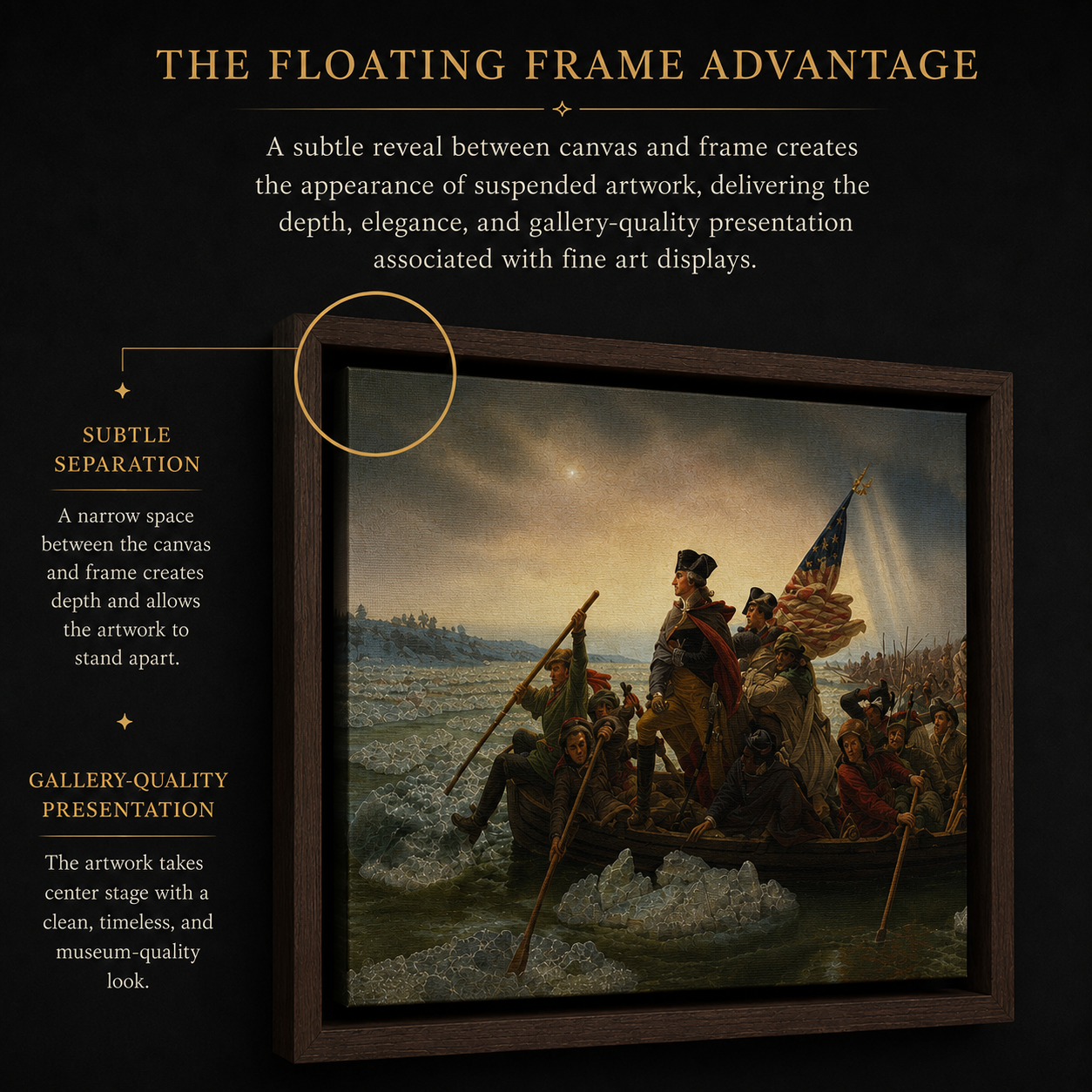
Printed on premium cotton-poly canvas with archival-quality, Greenguard Gold certified inks, it is built to the same standard of permanence the subject deserves — color that endures, detail that holds, a frame crafted from sustainably sourced FSC-certified pine that will outlast the trends.
Part of the American Legacy Collection — a curated series tracing the arc of the American story from the colonial era through World War II. Own one chapter or collect them all.
Crafted for collectors. Built to be passed down.
Frequently Asked