
The Midnight Ride of Paul Revere
Grant Wood (American, 1891–1942)
1931
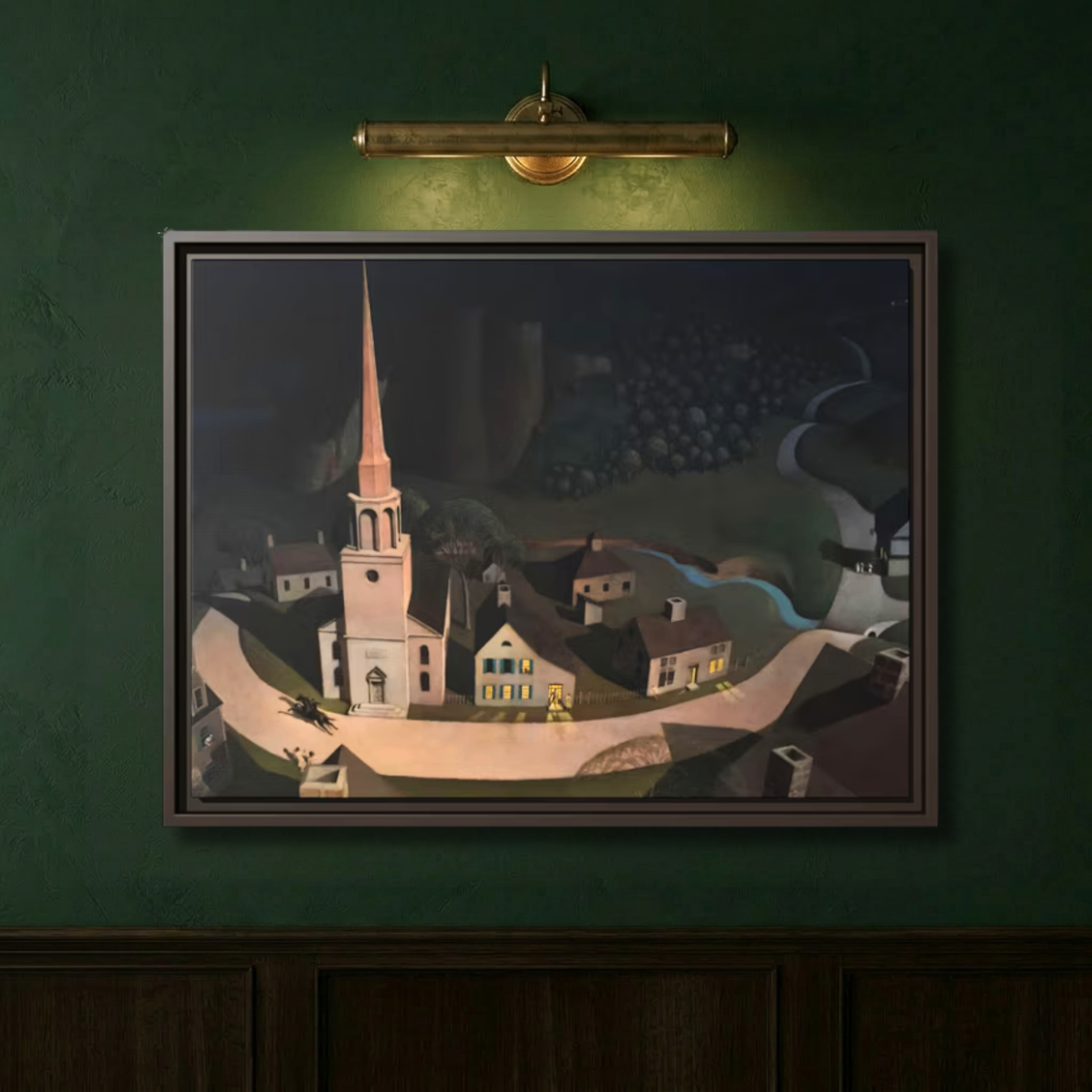
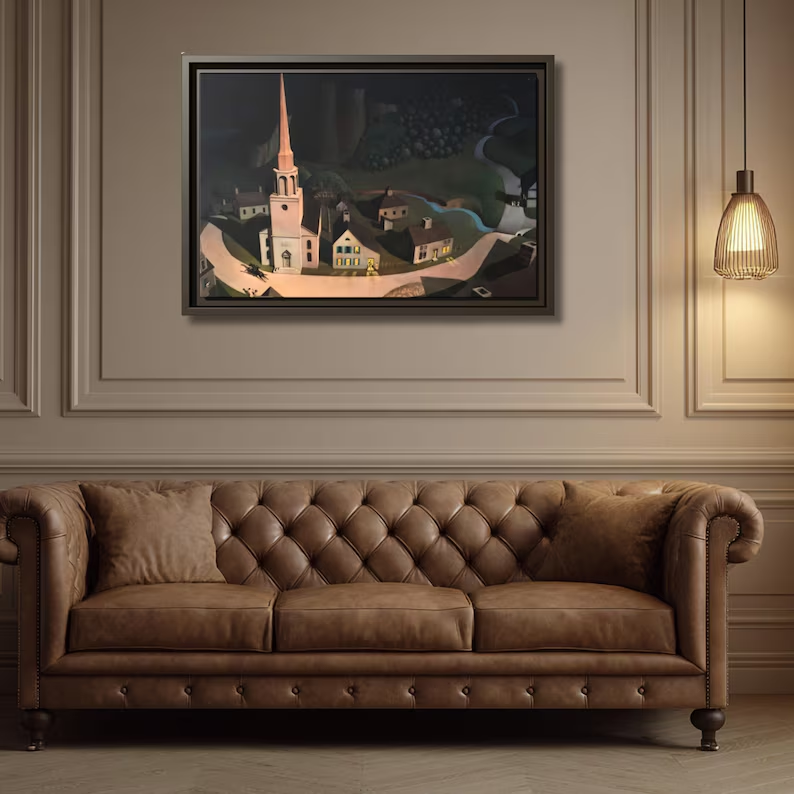
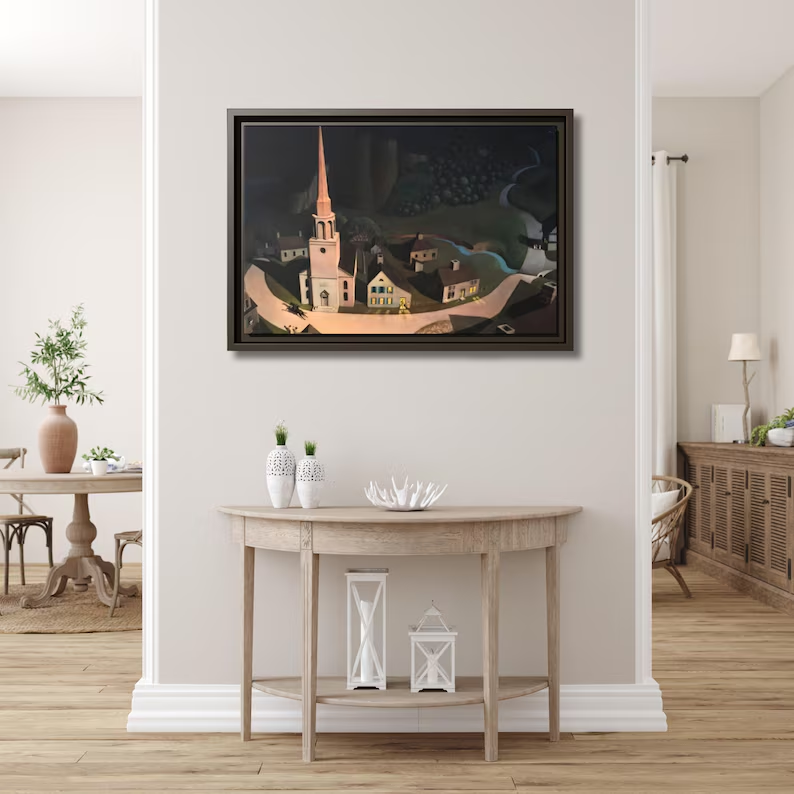
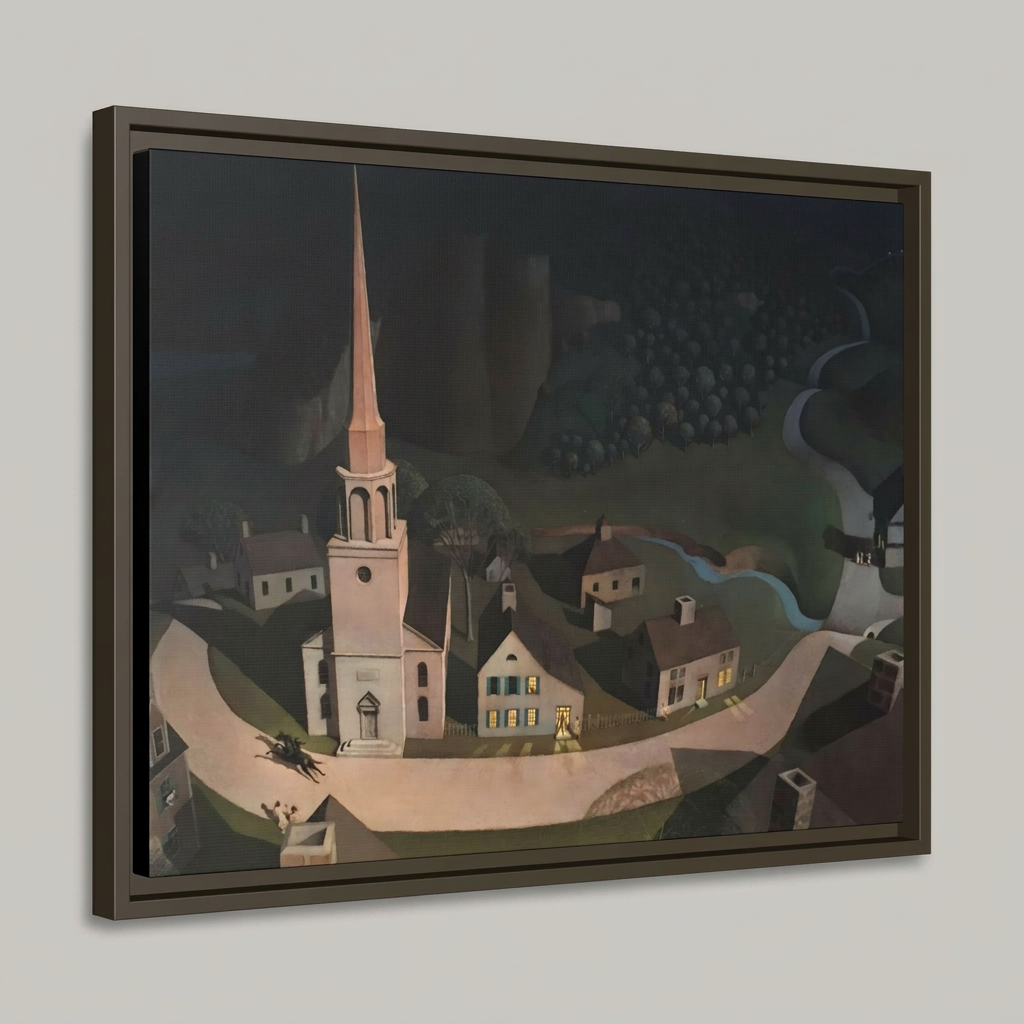
Every house in this painting is dark except one. Every road is empty except one rider. Grant Wood painted Paul Revere's midnight ride not as a dramatic close-up of a galloping horseman but as something stranger and more true — a bird's-eye view of a sleeping New England village on the verge of waking up to the first day of a revolution. The rider is tiny. The village is enormous. That is exactly the point.
Size
12" x 9" (Horizontal)
Color
Espresso
The Story
The Story Behind the Painting
On the night of April 18-19, 1775, Paul Revere rode from Boston to Lexington to warn Samuel Adams and John Hancock that British troops were marching to arrest them and seize colonial weapons at Concord.
He was not alone — William Dawes rode a different route simultaneously, and Samuel Prescott joined them later — but it was Revere's name that Henry Wadsworth Longfellow immortalized in his 1861 poem, and it was Revere's ride that entered American mythology as the moment the colonies were roused from sleep to revolution.
Grant Wood painted this scene in 1931, one hundred and fifty-six years after the ride itself, and made choices that distinguished his version from every previous treatment of the subject. Where other artists had painted Revere at the center of the frame — heroic, close-up, the drama of the galloping horse filling the canvas — Wood pulled back entirely. He painted the village from above, at night, as though looking down from a great height at something small and quiet about to become something large and loud.
The result is disorienting and beautiful in equal measure. The village is rendered in Wood's signature Regionalist style — simplified, almost toylike, the church steeple a pale pink spike against the dark sky, the houses small and geometric, the hills rolling in the background in smooth organic curves. The rider is barely visible, a tiny dark figure on a pale road threading through the sleeping town.
But that tiny figure is the whole story. Everything in the painting — every dark window, every empty road, every sleeping house — is about to change because of him.
Wood was painting this in 1931, during the early years of the Great Depression, from his home in Iowa — far from New England, far from the revolution he was depicting, looking back across a century and a half at the moment when ordinary American life was interrupted by history. There is something in the painting's quiet — the village not yet awake, the rider not yet heard — that resonates with the uncertainty of Wood's own era, when another kind of crisis was bearing down on ordinary American life.
The painting is now held in the Metropolitan Museum of Art in New York.
Why Own It
Most paintings of Paul Revere show a hero. This one shows a village about to change forever.
The Midnight Ride of Paul Revere belongs in the American Legacy Collection as its most visually distinctive piece — a painting that approaches the founding moment from an angle no other artist attempted, and in doing so captures something the close-up heroic treatments miss entirely. The Revolution did not happen to famous people in dramatic poses. It happened to villages. To sleeping houses. To ordinary people who woke up one April morning to find that the world they had gone to sleep in no longer existed.
Grant Wood understood this. He painted the rider small and the village large because the village is the subject. The rider is just the message.
This is a piece for the collector who wants something unexpected alongside the standard historical canon — a painting that makes you look twice, think differently, and see the founding moment from a perspective you haven't seen before. The study or library that values artistic originality as much as historical accuracy. The home that wants its walls to reward sustained attention rather than simply commanding it.
Printed on premium cotton-poly canvas with archival-quality, Greenguard Gold certified inks, it is built to the same standard of permanence the subject deserves — color that endures, detail that holds, a frame crafted from sustainably sourced FSC-certified pine that will outlast the trends.
Part of the American Legacy Collection — a curated series tracing the arc of the American story from the colonial era through World War II. Own one chapter or collect them all.
Crafted for collectors. Built to be passed down.
Frequently Asked