
The Bloody Massacre
Paul Revere (American, 1734–1818)
1770
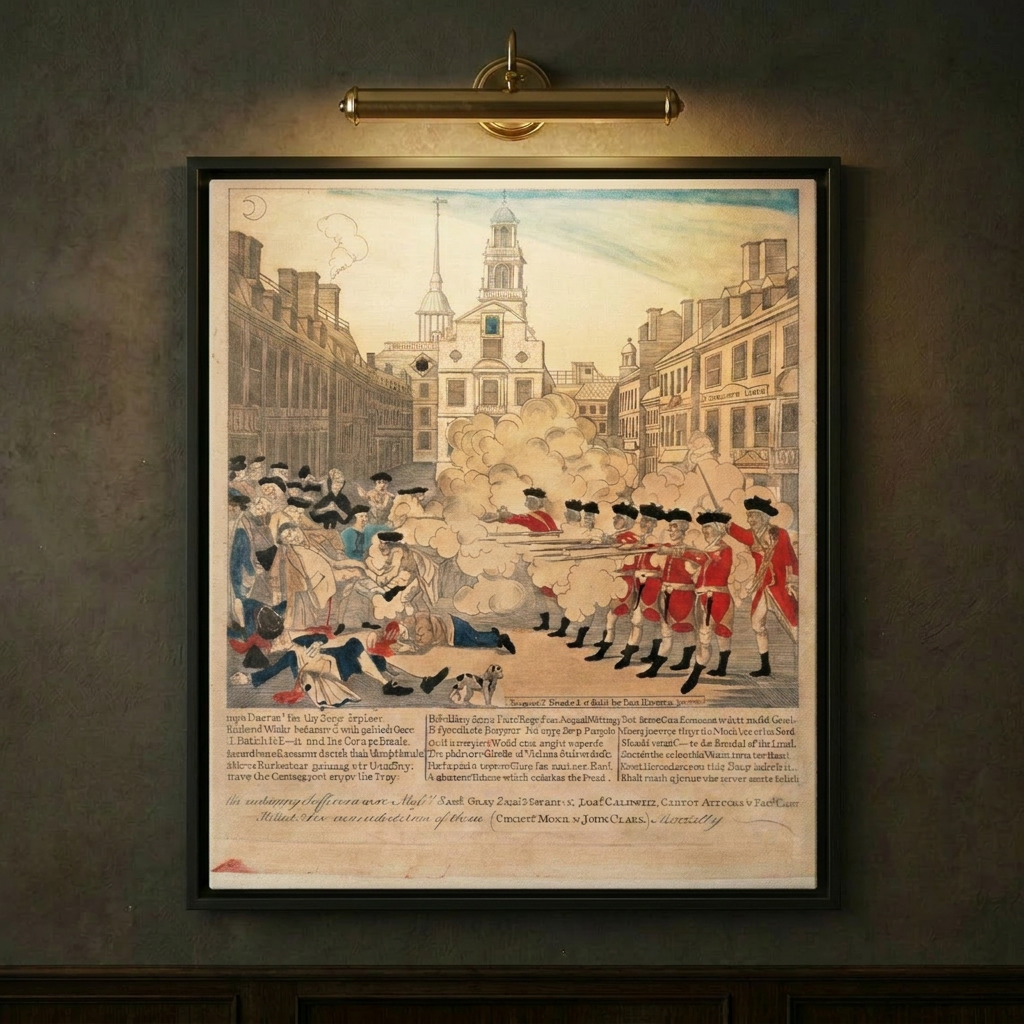
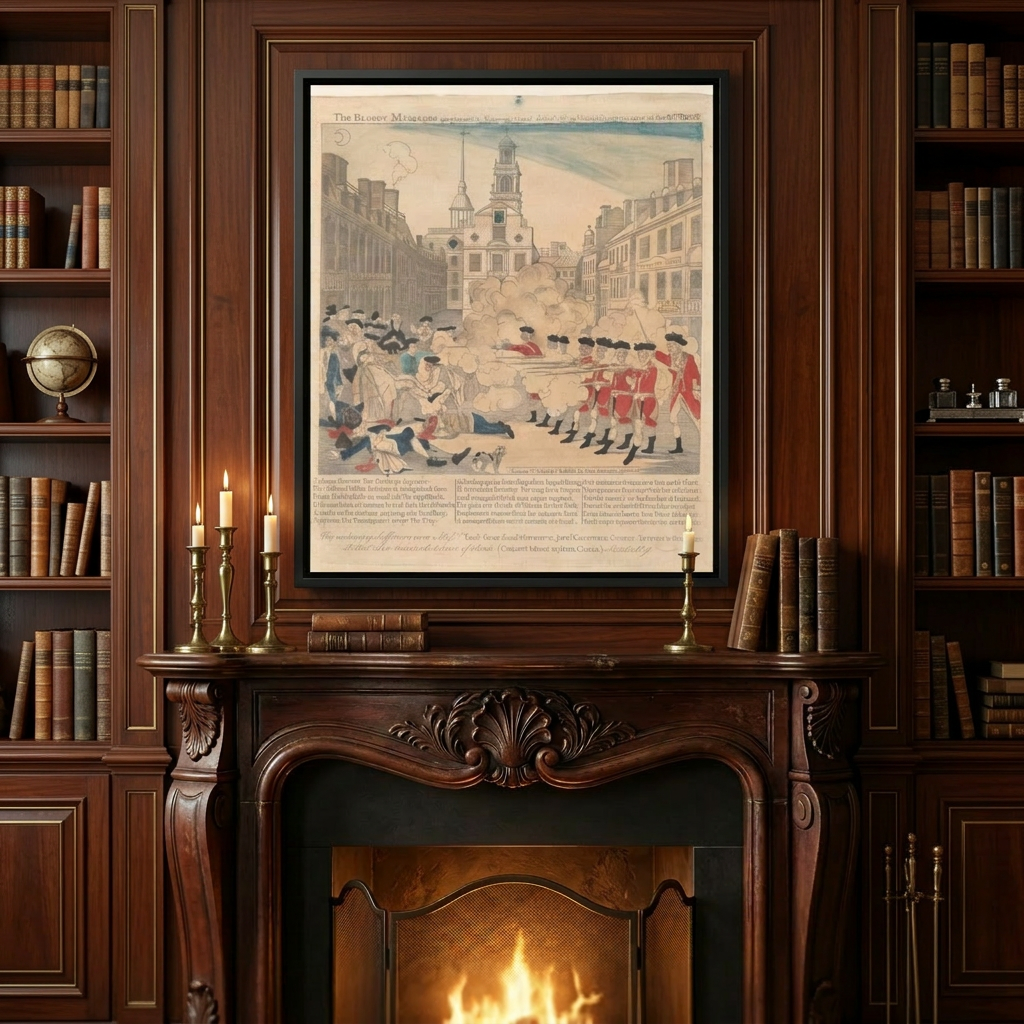
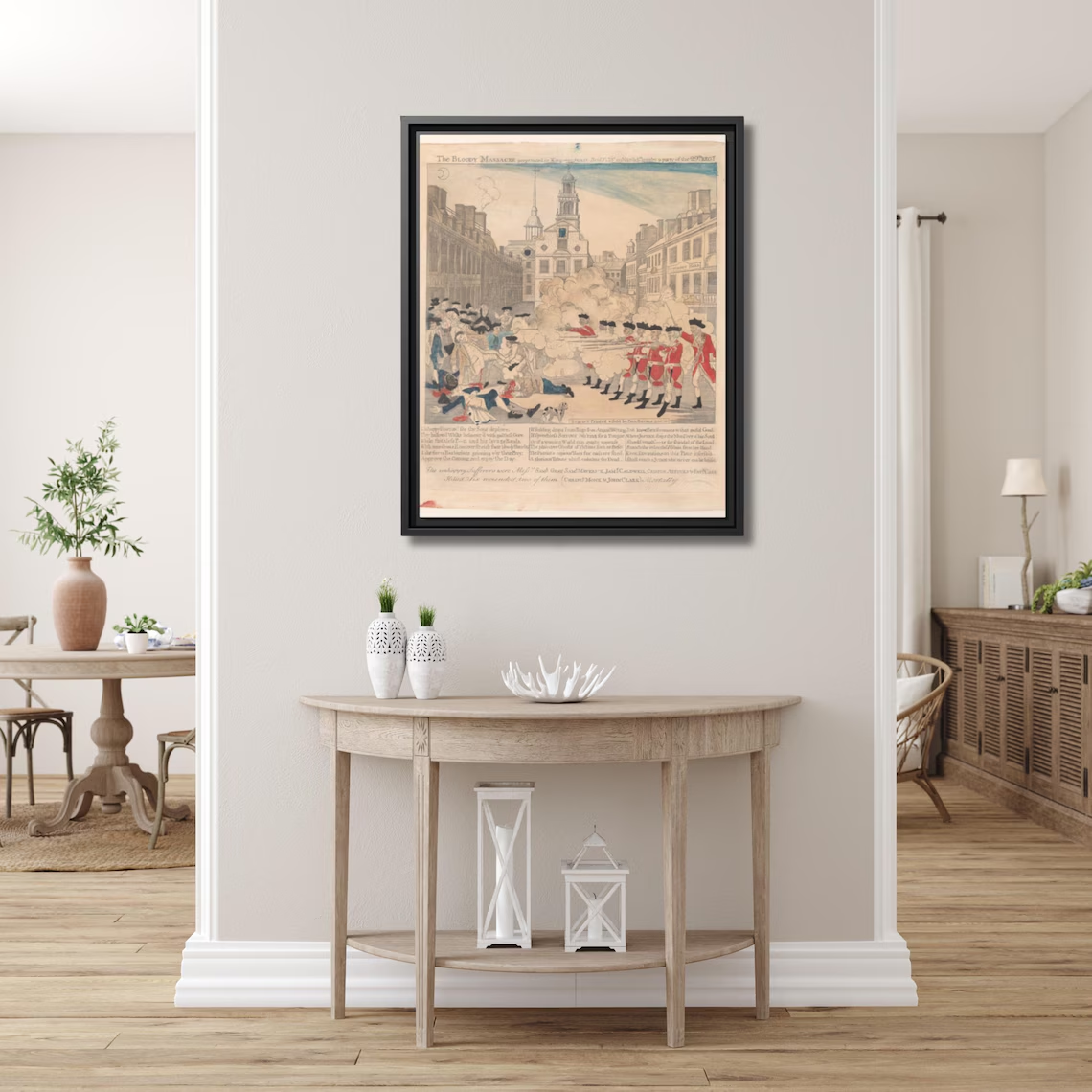
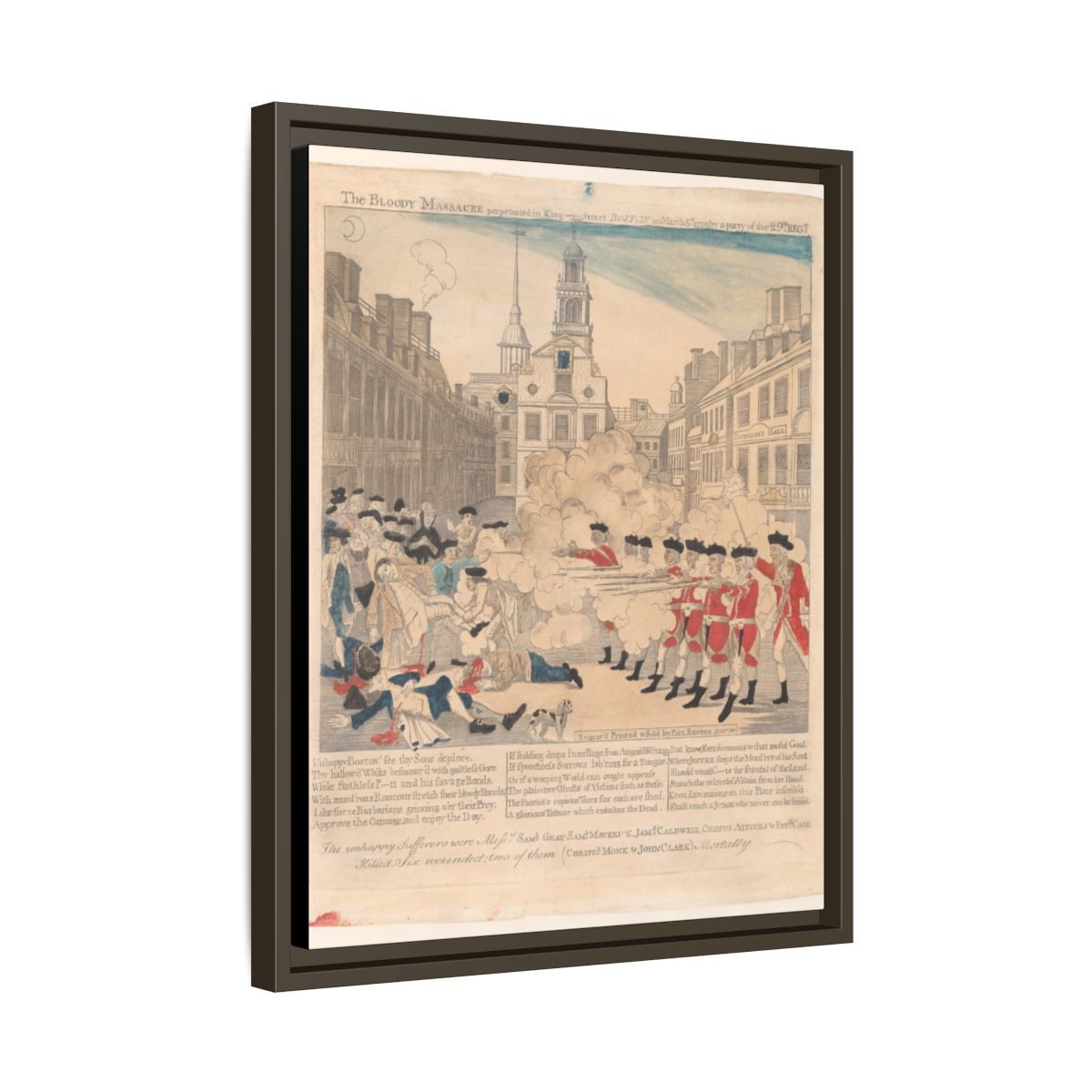
Five colonists were dead in the snow on King Street. What happened next mattered more than the event itself — because Paul Revere picked up an engraving tool, not a musket, and turned that night into the spark that lit a revolution. This is not a neutral historical record. It was never meant to be. It is one of the most effective pieces of political persuasion ever created, and it worked exactly as intended.
Size
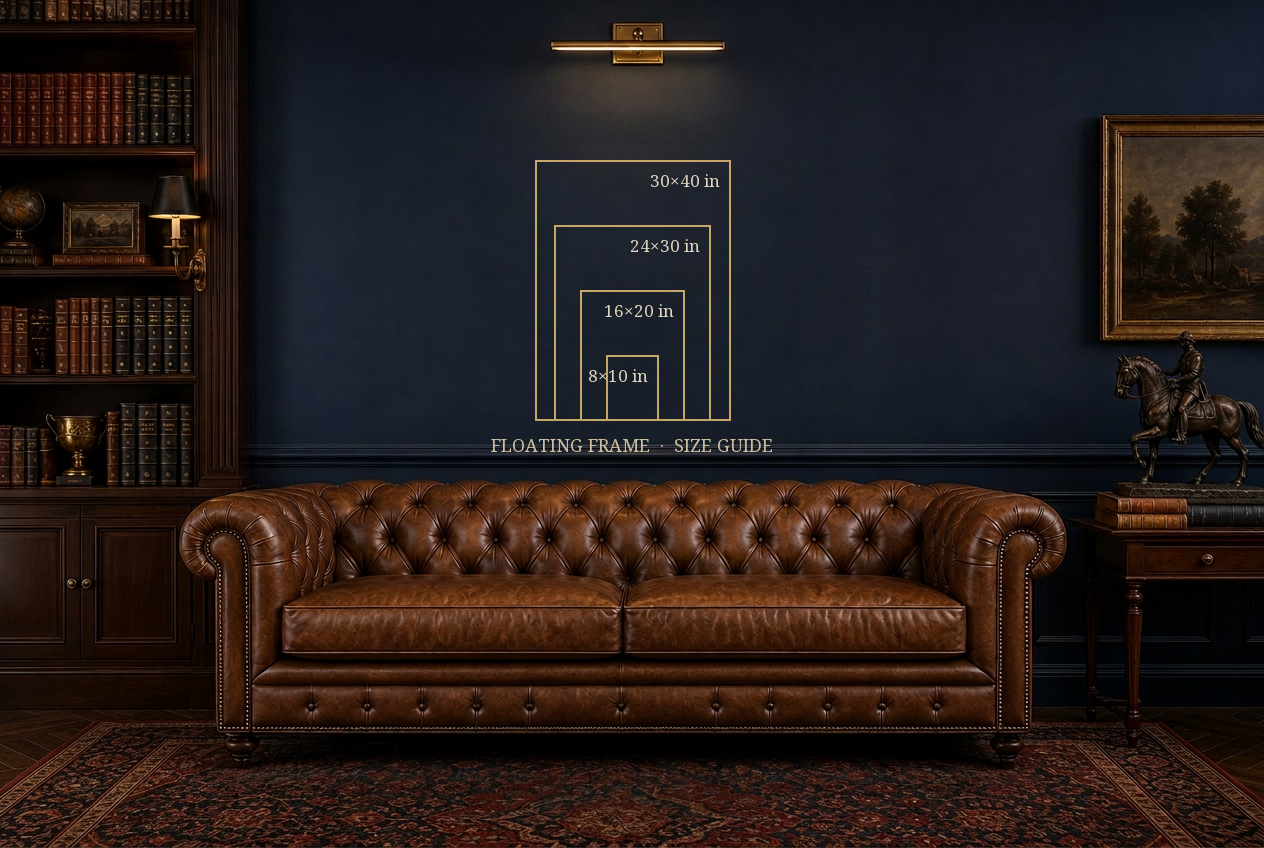
12″ x 16″ (Vertical)
Color
Espresso
The Story
The Story Behind the Painting
On the night of March 5, 1770, a confrontation between British soldiers and a crowd of Boston colonists on King Street ended with five Americans dead and six wounded. It became known as the Boston Massacre — though contemporary accounts of what actually happened that night vary considerably. The soldiers claimed they were threatened and fired in self-defense after being pelted with snowballs, ice, and stones. The colonists claimed it was an unprovoked attack on unarmed civilians.
Paul Revere did not wait to find out who was right.
Within three weeks, Revere had engraved, printed, and was selling this image across Boston — a scene depicting a disciplined line of British soldiers firing point-blank into a peaceful, unarmed crowd on direct order from an officer with his sword raised. There is no chaos in Revere's version. No confusion, no provocation, no thrown objects. Just calculated violence committed by a foreign army against innocent civilians on American soil.
It was not an accurate depiction of the event. It was something more powerful — a perfectly engineered piece of political messaging, designed to convert a confusing, contested street brawl into an unambiguous symbol of British tyranny.
Revere likely copied the composition directly from an engraving by Boston artist Henry Pelham, who had created his own version just days after the event and was reportedly furious to find Revere had beaten him to print with what was essentially the same image. The dispute over authorship is itself revealing — both men understood immediately that whoever controlled the image controlled the narrative.
The accompanying poem, printed beneath the scene, leaves no room for ambiguity: "Unhappy Boston! See thy sons deplore, thy hallowed walks besmeared with guiltless gore." The five victims are named individually — Samuel Gray, Samuel Maverick, James Caldwell, Crispus Attucks, and Patrick Carr — transforming statistics into martyrs.
The image spread through the colonies rapidly, reprinted and copied throughout New England. It became one of the most effective pieces of revolutionary propaganda in American history — not because it was accurate, but because it was unforgettable. Five years before Lexington and Concord, Paul Revere understood something that would prove essential to the American cause: that a revolution needs not just soldiers and statesmen, but image-makers who can make people feel the stakes.
He would go on to make an even more famous contribution to American independence. This engraving came first.
Why Own It
Some history is written. This history was drawn — deliberately, urgently, and with a purpose.
The Bloody Massacre belongs in the American Legacy Collection as the moment the Revolution found its first weapon that wasn't a musket — the printed image, distributed widely and designed to move hearts before minds had time to ask questions. Five years before independence was declared, Paul Revere understood that wars are won as much in public sentiment as on battlefields.
This is a piece for the collector who wants the complicated truth, not the simplified one. For the history enthusiast who understands that even the most consequential American symbols were sometimes built on persuasion as much as fact — and that understanding this doesn't diminish the Revolution, it explains how revolutions actually happen. For the study or office that values primary sources exactly as they were — urgent, partisan, and unforgettable.
Printed on premium cotton-poly canvas with archival-quality, Greenguard Gold certified inks, it is built to the same standard of permanence the subject deserves — color that endures, detail that holds, a frame crafted from sustainably sourced FSC-certified pine that will outlast the trends.
Part of the American Legacy Collection — a curated series tracing the arc of the American story from the colonial era through World War II. Own one chapter or collect them all.
Crafted for collectors. Built to be passed down.
Frequently Asked