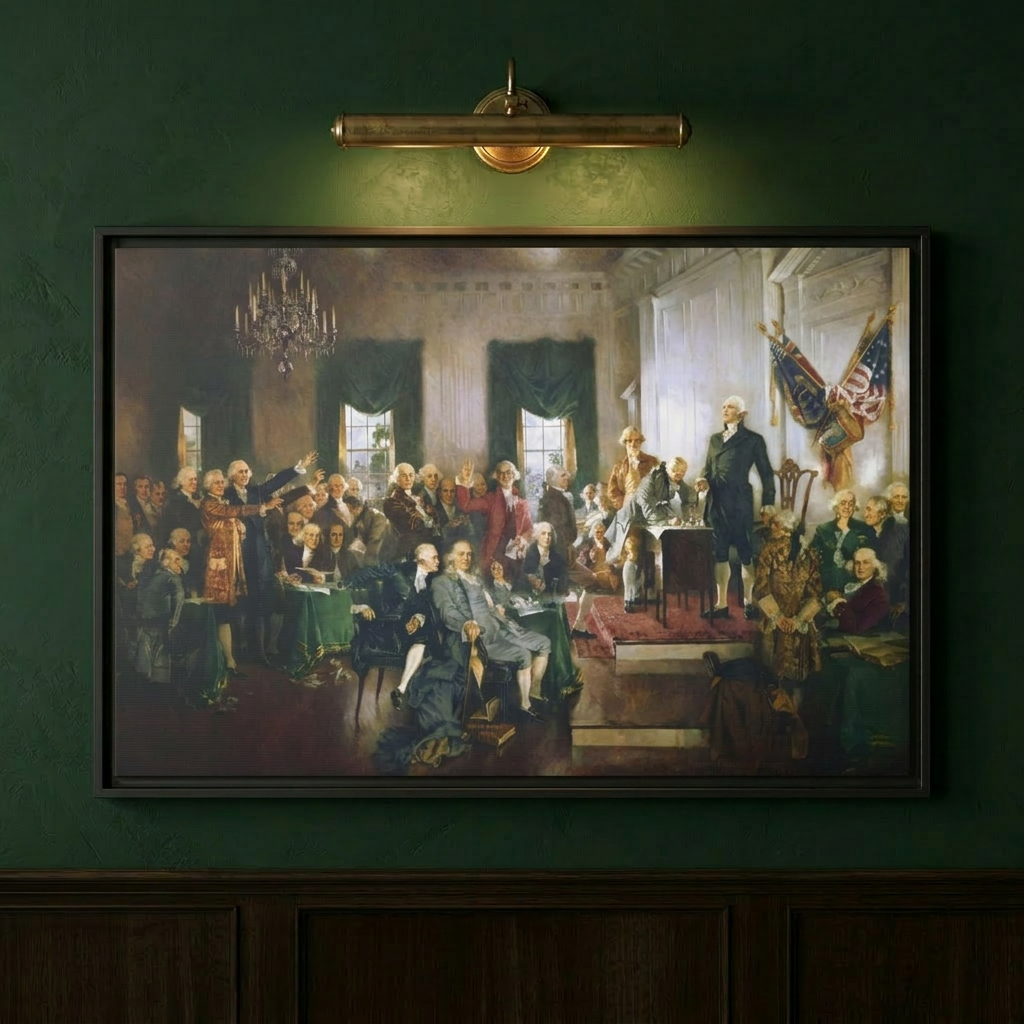
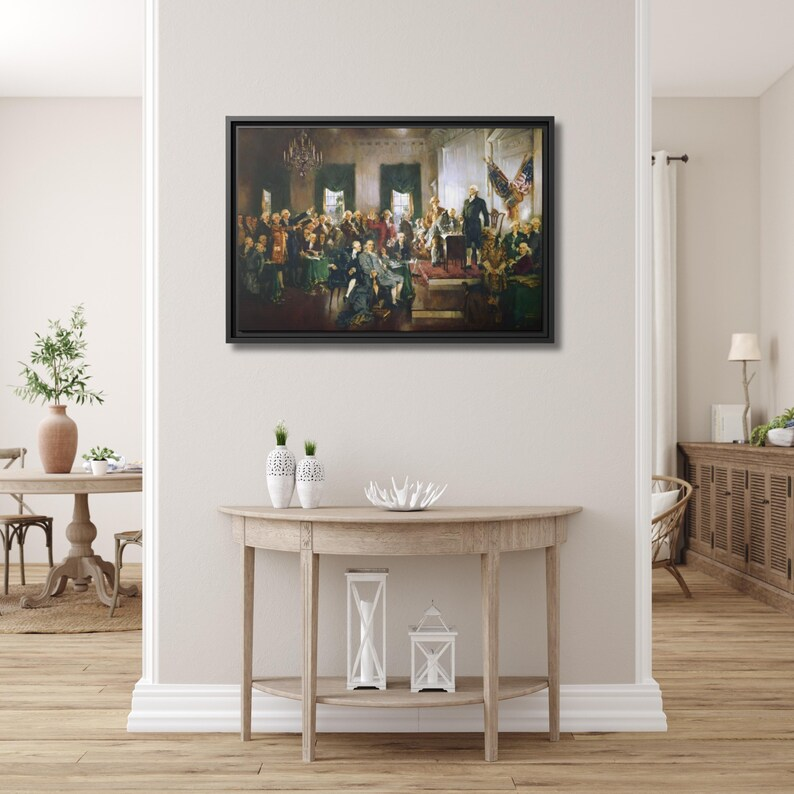
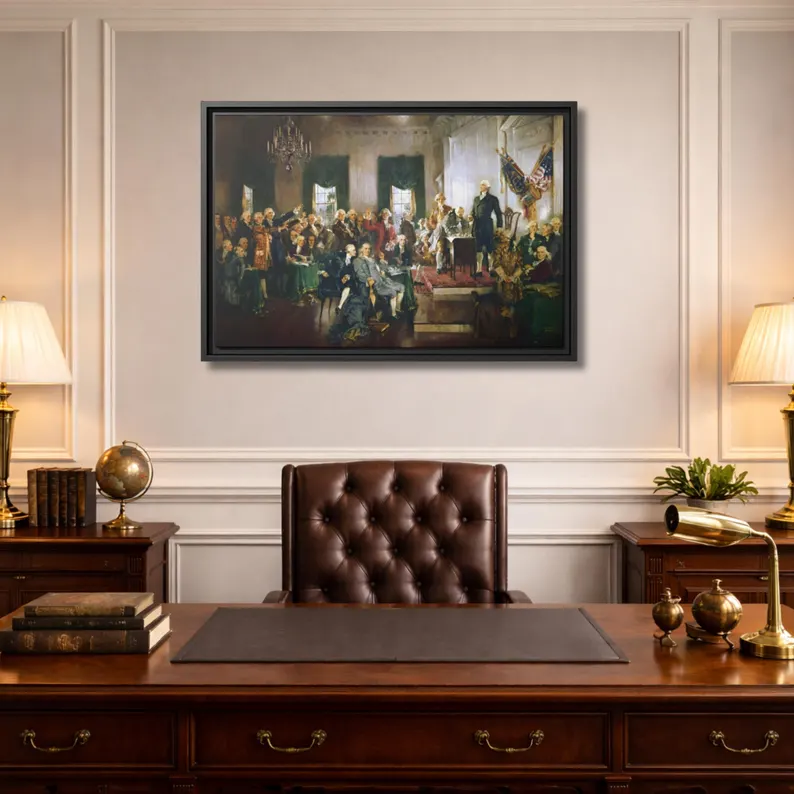
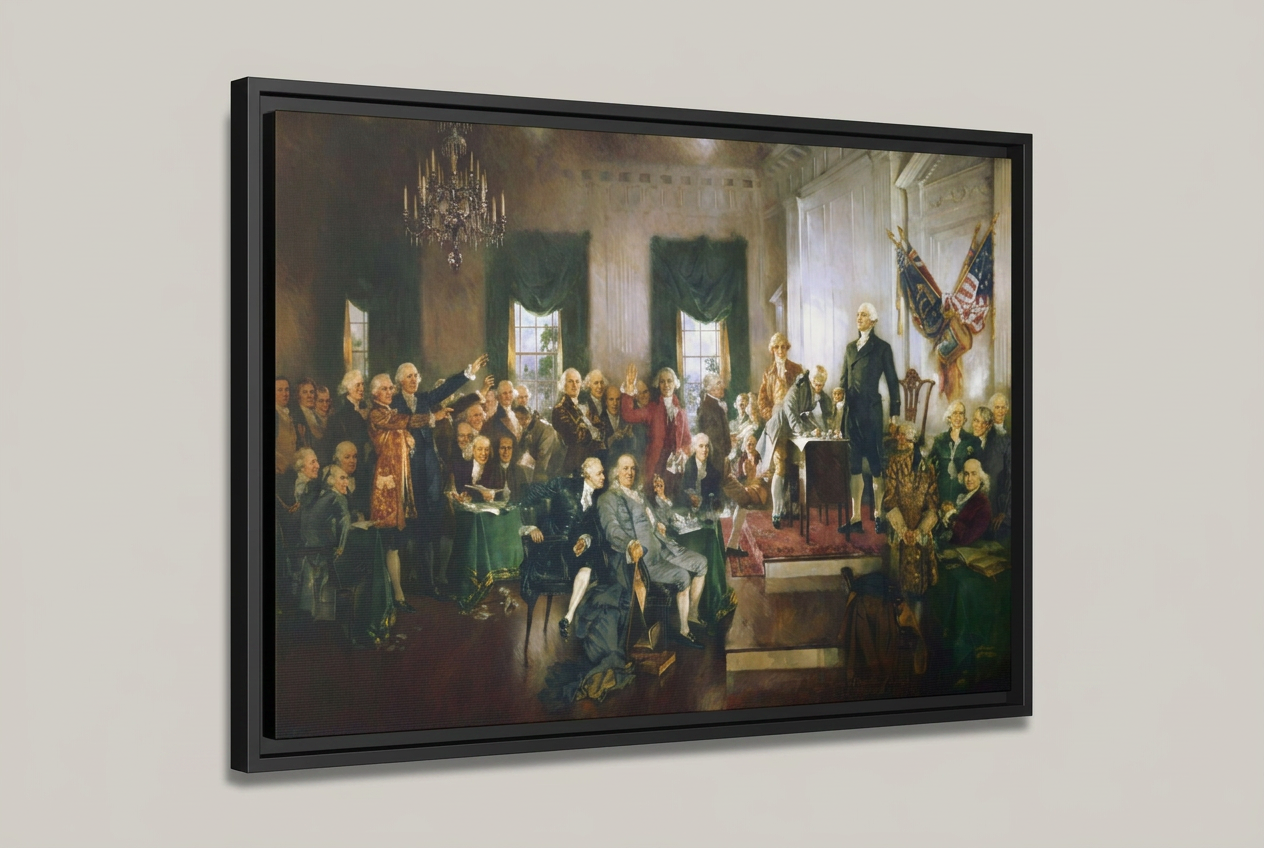

Scene at the Signing of the Constitution of the United States
Howard Chandler Christy (American, 1873–1952)
1940
The Declaration said what America would be. The Constitution decided whether it could last. On September 17, 1787 — four years after the Revolution ended and eleven years after independence was declared — thirty-nine men gathered in Philadelphia and signed the document that has governed the United States longer than any written constitution in history. Howard Chandler Christy spent three years painting this room. He understood what was at stake in getting it right.
Size
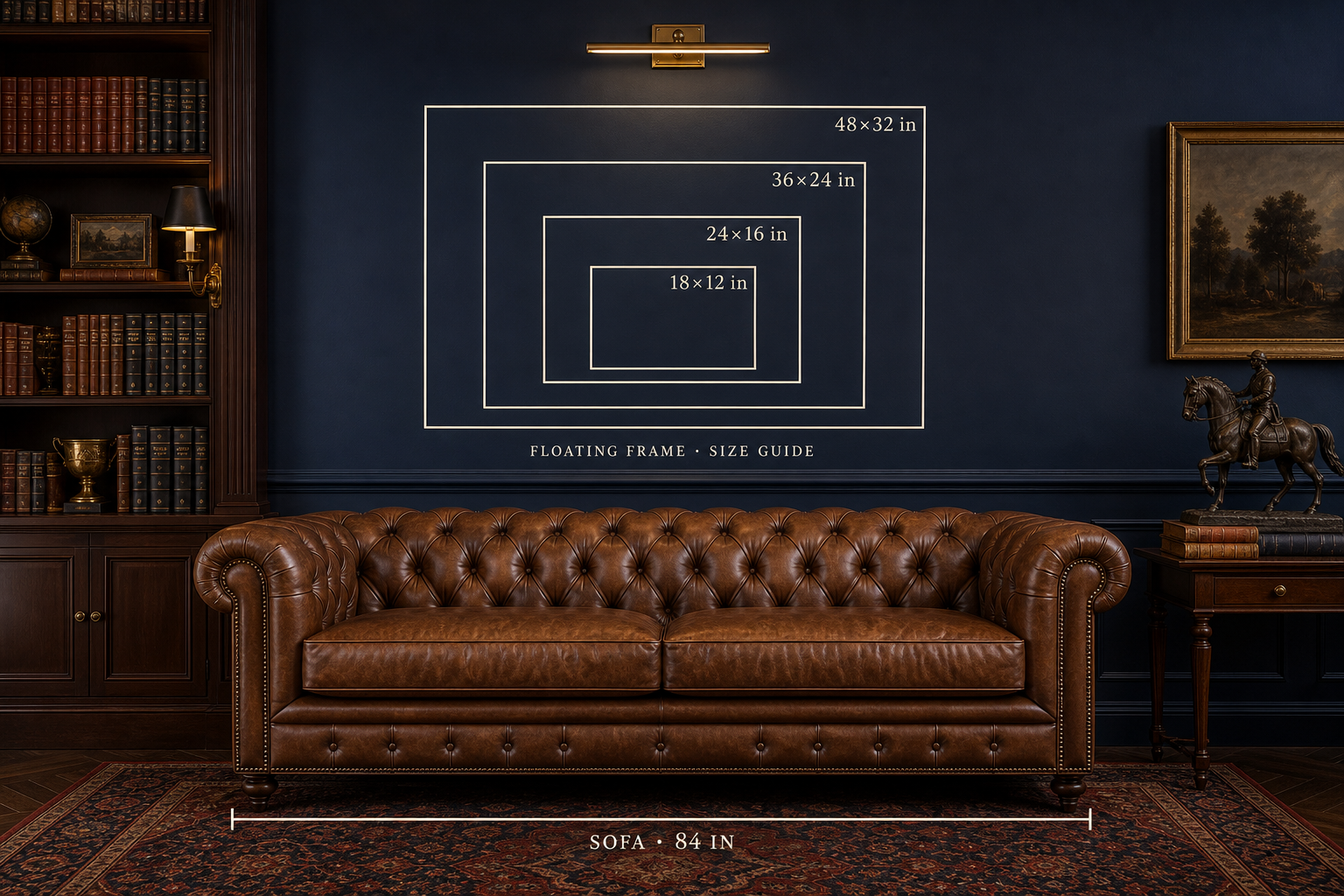
18″ x 12″ (Horizontal)
Color
Black
The Story
The Story Behind the Painting
The Revolutionary War ended in 1783. What followed was not triumph — it was crisis.
The Articles of Confederation, the young nation's first governing document, had proven disastrously inadequate. Congress had no power to tax, no power to regulate commerce, and no reliable mechanism to enforce its own laws. States were printing competing currencies, imposing tariffs on each other, and ignoring federal authority at will. In 1786, Shays' Rebellion — an armed uprising of Massachusetts farmers protesting debt collection — nearly brought the government of that state to its knees, and Congress could do nothing about it.
Something had to change. In May 1787, fifty-five delegates from twelve states gathered in Philadelphia — in the same Pennsylvania State House where the Declaration had been signed eleven years earlier — for what was officially a convention to revise the Articles of Confederation. What they produced instead was an entirely new governing document.
The debates lasted four months, conducted in sweltering summer heat behind closed windows and sealed doors, in absolute secrecy. What happened inside that room has been partially reconstructed through James Madison's meticulous notes — the most complete record of the debates — but the full texture of the arguments, the compromises, the moments of near-collapse and unexpected resolution, remains only partially visible to history.
Washington presided. He spoke rarely, but his presence — his willingness to lend his unmatched credibility to the process — was essential. Without Washington in that chair, many historians believe the convention would have failed. Franklin, at 81 the oldest delegate and too frail to stand for long periods, was carried to the sessions in a sedan chair. His closing speech, delivered on the final day, urged every delegate to set aside his objections and sign regardless of reservations — because no document produced by human beings would ever be perfect, and this one was as good as human beings were likely to produce.
Thirty-nine of the fifty-five delegates who had attended signed on September 17, 1787. Three refused. The Constitution then went to the states for ratification — a process that took two more years and required the addition of the Bill of Rights before enough states would agree.
Howard Chandler Christy painted this scene in 1940, commissioned by Congress to hang in the United States Capitol. He spent three years on the work, conducting meticulous historical research to ensure the accuracy of every face and figure. The finished painting measures twenty by thirty feet — one of the largest oil paintings in the Capitol — and has hung in the House of Representatives wing ever since.
Washington stands at the podium, presiding as he had throughout the convention. Franklin sits prominently at center — the elder statesman who had seen more of American history than anyone else in the room and who understood, perhaps better than anyone, what it meant that this document existed at all.
Why Own It
The Declaration announced what America intended to be. This document decided whether it would survive long enough to find out.
The Signing of the Constitution belongs in the American Legacy Collection as the bridge between revolution and republic — the moment the founding generation moved from declaring independence to actually building a government capable of securing it. Without this room, without these thirty-nine signatures, the United States as we know it does not exist. The Declaration would have been a beautiful failure.
This is a piece for the study that understands that building something lasting is harder than winning the battle to start it. The office that values the unglamorous work of governance and compromise that turns ideals into institutions. The home that wants the complete American story — not just the spark but the structure that kept it burning.
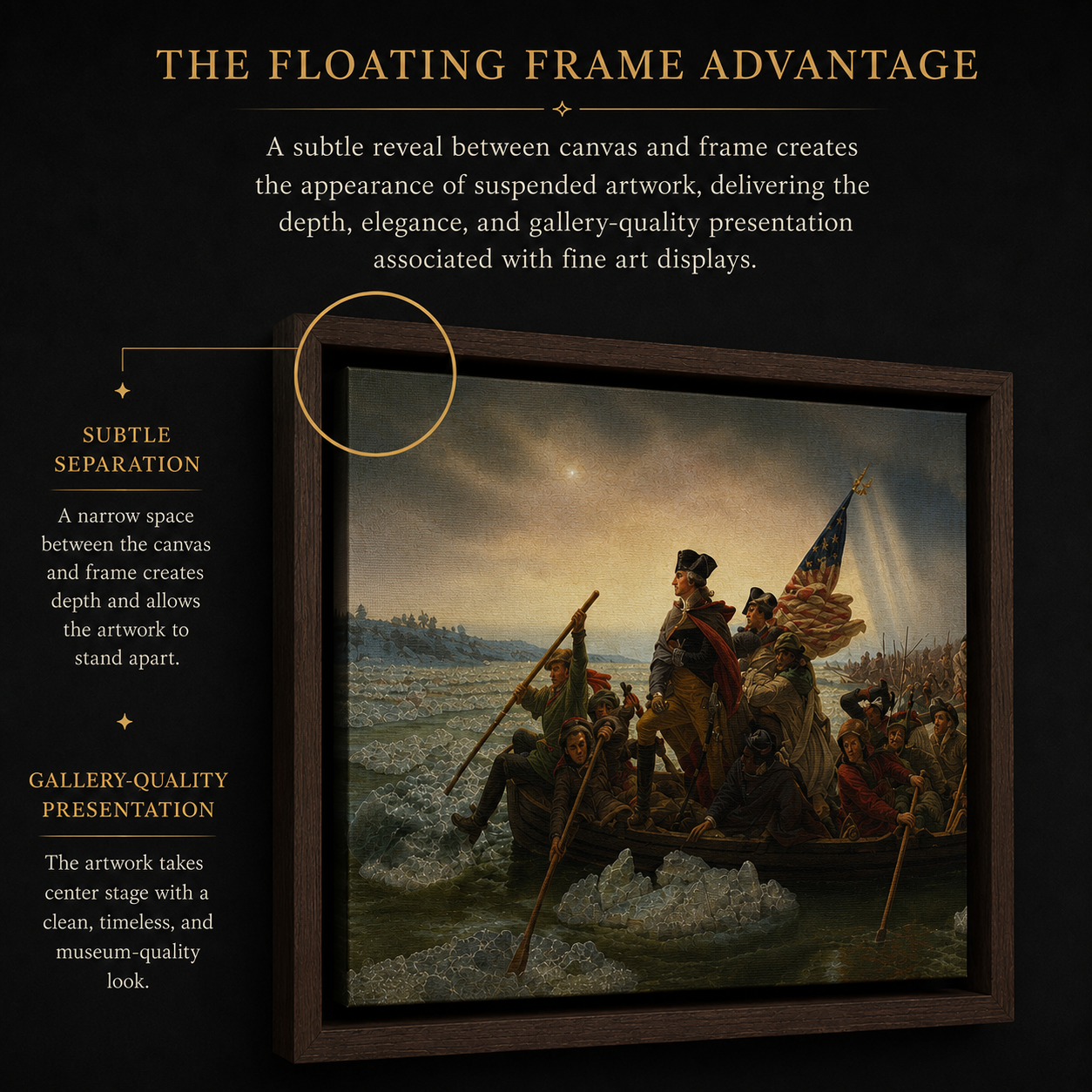
Printed on premium cotton-poly canvas with archival-quality, Greenguard Gold certified inks, it is built to the same standard of permanence the subject deserves — color that endures, detail that holds, a frame crafted from sustainably sourced FSC-certified pine that will outlast the trends.
Part of the American Legacy Collection — a curated series tracing the arc of the American story from the colonial era through World War II. Own one chapter or collect them all.
Crafted for collectors. Built to be passed down.
Frequently Asked