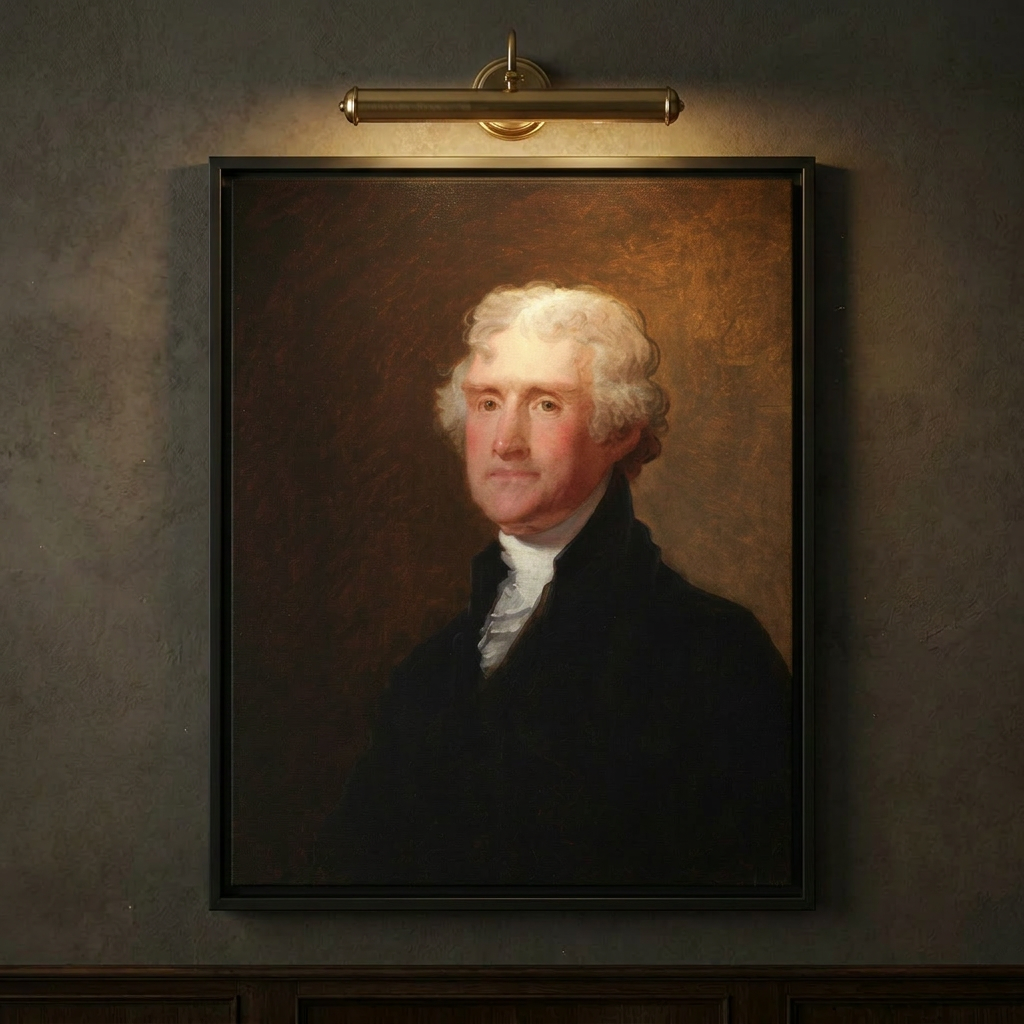
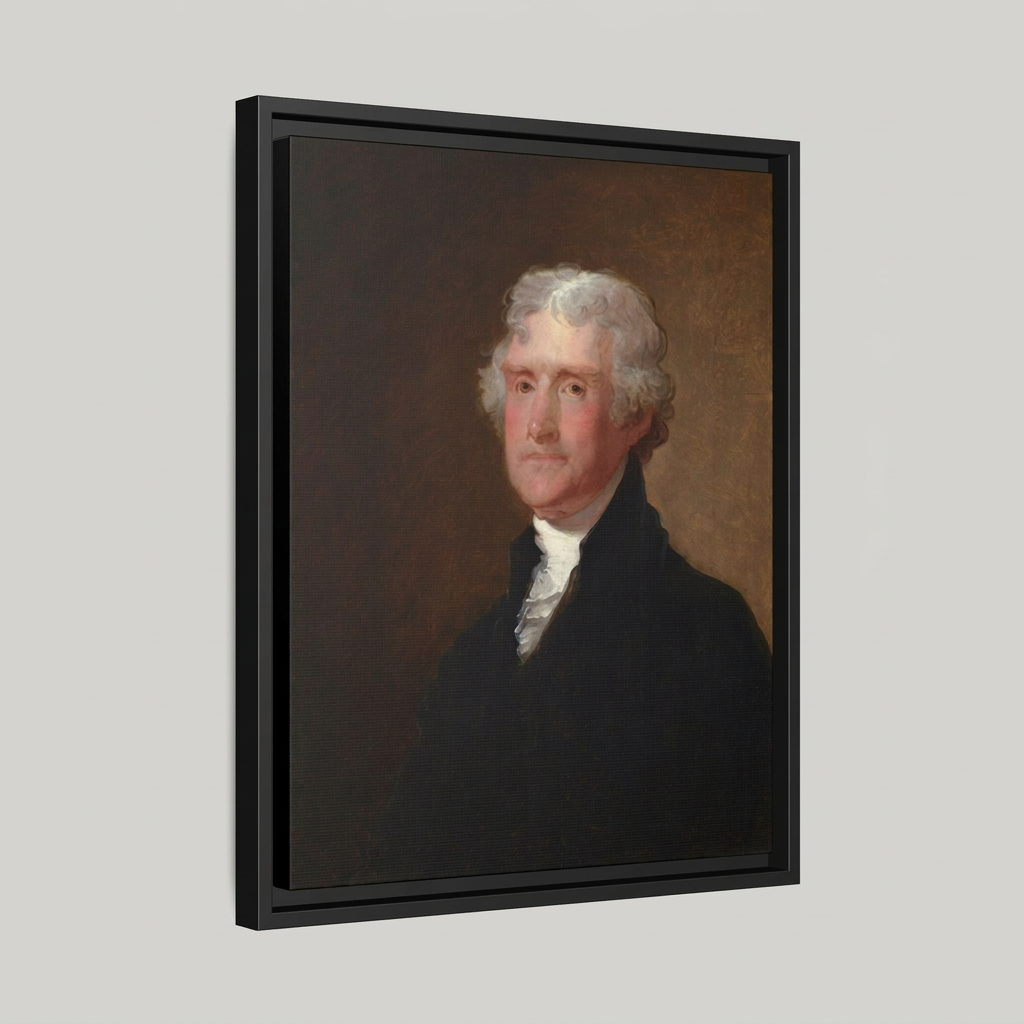

Thomas Jefferson
Rembrandt Peale (American, 1778–1860)
1805
He wrote the words that became a nation's founding promise, then spent the rest of his life wrestling with how imperfectly America lived up to them. Architect, scientist, diplomat, president — but first and always, the man who believed self-evident truths could reorder the world. This is Thomas Jefferson as Rembrandt Peale painted him: thoughtful, weathered, and entirely human.
Size
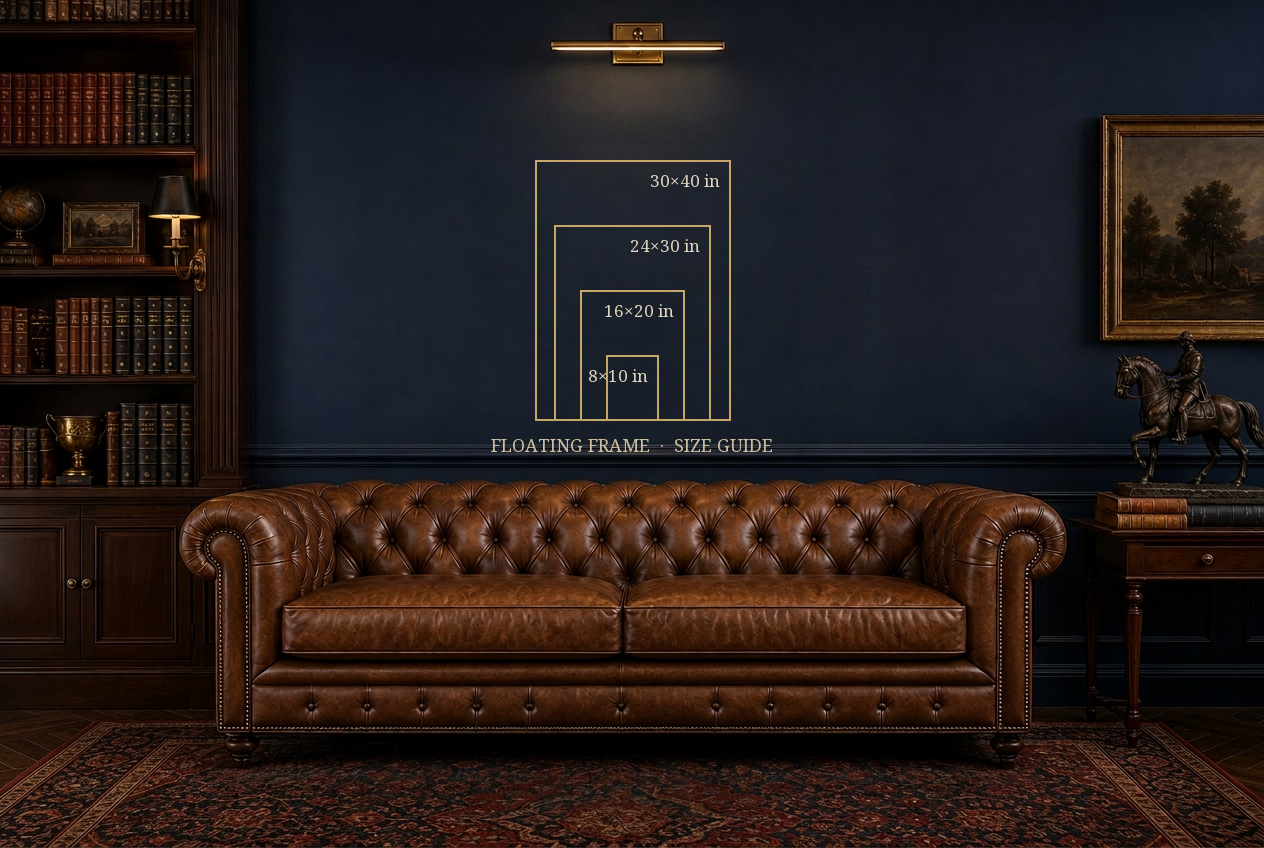
8″ x 10″ (Vertical)
Color
Black
The Story
The Story Behind the Painting
By the time Rembrandt Peale painted this portrait in 1805, Thomas Jefferson was no longer the 33-year-old lawyer who had written the Declaration of Independence in a rented Philadelphia room. He was President of the United States, in the middle of his first term, having just doubled the size of the country through the Louisiana Purchase and dispatched Lewis and Clark to map what lay beyond it.
Peale was the son of Charles Willson Peale, the celebrated painter who had captured Washington decades earlier, and Rembrandt had grown up in a family devoted almost entirely to preserving the likenesses of the founding generation before time took them. He traveled to Washington specifically to paint Jefferson from life — a privilege not every artist of the era received, as Jefferson found the process of sitting for portraits tedious and granted it sparingly.
What Peale captured was not a formal, idealized statesman but a man visibly marked by experience. The portrait shows Jefferson at 62 — silver-haired, weathered, his expression somewhere between weariness and quiet conviction. This was not the optimistic young revolutionary of 1776. This was a man who had spent three decades in public service, who had buried a wife and several children, who had wrestled publicly and privately with the contradiction between the principles he had written and the institution of slavery he had never fully reconciled with them.
Jefferson himself was a study in contradiction that historians still debate today — the author of "all men are created equal" who held people in bondage throughout his life. Peale's portrait does not resolve that tension. It simply presents the man as he was in 1805: complicated, consequential, and entirely real.
The portrait remains one of the most reproduced images of Jefferson, used on currency, in textbooks, and in institutions across the country as the visual shorthand for the third president. It endures not because it flatters him, but because it captures something true — a man who reshaped the world through ideas while remaining, in the end, only a man.
Why Own It
Some portraits commemorate power. This one commemorates a mind.
This piece belongs in the American Legacy Collection as a reminder that the Declaration's words came from a specific person — brilliant, flawed, and consequential in ways that still shape the country today. Jefferson's portrait sits naturally alongside the document he wrote and the words that have outlived every contradiction in the man who authored them.
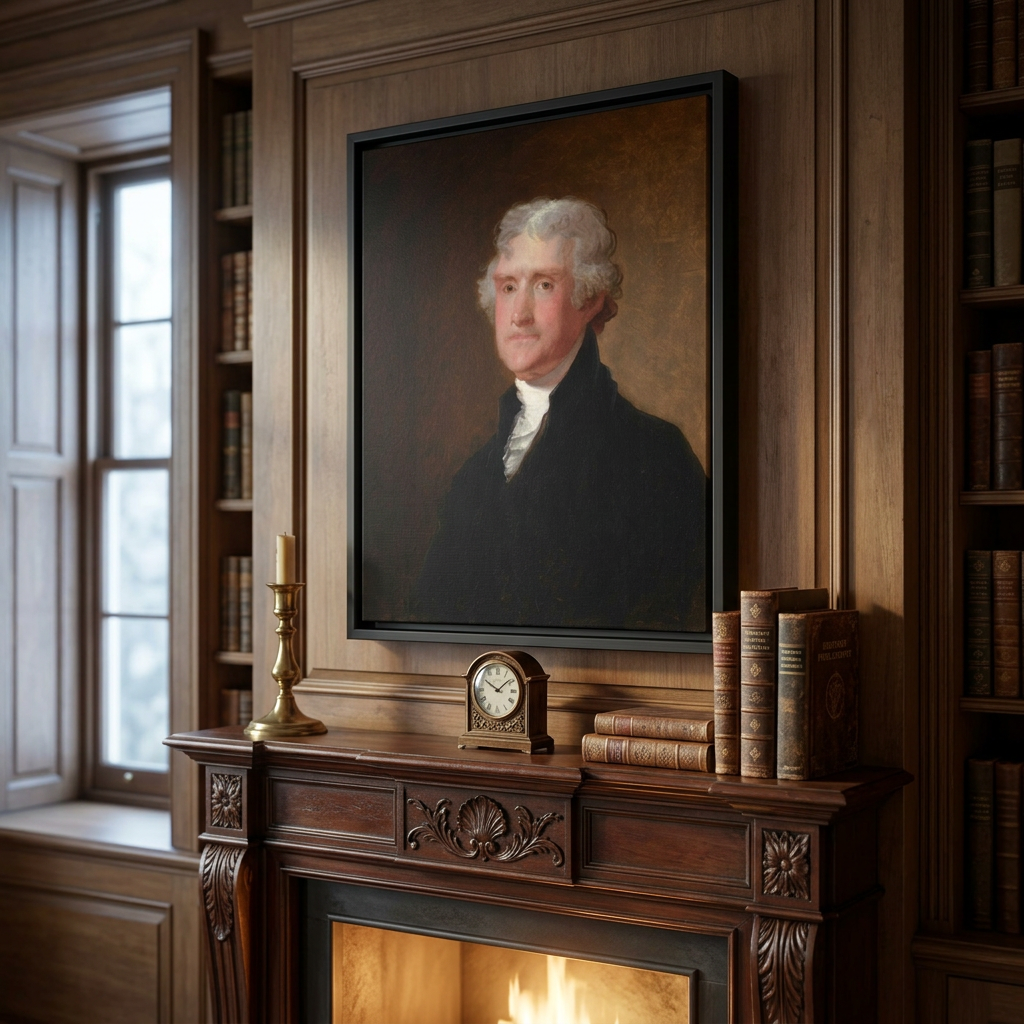
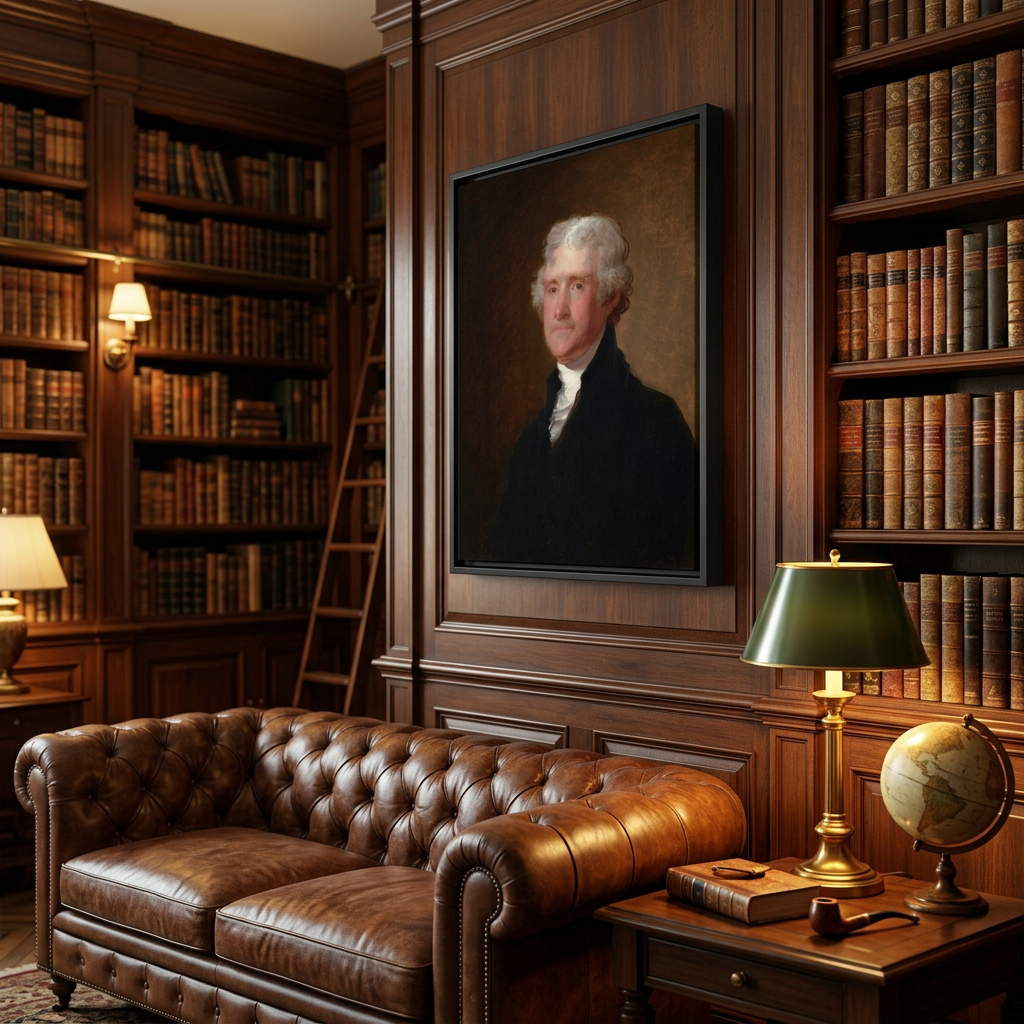
This is a piece for the study where ideas are taken seriously, the library that honors intellectual legacy alongside historical memory, and the home that wants to remember the founders not as marble statues but as the complicated, brilliant, and imperfect people they actually were.
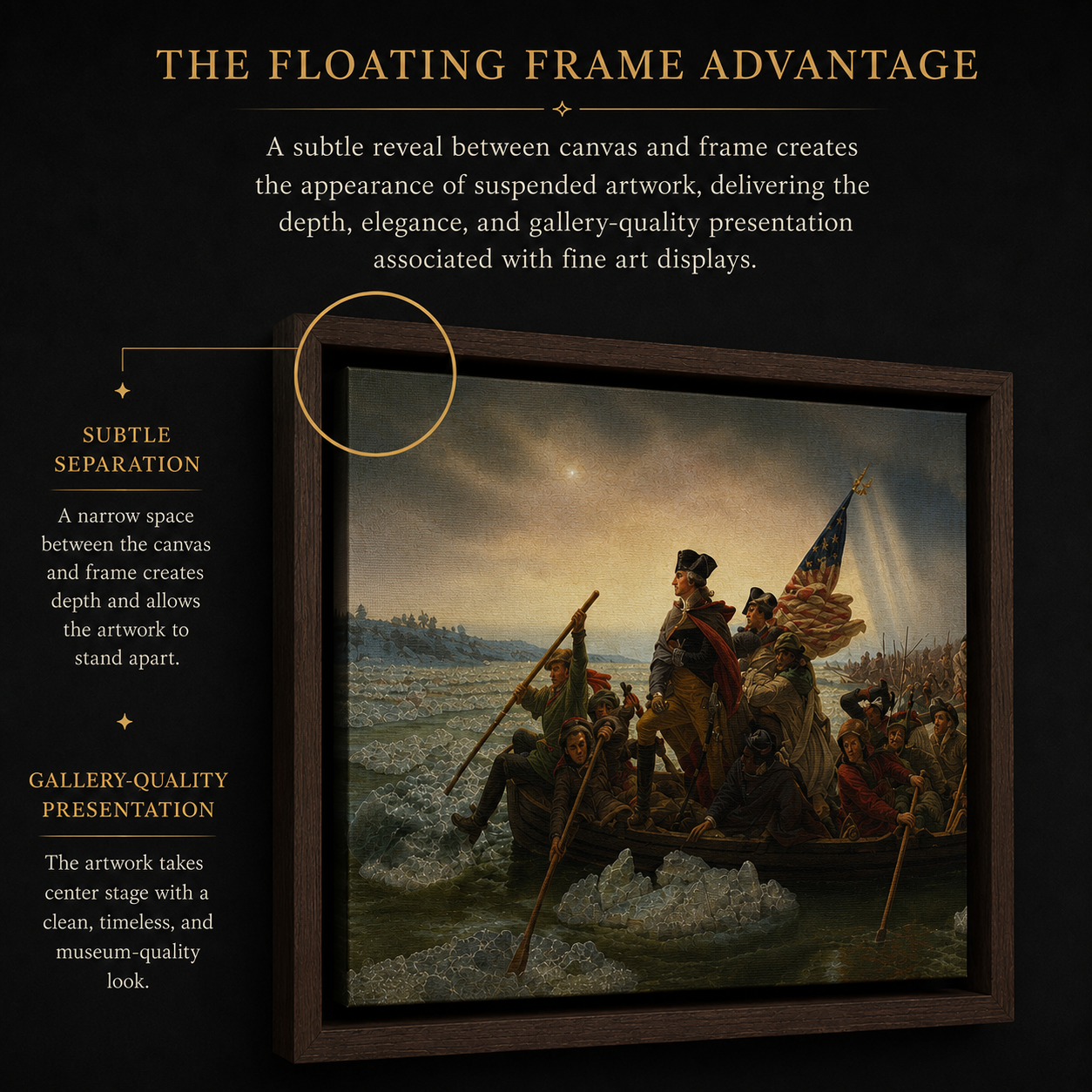
Printed on premium cotton-poly canvas with archival-quality, Greenguard Gold certified inks, it is built to the same standard of permanence the subject deserves — color that endures, detail that holds, a frame crafted from sustainably sourced FSC-certified pine that will outlast the trends.
Part of the American Legacy Collection — a curated series tracing the arc of the American story from the colonial era through World War II. Own one chapter or collect them all.
Crafted for collectors. Built to be passed down.
Frequently Asked