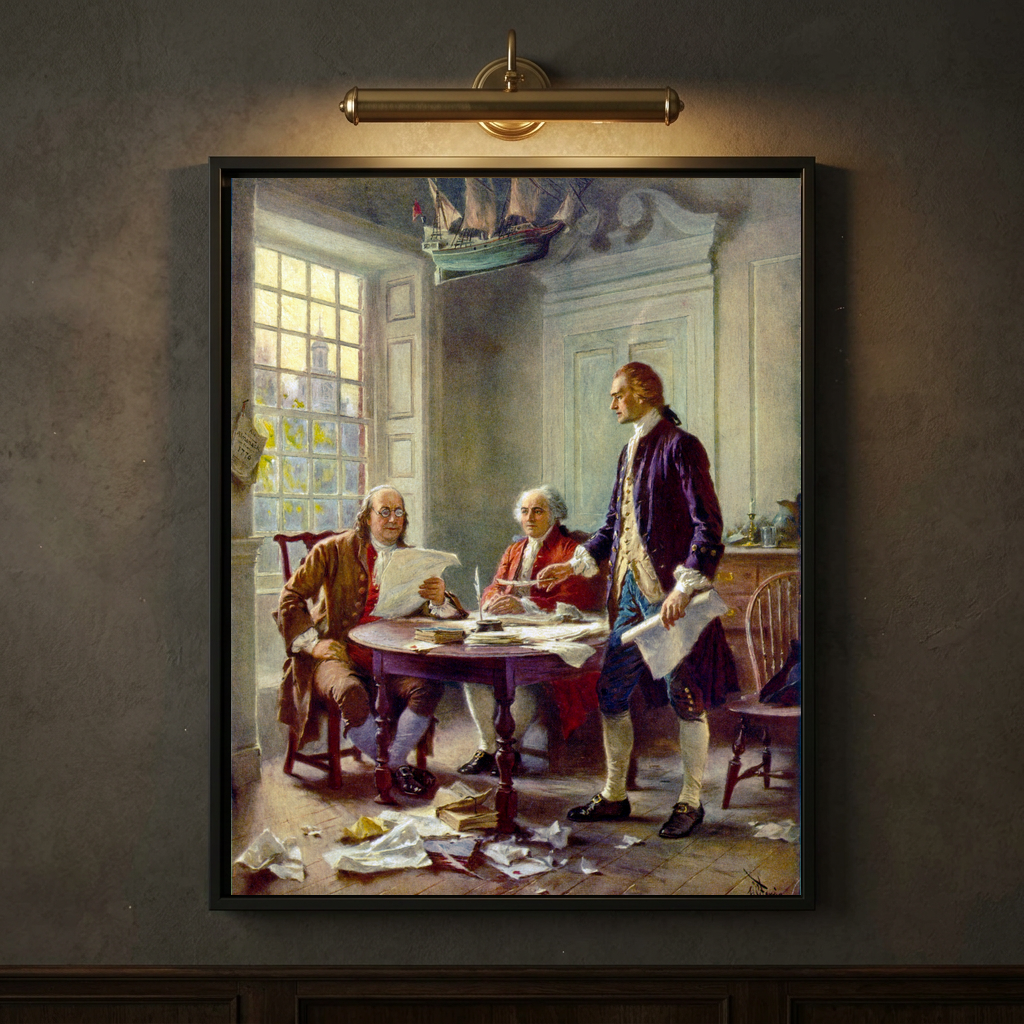
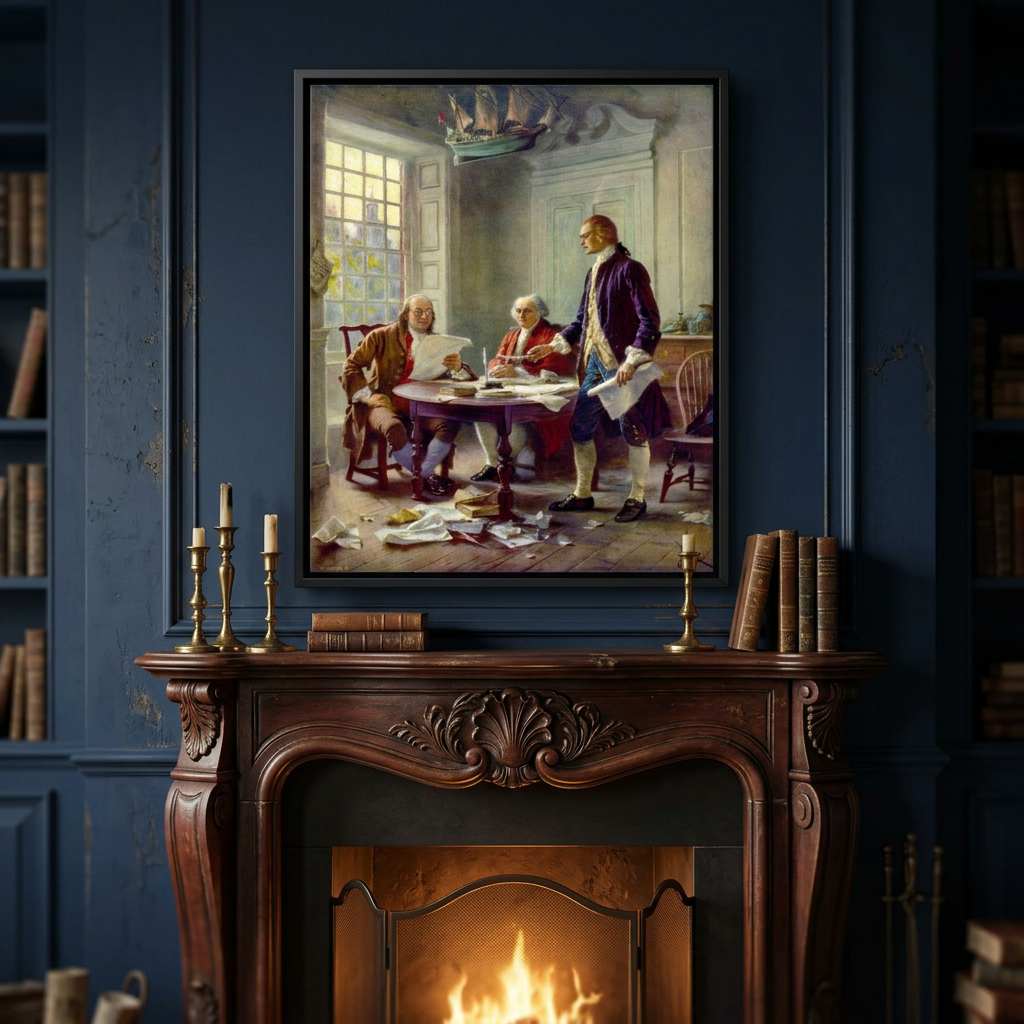
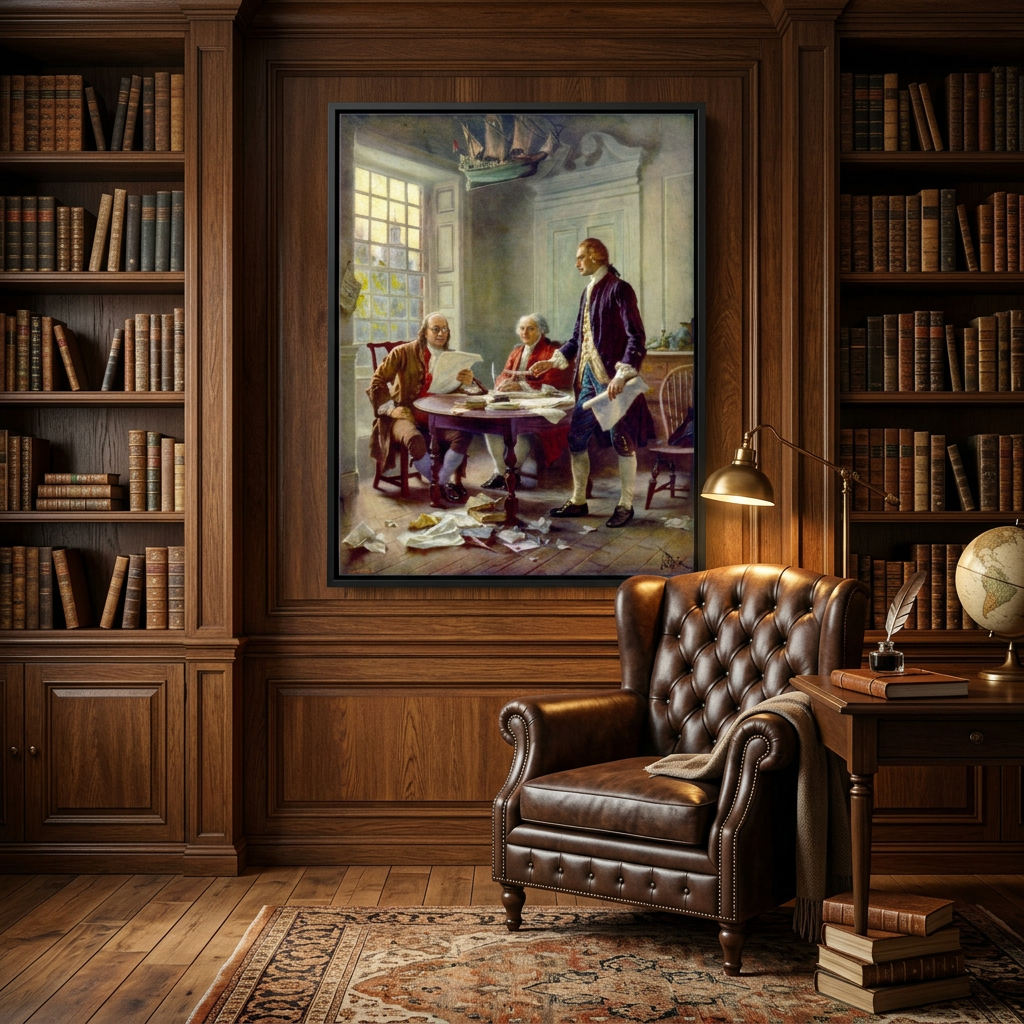
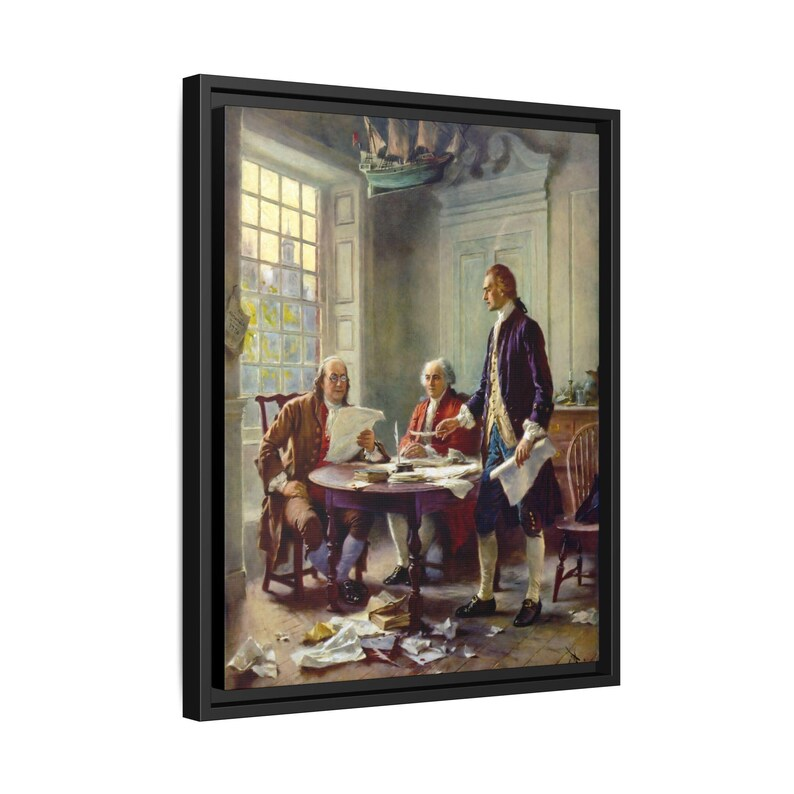

Writing the Declaration of Independence, 1776
Jean Leon Gerome Ferris (American, 1863–1930)
c. 1900
Everyone remembers the signing. Almost no one thinks about the writing. In June 1776, the Continental Congress appointed a Committee of Five to draft a formal declaration of independence — Jefferson, Adams, Franklin, Roger Sherman, and Robert Livingston. But the actual work fell primarily to three men, and primarily to one room.
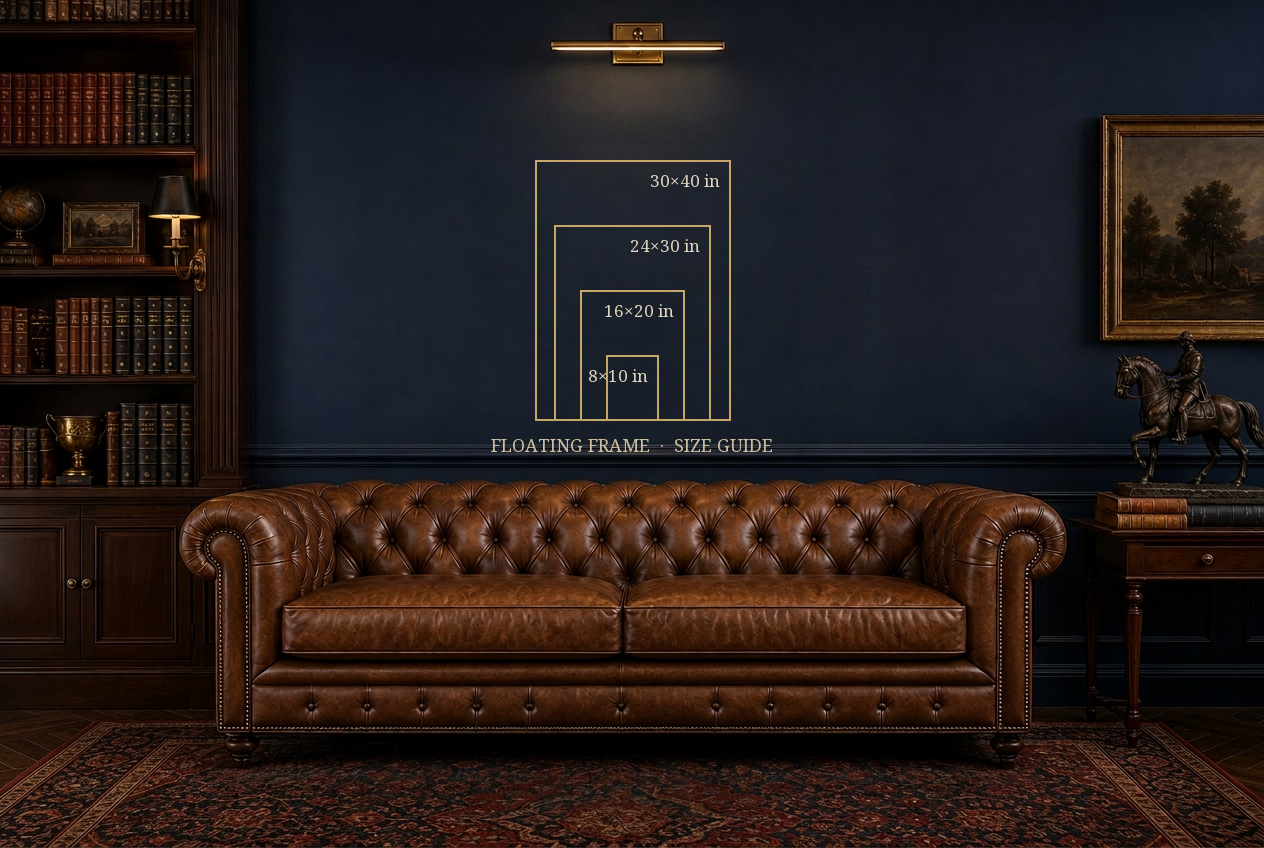
Size
16″ x 20″ (Vertical)
Color
Espresso
The Story
The Story Behind the Painting
Everyone remembers the signing. Almost no one thinks about the writing.
In June 1776, the Continental Congress appointed a Committee of Five to draft a formal declaration of independence — Jefferson, Adams, Franklin, Roger Sherman, and Robert Livingston. But the actual work fell primarily to three men, and primarily to one room: Jefferson's rented second-floor lodgings at the corner of Seventh and High Streets in Philadelphia, in the home of a bricklayer named Jacob Graff.
There was no formula for what they were attempting. No nation had ever been founded this way before — not through conquest, not through dynasty, but through an argument. A written case, addressed to the world, explaining why a government existed, what made it legitimate, and why this particular government had forfeited that legitimacy. The committee was not writing a declaration of war. They were writing a declaration of principle — and principle has to be exact.
Jefferson held the pen. By his own account and the consensus of historians, the draft was overwhelmingly his — written in roughly two weeks of concentrated work, drawing on the political philosophy he had absorbed for years and compressing it into language precise enough to bear the weight of what it was being asked to do.
But Jefferson did not work alone, and the painting captures exactly why that mattered.
Franklin, already in his seventies and the most internationally respected American alive, brought decades of diplomatic instinct — an ear for which phrases would land and which would merely provoke. Adams brought relentless intellectual rigor — a lawyer's insistence that every claim be defensible, every grievance documented, every argument airtight. Between Jefferson's draft and the version presented to Congress, forty-seven alterations were made. Words added. Words struck. Phrases reconsidered, argued over, and resolved — three men in a room, refining language until it was no longer merely good but permanent.
Ferris painted this scene not as spectacle but as intimacy. There is no audience in this painting. No drama of public consequence — yet. Just the work itself: the table, the papers, the candlelight, three men absorbed in getting it right because they understood, even in that quiet room, that the words would outlast them by centuries.
They were correct.
Why Own It
Before there was a nation, there were words. Before there were words, there was this room.
The Writing of the Declaration of Independence belongs in the American Legacy Collection because it captures something the more famous paintings of 1776 do not — the labor behind the legend. Not the triumphant moment of adoption, not the solemn ceremony of signing, but the unglamorous, exacting work of three men trying to get language right because they understood that everything that followed would be built on what they wrote in that room.
This is a piece for the study where ideas are taken seriously — where the work that precedes the result is understood to be the real story. The office that values precision and the patience required to achieve it. The home that wants to remember that the most consequential document in American history did not arrive by inspiration alone. It arrived through draft, revision, argument, and revision again — three minds working until the words could bear the weight of a nation.
Pairs naturally with the Declaration of Independence document itself — the words these three men wrote, displayed alongside the room where they wrote them.
Printed on premium cotton-poly canvas with archival-quality, Greenguard Gold certified inks, it is built to the same standard of permanence the subject deserves — color that endures, detail that holds, a frame crafted from sustainably sourced FSC-certified pine that will outlast the trends.
Part of the American Legacy Collection — a curated series tracing the arc of the American story from the colonial era through World War II. Own one chapter or collect them all.
Crafted for collectors. Built to be passed down.
Frequently Asked